
You've probably heard that saunas are good for you—but what does a sauna actually do for you? Whether you're recovering from a tough workout, battling daily stress, or just curious about that warm wooden room at the gym, the real sauna benefits go far deeper than a good sweat.
A sauna raises your core temperature, which boosts circulation, relaxes muscles, relieves stress, improves sleep, and clears your skin—and a traditional Finnish-style sauna delivers the authentic heat-and-steam experience[^1] that makes these benefits feel even better.

In this guide, we'll cover exactly what happens inside your body, 12 science-backed health benefits of sauna use, which toxins a sauna really removes, and how long you should stay in to get the most out of every session.
What Happens to Your Body When You Use a Sauna?
To understand why saunas are good for you, it helps to know what the heat does to your body first.
When you sit in a sauna at 70–90°C (158–194°F), your skin and core temperature rise, your heart rate climbs to 100–150 bpm, your blood vessels widen, and your body sweats to cool itself—effects surprisingly similar to light-to-moderate exercise[^2][^1].

This mild "heat stress" is the engine behind every benefit below. Here's the chain reaction in a single session:
- Heart rate rises as your body works to cool down, mimicking a gentle cardio workout.
- Blood vessels dilate, so circulation improves and blood pressure often drops afterward[^3].
- Sweat glands activate, releasing water and heat while your pores open.
- Muscles loosen as warmth increases blood flow to tissue.
- Stress hormones fall and feel-good endorphins rise, leaving you relaxed.
Because it's a controlled, repeated stress, your body gradually adapts—which is why regular, daily sauna use tends to produce the strongest long-term results.[^2] In a traditional sauna, pouring water over the hot stones (löyly) adds a burst of steam that deepens this whole effect.
12 Key Health Benefits of Sauna Use
So, what is a sauna good for? Below are 12 reasons why people use saunas, grouped so you can see exactly how the heat helps your body and mind.
Regular sauna use supports your heart, muscles, mind, sleep, and skin—making it one of the simplest wellness habits you can build into your week.

Physical Health Benefits
- Better circulation. Heat widens blood vessels and increases blood flow, delivering more oxygen throughout the body.
- Heart health support. Studies on frequent sauna bathing link it to lower blood pressure and reduced cardiovascular risk over time.[^3]
- Faster muscle recovery. Improved blood flow eases post-workout soreness[^4]—one reason athletes swear by sauna therapy.
- Joint and muscle pain relief. Warmth relaxes stiff joints and tight muscles, offering comfort for everyday aches.[^4]
- Stronger immune response. Regular heat exposure may help your body produce more white blood cells[^5].
- Deep sweating and cleansing. Sweating flushes water and heat while giving pores a thorough rinse.
Mental and Sleep Benefits
- Stress relief. The warm, quiet space lowers cortisol and calms your nervous system.[^6]
- Better mood. Endorphin release leaves many people feeling relaxed and mildly euphoric afterward.[^7]
- Improved sleep. The gradual cool-down after a session signals your body it's time to rest[^6]—ideal for evening use.
- Mental reset. With no screens or distractions, a sauna is a rare chance to simply unplug.
Skin and Recovery Benefits
- Clearer skin. Increased circulation and open pores can leave skin looking fresh and healthy.
- A recovery ritual. Making the sauna a daily or weekly habit builds a consistent routine your body learns to look forward to.
A quick real-world example: one of our customers, a marathon runner in Germany, installed a compact home sauna with a Harvia heater to speed up recovery. After a few weeks of 15-minute sessions post-run, he reported noticeably less next-day soreness and deeper sleep—two of the most common results people notice first. If you're planning a home setup for recovery like his, feel free to tell us your room size and we'll help you spec the right heater.
What Toxins Do Saunas Actually Remove?
"Detox" is one of the most hyped words in the sauna world, so let's be honest and accurate here.
Sweat is about 99% water plus small amounts of salt and electrolytes—so while a sauna helps your skin and cooling system, your liver and kidneys do the real detox work, not your sweat glands.
Here's a realistic look at what sweating in a sauna does and doesn't do:
| Substance | Removed by sweating? | Reality |
|---|---|---|
| Water & heat | Yes | The main purpose of sweat—cooling the body |
| Sodium & electrolytes | Yes | Lost in small amounts; rehydrate afterward |
| Heavy metals (lead, etc.) | Trace amounts | Present but very minor vs. kidney/liver removal |
| BPA & some chemicals | Trace amounts | Research is limited and quantities are tiny |
| Everyday "toxins" | Mostly no | Filtered by your organs, not your pores |
The honest takeaway: don't use a sauna as a "detox machine." Its true value lies in the circulation, recovery, relaxation, and skin benefits above. Because you lose fluid quickly, always drink water before and after, and never overstay just to "sweat out more toxins."
How Long Should You Sit in a Sauna?
More time isn't always better—session length matters for both results and safety.
Most people get the full benefits of daily sauna use in 15–20 minutes at 70–90°C; beginners should start with 5–10 minutes and build up gradually.
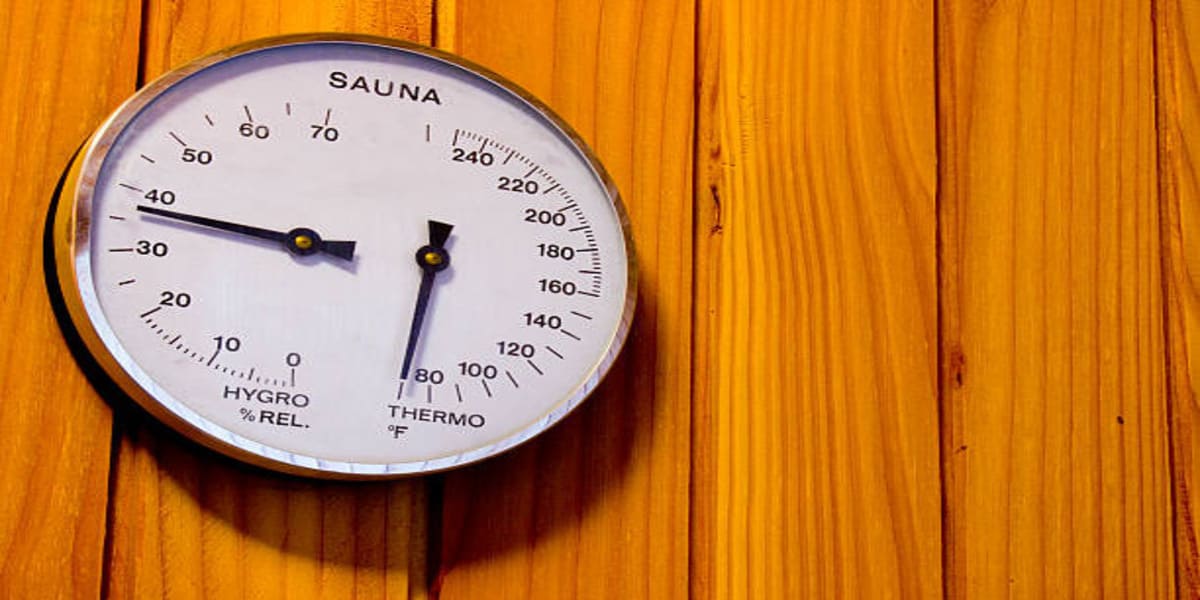
Use this as a simple starting point:
| Experience Level | Time per Session | Frequency |
|---|---|---|
| Beginner | 5–10 minutes | 2–3 times/week |
| Regular user | 15–20 minutes | 3–5 times/week |
| Experienced | Up to 20 minutes | Daily, if comfortable |
A few practical tips for the best experience:
- Listen to your body. Dizziness, headache, or discomfort means it's time to step out.
- Try heat-and-cool cycles. A cool shower or rest between rounds is invigorating and refreshing.
- Hydrate well. Water before and after replaces what you sweat out.
- Skip alcohol. Never combine drinking with sauna use.
- Check with your doctor if you're pregnant or have heart conditions or low blood pressure.
The quality of your session also depends on your equipment. A properly sized heater keeps the room at a steady, even temperature, and genuine sauna stones hold and release heat smoothly for a rich löyly. As a rule of thumb, allow roughly 1 kW of heater power per cubic meter of room volume—so a 6 m³ home sauna typically needs a 6 kW Harvia heater. Not sure which model fits your space? Send us your room dimensions and we're happy to recommend a suitable option.
Conclusion
So, what does a sauna do for you? Quite a lot—better circulation and heart health, faster muscle recovery, real stress relief, deeper sleep, and clearer skin, all from the simple habit of sitting in the heat. Just remember its true value comes from these physical and mental benefits rather than "sweating out toxins," and that 15–20 minutes per session is usually all you need to feel the difference.
To enjoy every one of these benefits safely and comfortably, the right setup matters just as much as the routine. As a traditional sauna specialist, we help home users and businesses choose genuine Harvia heaters, steam generators, sauna stones, and accessories, and match the correct heater power to each room. Whenever you're ready to plan your build, we're glad to answer your questions and help you find the right fit.
[^1]: "Sauna culture in Finland - UNESCO Intangible Cultural Heritage", https://ich.unesco.org/en/RL/sauna-culture-in-finland-01596. A historical or encyclopedic source can document that sauna bathing is a longstanding Finnish cultural practice traditionally involving a heated room, stones, and water thrown on the stones to create steam. Evidence role: historical_context; source type: encyclopedia. Supports: A traditional Finnish-style sauna is an authentic heat-and-steam sauna experience.. Scope note: This supports the cultural and technical context of Finnish-style sauna, not the health-benefit claims in the same sentence. [^2]: "Non-acute effects of passive heating interventions on ...", https://www.sciencedirect.com/science/article/pii/S2666667725001576. A physiological review can support that sauna heat exposure raises heart rate and produces cardiovascular responses that overlap with low- to moderate-intensity exercise responses. Evidence role: mechanism; source type: paper. Supports: Sauna heat exposure produces some cardiovascular effects similar to light-to-moderate exercise.. Scope note: The comparison is physiological and does not mean sauna use provides all fitness adaptations of exercise. [^3]: "Acute Finnish sauna heating and cold water immersion effects on ... - Nature", https://www.nature.com/articles/s41598-025-29035-w. Clinical research on sauna bathing can support that blood pressure may decrease after a sauna session in some adults, consistent with heat-induced vasodilation and post-heat cardiovascular responses. Evidence role: statistic; source type: paper. Supports: Blood pressure can drop after sauna bathing.. Scope note: Post-session blood pressure responses vary by baseline blood pressure, medications, hydration, and heat exposure protocol. [^4]: "Effects of Post-Exercise Heat Exposure on Acute Recovery ...", https://link.springer.com/article/10.1186/s40798-025-00910-0. Research on heat therapy and exercise recovery can support that post-exercise heat exposure may reduce perceived muscle soreness and improve recovery-related blood-flow responses. Evidence role: general_support; source type: paper. Supports: Improved blood flow from heat exposure may help ease post-workout soreness.. Scope note: Evidence for sauna specifically is less extensive than for broader heat therapy, and recovery effects depend on timing, exercise type, and session protocol. [^5]: "Study offers insight on how hot weather impairs the immune system", https://www.heart.org/en/news/2024/03/19/study-offers-insight-on-how-hot-weather-impairs-the-immune-system. A human study or review of sauna/heat exposure and immune markers can support that repeated heat exposure has been associated with changes in leukocyte counts or immune-cell activity. Evidence role: statistic; source type: paper. Supports: Regular heat exposure may influence white blood cell production or immune markers.. Scope note: Changes in white blood cell counts are surrogate immune markers and do not directly prove reduced infection risk or stronger immunity in all users. [^6]: "The Temperature Dependence of Sleep - Frontiers", https://www.frontiersin.org/journals/neuroscience/articles/10.3389/fnins.2019.00336/full. Sleep physiology research can support that a decline in core body temperature and heat redistribution before sleep are associated with sleep onset, providing a plausible mechanism for post-sauna relaxation and sleepiness. Evidence role: mechanism; source type: paper. Supports: Cooling after heat exposure may support sleep onset through thermoregulatory mechanisms.. Scope note: This supports the thermoregulatory rationale for sleep effects, not proof that every evening sauna session improves sleep quality.