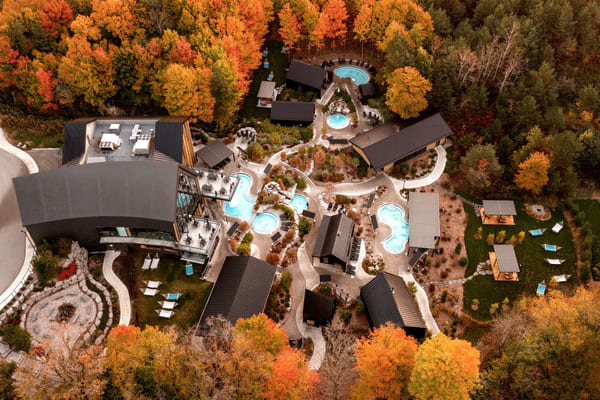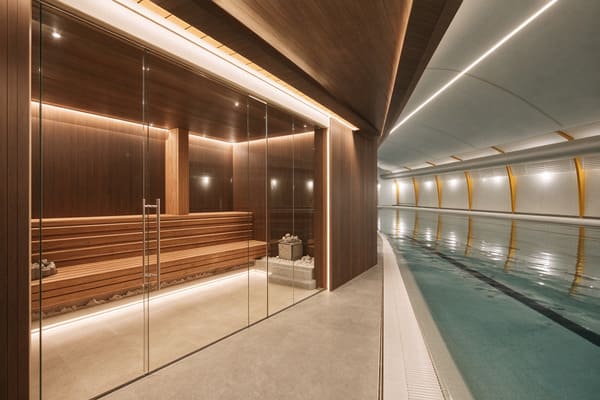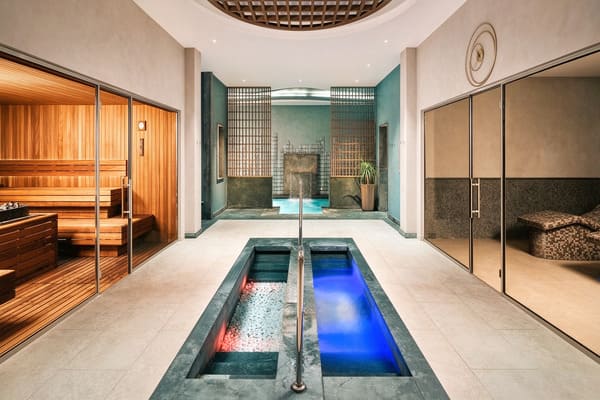
A floating sauna offers something a conventional sauna facility cannot easily replicate: the experience of enjoying heat therapy while surrounded by open water and natural scenery.
From lakeside resorts and waterfront hotels to commercial wellness destinations, floating saunas are becoming an interesting option for developers looking to create distinctive guest experiences.
However, building a sauna on water involves much more than placing a wooden cabin on a floating platform. Projects must account for structural stability, equipment weight, electrical connections, moisture protection, ventilation, safety, and long-term maintenance.
For commercial buyers, these considerations should be addressed before selecting the sauna heater or confirming the interior design.
This guide explains the key design and equipment considerations for developing a floating sauna project.
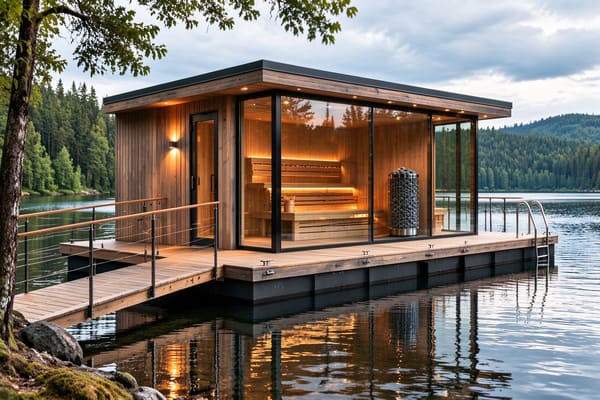
1. What Is a Floating Sauna? Understanding Different Project Types
A floating sauna is a sauna facility installed on a buoyant platform or floating vessel rather than a conventional land-based foundation.
Depending on the location and intended use, floating sauna projects generally take three forms.
| Project Type | Main Characteristics | Potential Applications |
|---|---|---|
| Pontoon Floating Sauna | Sauna cabin installed on a buoyant platform | Resorts, lake wellness facilities |
| Floating Sauna Boat | Sauna installed on a purpose-built or converted vessel | Water tourism, mobile wellness |
| Shore-Connected Floating Sauna | Floating structure connected to land by a dock or gangway | Hotels, waterfront spas, glamping sites |
The project type affects structural design, heater selection, electrical supply, access arrangements, and maintenance requirements.
2. Floating Platform and Structural Design
The floating platform is the foundation of the entire project.
Unlike a conventional sauna building, a floating installation must remain stable while carrying changing loads and responding to water movement.
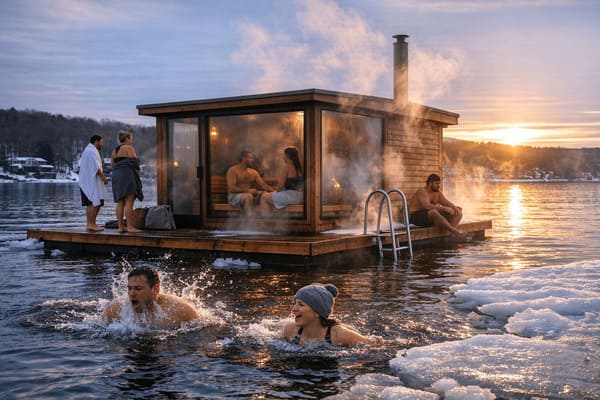
Buoyancy and Load Capacity
The platform must support the complete design load, including:
- Sauna cabin and structural framing
- Interior timber, insulation, and glass
- Heater, stones, and electrical equipment
- Benches and furnishings
- Maximum permitted occupant capacity
- Exterior decking and additional facilities
The engineering design must also consider reserve buoyancy, water ingress scenarios, and the consequences of component failure.
Stability and Mooring
Weight distribution affects the platform's stability. Heavy heaters, large glass panels, and water tanks should be considered during the initial layout.
The engineering team should evaluate:
- Centre of gravity and load distribution
- Static and dynamic loading
- Wind and wave effects
- Mooring and anchoring arrangements
- Water-level changes
- Shore access and gangway connections
The Malaysia Public Works Department's Marina Design Guidelines provide useful background on pontoon positioning, structural planning, and marina infrastructure.
For commercial projects, platform design and stability calculations should be completed by appropriately qualified marine or structural engineers.
3. Choosing the Right Sauna Heater for a Floating Project
The sauna heater is one of the most important equipment decisions.
Floating sauna projects generally consider two main options: electric heaters and wood-burning heaters.
Electric Sauna Heaters
Electric heaters can be suitable when a reliable electrical supply is available.
Potential advantages include:
- Convenient temperature adjustment
- Integration with compatible control systems
- No fuel storage or ash removal
- Easier coordination with scheduled operating hours
Before ordering, buyers should confirm:
- Heater power requirements in kW
- Supply voltage and electrical phase
- Available electrical capacity
- Controller compatibility
- Cable routing and electrical protection
Wood-Burning Sauna Heaters
Wood-burning heaters may be considered for selected remote or off-grid projects.
They offer a traditional sauna experience but introduce additional requirements:
- Chimney and flue installation
- Combustion air supply
- Fire separation and protective clearances
- Fuel storage and ash removal
- Smoke management and fire safety
On a floating structure, chimney installation and fire protection require particular attention.
Neither heater type is automatically better. The choice depends on the project location, energy supply, operating model, and applicable regulations.
How to Select the Appropriate Heater Capacity
The heater should be selected according to the sauna room's internal volume and the manufacturer's sizing requirements.
Buyers should provide the room dimensions, glass area, insulation details, intended temperature, and maximum occupancy.
Large glass surfaces and other uninsulated areas can increase the effective heating requirement.
For more information, see our Commercial Sauna Heater Selection Guide.
4. Electrical Systems and Water Protection
Waterfront installations create a challenging environment for electrical equipment.
The combination of electricity, moisture, metal structures, and moving platforms requires careful electrical planning.
Shore Power or Independent Power Supply?
A shore-connected electrical supply may be appropriate when the floating sauna remains close to a waterfront property.
Remote projects may investigate generators or hybrid power systems, but the complete electrical load must be assessed before selecting a solution.
The project team should consider:
- Heater power consumption
- Lighting and auxiliary equipment
- Cable routing between land and platform
- Mechanical protection for moving connections
- Electrical isolation and emergency shutdown
- Suitable enclosures and corrosion protection
Electrical Safety
Commercial floating sauna projects should address protective earthing and bonding, residual-current protection, cable protection, electrical enclosures, and inspection access.
The applicable requirements depend on whether the installation is classified as a vessel, floating building, pontoon structure, or another type of facility.
The Land Transport Authority's construction safety guidance for floating structures provides additional context on working with floating structures and access arrangements.
Electrical installation and certification must be handled by appropriately qualified professionals under local regulations.
5. Materials, Insulation and Moisture Management
Material selection affects durability, comfort, maintenance, and long-term operating costs.
A floating sauna must withstand both the high-temperature interior environment and external waterfront exposure.
Interior and Exterior Timber
Suitable sauna-grade timber can be used for interior walls, ceilings, and benches. Common options include Aspen, Abachi, and Alder.
Exterior timber requires a separate assessment based on moisture exposure, weathering, and maintenance requirements.
The USDA Forest Products Laboratory's Wood Handbook provides technical information on wood properties, durability, and finishing.
For waterfront applications, buyers should also consider the environmental suitability of exterior wood treatments.
Insulation and Ventilation
The sauna room should have an appropriate insulation and vapor-control system to maintain thermal performance and manage condensation.
Important considerations include:
- Wall and ceiling insulation
- Vapor control layers
- Sealed construction joints
- Suitable ventilation openings
- Reduced unnecessary heat loss through glazing
- Protection against water penetration
Ventilation should be designed according to the heater, room layout, and applicable sauna requirements.
For additional guidance, see our Sauna Insulation and Vapor Barrier Guide.
Metal Components and Fasteners
Metal brackets, fasteners, and connections may be exposed to persistent moisture and, in coastal locations, salt-laden air.
Specify suitable corrosion-resistant materials and ensure that different metals are compatible within the installation.
6. Safety and Maintenance for Commercial Operations
A floating sauna combines a heated indoor environment with a surrounding water area. Safety must therefore be considered throughout the design and operating process.
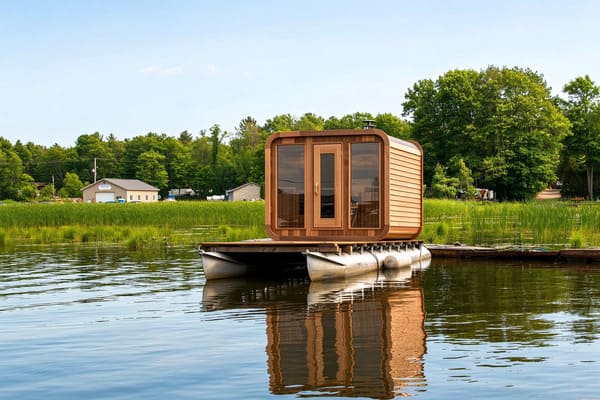
Guest and Water Safety
Depending on the location and operating model, the project may require:
- Stable access gangways
- Non-slip deck surfaces
- Handrails and suitable lighting
- Emergency exit arrangements
- Life-saving equipment
- Safe swimming access
- Clear occupancy limits
- Weather-related operating restrictions
If cold-water immersion is included, water depth, access, rescue arrangements, and local bathing requirements must also be assessed.
Fire Safety
Fire protection is particularly important when using wood-burning heaters.
The design should consider heater clearances, protective surfaces, flue construction, fire detection, extinguishing equipment, and emergency access.
Long-Term Maintenance
Commercial operators should include regular inspections of the floating platform, mooring system, timber surfaces, metal connections, sauna heater, electrical components, and drainage.
The inspection schedule should reflect the local climate, water conditions, usage frequency, and manufacturer recommendations.
A planned maintenance programme can help identify deterioration before it causes equipment damage or operational downtime.
7. Real-World Floating Sauna Projects
Existing projects demonstrate how floating sauna concepts can be developed for different commercial environments.
WATERSHED Sauna – Lake Whakatipu, New Zealand
WATERSHED Sauna in Queenstown uses a floating pontoon to support its sauna facility on Lake Whakatipu.
The project combines waterfront architecture, carefully selected timber, and a sauna experience integrated with the surrounding alpine landscape.
See the WATERSHED project overview.
Project lesson: Interior materials, exterior decking, and the waterfront environment should be considered together during design.
Lake Burley Griffin Floating Sauna Proposal – Canberra, Australia
The National Capital Authority received a works approval application for a proposed floating sauna at Lake Burley Griffin.
The proposal included a 78.8 m² floating pontoon, two sauna rooms, changing facilities, a gathering area, and a 10.5-metre access gangway.
This is a planning and approval example, not confirmation of a completed facility.
See the National Capital Authority's consultation documentation.
Project lesson: The platform, access gangway, guest facilities, and sauna rooms should be planned as one integrated project.
Fjord Floating Sauna – Sausalito, California
Fjord is a commercial floating sauna and plunge experience on San Francisco Bay.
Its project case study describes two traditional Finnish-style saunas, an outdoor deck, and a floating base built using a salvaged breakwater barge.
See the Fjord Sauna project case study.
Project lesson: A floating sauna can become part of a wider commercial wellness destination rather than operating as an isolated cabin.
8. What Should Buyers Specify Before Ordering a Floating Sauna?
For commercial buyers, early project information makes equipment selection and supplier coordination much easier.
Before requesting a quotation, prepare the following details.
Floating Sauna Project Specification Checklist
| Item | Information Required |
|---|---|
| Project location | Lake, river, coast, or marina |
| Project type | Pontoon, vessel, or shore-connected structure |
| Sauna room dimensions | Internal length, width, and height |
| Maximum occupancy | Expected number of users |
| Platform information | Design type and approved load capacity |
| Heater preference | Electric or wood-burning |
| Electrical supply | Voltage, phase, and available power |
| Interior materials | Preferred wood species |
| Glass configuration | Door, front wall, and window requirements |
| Operating model | Private use, hotel, resort, or commercial admission |
| Local approvals | Building, maritime, fire, and electrical requirements |
Questions to Ask Your Sauna Supplier
Before confirming an order, buyers should also ask:
- Is the proposed heater suitable for the installation environment?
- What electrical supply does it require?
- Are the control system and safety devices compatible?
- What installation clearances are required?
- Are replacement parts available?
- Can the sauna cabin be customized to the platform dimensions?
- What technical drawings and installation information can be provided?
The sauna supplier should coordinate with the platform designer, electrical contractor, and other relevant professionals before final installation approval.
Conclusion
A floating sauna is more than a sauna placed on water.
It is a complete wellness project that requires coordination between the floating structure, sauna cabin, heating equipment, electrical systems, materials, and operating arrangements.
For commercial developers, the most important decisions should be made during the early planning stage.
A suitable floating platform, correctly specified heater, properly designed electrical system, and appropriate material selection can all contribute to a safer and more manageable installation.
Whether the project is a small lakeside sauna or a larger waterfront wellness destination, equipment should be selected according to the actual project conditions rather than treated as a standard off-the-shelf installation.
Planning a Floating Sauna Project?
ROC Sauna-Solution supplies sauna heaters, control systems, and customized sauna rooms for distributors, installers, hotels, resorts, and commercial wellness projects.
For floating sauna developments, we can discuss:
- Custom sauna room dimensions and layouts
- Electric sauna heater selection
- Compatible control systems
- Interior timber and seating configurations
- Glass door and front-wall options
- Equipment coordination for commercial installations
Planning a floating sauna for a hotel, resort, lake, or waterfront wellness facility?
Share your project location, room dimensions, preferred heater type, and electrical specifications with our team.
We can help review suitable sauna room and equipment configurations for your project.
Explore Our Custom Sauna Solutions
Contact ROC Sauna-Solution for a Project Quote
Frequently Asked Questions
1. What is a floating sauna?
A floating sauna is a sauna facility installed on a buoyant platform or vessel. It can serve private users, hotel guests, waterfront resorts, and commercial wellness destinations.
2. Can an electric sauna heater be installed on a floating platform?
Yes, provided the electrical installation is designed for the environment and meets applicable safety requirements. Heater power, voltage, protective devices, cable routing, and grounding arrangements must be confirmed by qualified professionals.
3. Is a wood-burning heater suitable for a floating sauna?
It may be suitable for selected projects, but the installation requires careful consideration of fire protection, combustion air, chimney construction, smoke management, and applicable regulations.
4. Does a floating sauna require special permits?
Potentially, yes. Requirements depend on the location and whether the facility is classified as a vessel, floating building, pontoon structure, or another type of installation.
Approvals may involve maritime authorities, local planning departments, environmental agencies, building authorities, and electrical regulators.
5. What information should I provide when requesting a floating sauna quotation?
Provide the project location, sauna room dimensions, maximum occupancy, floating platform information, preferred heater type, electrical supply, material preferences, and intended operating model.
These details help the supplier assess suitable equipment and customization options.
References
- Malaysia Public Works Department – Marina Design Guidelines
- Abu Dhabi Maritime – Maritime Infrastructure Requirements
- Land Transport Authority Singapore – Construction Safety Guidance
- National Capital Authority – Floating Sauna, Lake Burley Griffin
- JSC – WATERSHED Floating Sauna Project
- USDA Forest Products Laboratory – Wood Handbook
- Harvia – Official Sauna Heater and Equipment Information