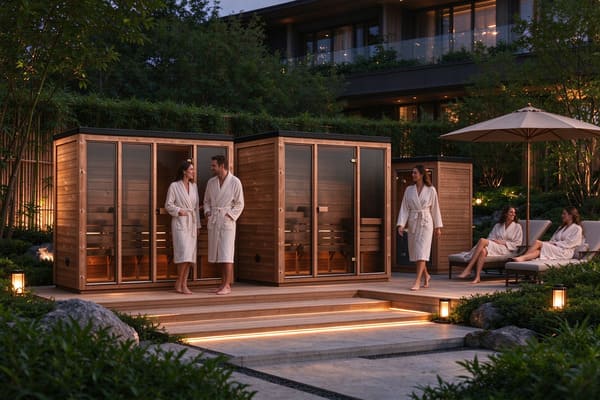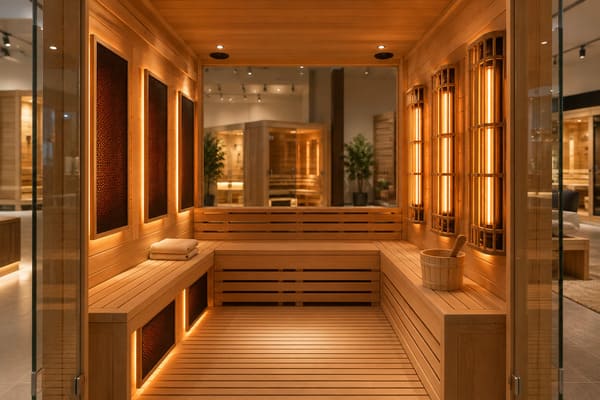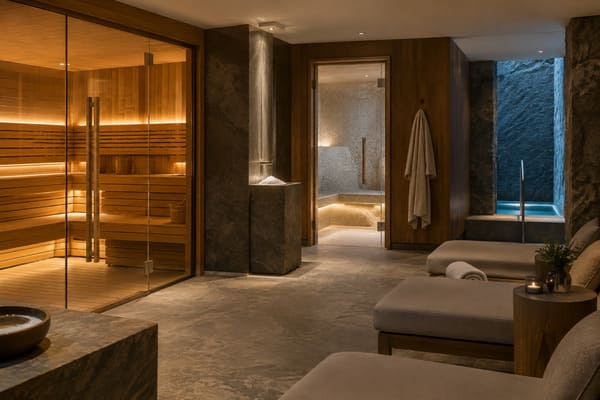
Picture two commercial saunas, both fitted with a 9 kW heater. In the first, guests sink onto the bench, ladle water over the stones, and a soft, enveloping wave of steam rolls through the room — they stay for twenty relaxed minutes. In the second, the air is sharp and dry, the steam hisses and stings, and guests are reaching for the door in five.
Same power. Completely different experience. So what went wrong?
The answer isn't kilowatts. It's the rocks. And for anyone sourcing sauna equipment for gyms, hotels, and spas, understanding rock capacity is one of the most valuable — and most overlooked — things you can learn. As an official Harvia agent, we want you selling heaters your customers rave about, not ones they return.
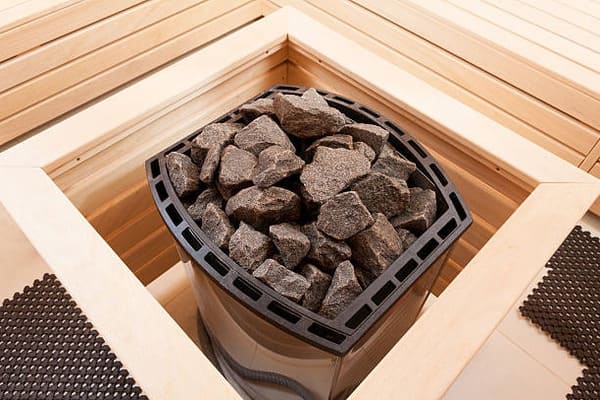
What a Sauna Rock Heater Actually Does with Its Stones
Every electric sauna rock heater works on the same principle: heating elements warm a load of stones, and the stones do the real work. They're not decoration — they're the heart of the sauna experience, playing two jobs at once:
- A heat battery. The stones absorb and store heat, then release it slowly and evenly.[^1] More stone means a bigger, steadier reservoir of warmth.
- A steam generator. When water is ladled over hot stones, it flashes into löyly — the soft, humid steam that defines a real sauna.[^4] The more hot stone surface there is, the more gentle and generous that steam becomes.
This is why two heaters rated at the same kW can feel worlds apart. Kilowatts decide how hot the room gets. Rock capacity decides how good it feels.
Why Small Rock Loads Ruin the Experience
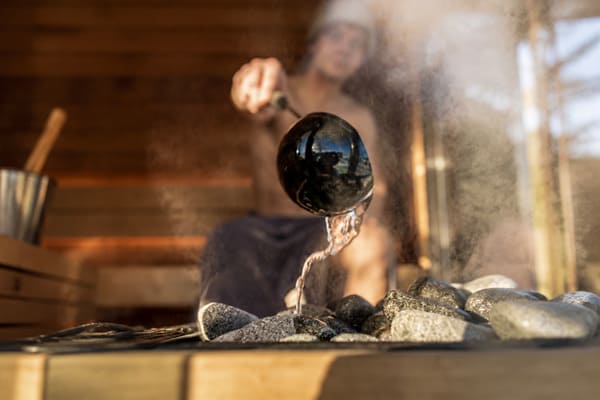
A heater with only a few kilos of stone heats up fast and cheap — which is why light-duty units carry so little. But in use, it behaves badly:
- Harsh, dry heat. With little thermal mass, the air heats quickly but feels thin and biting rather than soft.[^2]
- Weak, spitting steam. Ladle water onto a small stone load and it hisses aggressively, then dies. There isn't enough hot stone to produce a proper wave of löyly.
- Temperature swings. Every time the door opens, a small load loses its heat and the room lurches cold[^3], then overshoots hot as the elements fight to recover.
For a home used a few times a week, buyers might tolerate this. In a commercial room, it's a source of complaints.
Why This Matters Ten Times More in Commercial Rooms
A home sauna heats one family in a calm, closed room. A commercial sauna faces a completely different reality:
- Constant bather rotation — people coming and going all day.
- Doors opening every few minutes, dumping heat out each time.
- The promise of a premium experience that guests are paying for.
To survive this, a commercial heater needs a large stone mass to buffer against the heat loss and recover quickly between openings. A big rock load is what lets a busy spa deliver the same soft, consistent löyly at 9 a.m. and 9 p.m. — and consistent quality is exactly what keeps members renewing and hotel guests leaving five-star reviews. For your customer, better steam isn't a luxury; it's their business.
Three Heater Body Styles, Three Very Different Rock Capacities
When you're sourcing, the shape of the heater tells you a lot about how much stone it can hold — and therefore what steam quality to expect.
| Style | Typical rock capacity | Best suited to |
|---|---|---|
| Wall-mounted | Low (a few kg) | Small home saunas; not ideal for busy commercial rooms |
| Floor-standing | Medium | Larger homes and light commercial use |
| Tower / pillar | High (tens of kg) | Commercial rooms where steam quality is the priority |
The takeaway for commercial projects is simple: tower-style heaters hold the most stone, so they deliver the richest, most forgiving steam. That's why they're the default recommendation for gyms, hotels, and spas — and why they anchor Harvia's commercial range.
Harvia's High-Capacity Heaters, Ranked by Steam Experience
Rather than list kilowatts, here's how Harvia's commercial heaters stack up on the thing that actually matters to your customers — stone capacity and the steam it produces.
Harvia Cilindro Pro — The Rock-Capacity King
If a project lives and dies on steam quality, this is the heater. The Cilindro Pro is a tall pillar design built around an enormous stone load — up to 220 kg in the largest models (PC165E and PC200E) — surrounding the elements on all sides. The result is exceptionally soft, generous löyly and rock-solid temperature stability, even in large, high-traffic rooms. This is the one to quote for premium spas and serious wellness facilities. See the Harvia Cilindro Pro product page.
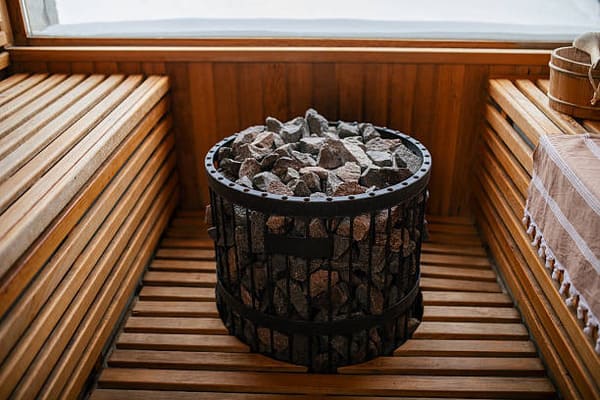
Harvia Dragon — Fast Recovery for High-Traffic Rooms
Where the Cilindro Pro wins on sheer stone volume, the Dragon wins on speed. It heats a room to 110°C in about 20 minutes — roughly 30% faster than standard heaters — and holds a solid 40–50 kg stone load for genuine löyly. That fast heat-up is a real commercial advantage: in a busy room where the door never stops opening, the Dragon recovers temperature quickly between guests. A stainless-steel guard also separates the elements from the stones, extending service life and letting staff swap elements or stones in three simple steps — a big plus for facilities that can't afford downtime. Its sculptural dragon design is a bonus for spaces that want a heater guests notice. Explore the Harvia Dragon product page.
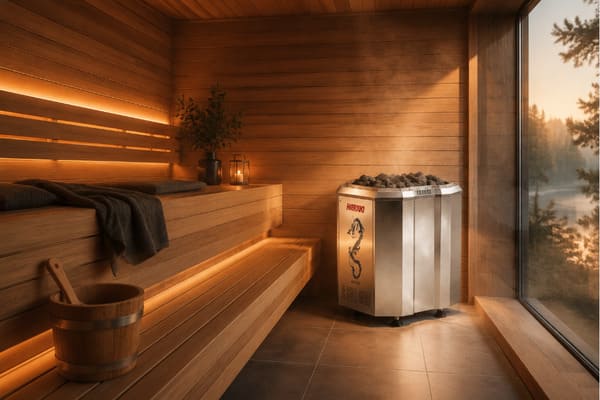
Harvia Vega Pro — Commercial Steam, Sensible Value
Not every project has a premium budget. The Vega Pro brings genuine commercial-grade stone capacity and reliable löyly at a more accessible price — the smart pick for gyms and mid-tier facilities that need dependable steam without the flagship spec. See the Harvia Vega Pro product page.
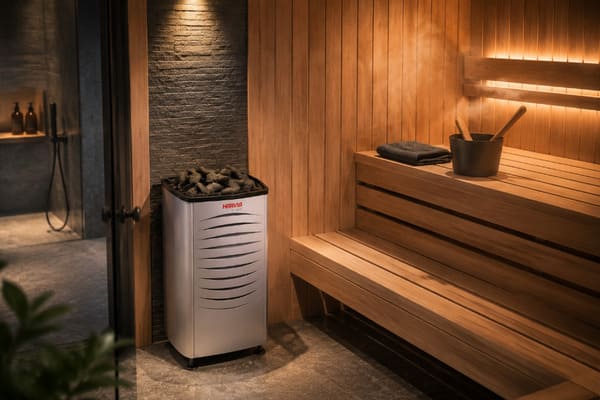
How to Use Rock Capacity When You Source
Now that you know the secret, here's how to put it to work on your next order:
- Ask for the rock capacity in kg — not just the kW. Two heaters can share a power rating and hold wildly different amounts of stone. The stone figure predicts the steam quality.
- The bigger and busier the room, the more stone you want. For large or high-traffic commercial rooms, lead with tower-style, high-capacity heaters.
- Specify good stones, and stock spares. Sauna stones are consumables — cheap or crumbly stone fractures under repeated heating and cooling[^5], blocks airflow, and dulls the steam. Recommend quality sauna stones such as Harvia Black Vulcanite, and remind buyers to reorder replacements periodically. It's an easy repeat-sale item to bundle.
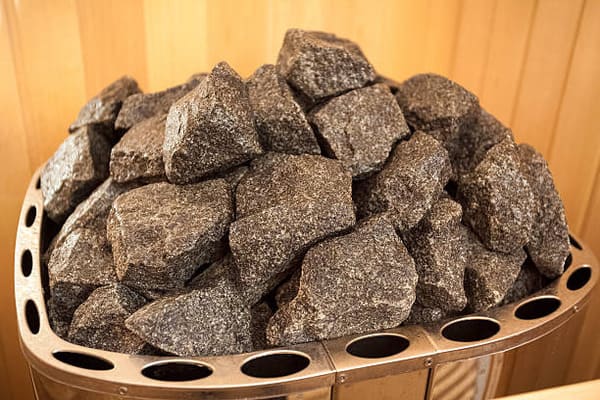
Choosing on rock capacity, not kW alone, is the difference between a customer who reorders and one who files a complaint.
Frequently Asked Questions
How much rock capacity does a commercial sauna heater need? It scales with room size and traffic. Small commercial rooms may run on 20–40 kg of stone, while large, high-use spa rooms benefit from tower-style heaters holding 100 kg or more — like the Harvia Cilindro Pro, which carries up to 220 kg. As a rule, more stone means softer, more consistent steam and better recovery when the door keeps opening.
Does more rock really mean better steam? Yes — up to the point the heater is designed for. A larger, well-heated stone mass stores more energy and offers more hot surface for water to hit, producing a fuller, gentler wave of löyly instead of a sharp hiss. It also keeps the room temperature steadier through constant use.
What's the best commercial sauna heater for steam quality? For pure steam performance in demanding commercial rooms, a high-capacity tower heater like the Harvia Cilindro Pro is hard to beat, thanks to its very large stone load. For busy rooms that need fast temperature recovery, the Dragon is a strong choice, and the Vega Pro covers value-focused commercial projects.
Conclusion
When you source commercial sauna heaters, resist the urge to compare kilowatts alone. Kilowatts heat the room — but rock capacity is what turns heat into the soft, consistent löyly that keeps your customer's guests coming back. Lead with high-capacity, tower-style heaters like the Harvia Cilindro Pro, and you're selling an experience, not just a box.
Want help matching the right heater — and the right stone capacity — to your next project? Contact us for a recommendation and quote. As an official Harvia agent, we ship reliably to 50+ countries with flexible order quantities; contact our sales team for specific MOQ details.
About ROC Sauna-Solution: We are a professional sauna supplier from China and an official Harvia agent, with 12+ years of OEM/ODM experience and CE/ETL-certified quality. We supply the full range of commercial and residential sauna products — heaters, steam generators, infrared units, solid-wood panels, accessories, and controls — to SPA chains, hotel developers, and brand operators in 50+ countries. Learn more at Harvia's official website.
[^1]: "Heat Capacity and Thermal Energy Storage", Penn State University — Earth 103 course materials, https://courses.ems.psu.edu/earth103/node/1005. Evidence role: general_support; source type: university educational material. Supports: Materials with high heat capacity absorb and store thermal energy, then release it slowly — the principle behind sauna stones acting as a heat reservoir.
[^2]: "Environmental Technologies in Buildings — Thermal Mass", MIT OpenCourseWare (4.401), https://ocw.mit.edu/courses/4-401-environmental-technologies-in-buildings-fall-2018/. Evidence role: general_support; source type: university educational material. Supports: Low thermal mass causes air to heat quickly but hold temperature poorly, producing a thinner, less stable heat.
[^3]: "This Thermal House", Do the Math — University of California San Diego (Tom Murphy), https://dothemath.ucsd.edu/2012/11/this-thermal-house/. Evidence role: general_support; source type: university/academic blog. Supports: A body with little thermal mass loses and regains heat rapidly, causing large temperature swings — analogous to a small stone load when the sauna door opens.
[^4]: "Sauna bathing in Finland", UNESCO — Representative List of the Intangible Cultural Heritage of Humanity, https://ich.unesco.org/en/RL/sauna-bathing-in-finland-01596. Evidence role: general_support; source type: international cultural body (UNESCO). Supports: Löyly — the steam produced by throwing water on hot stones — is the defining element of authentic Finnish sauna culture. Scope note: The listing documents cultural practice rather than technical steam performance.
[^5]: "Geologic Time / Rocks and the rock cycle", U.S. Geological Survey (USGS), https://pubs.usgs.gov/gip/geotime/contents.html. Evidence role: general_support; source type: government geological survey. Supports: Rock durability under repeated thermal cycling varies by type; dense igneous rock resists cracking better than porous or layered stone, which is why sauna stones must be selected for thermal-shock resistance. Scope note: General geological reference; not sauna-specific testing.