What if a sauna business did not need a permanent building?
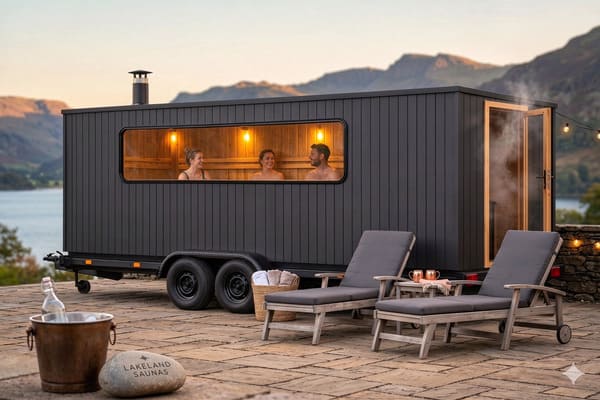
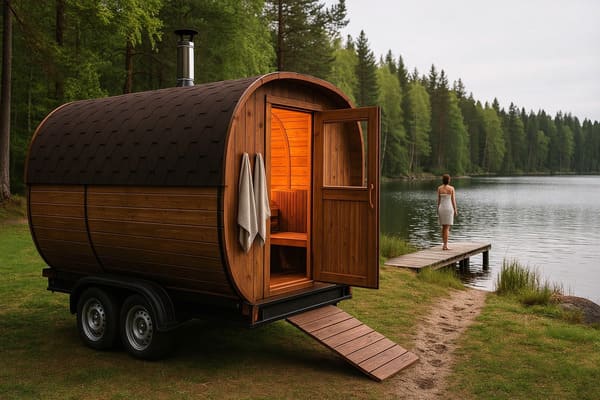
Across several countries, mobile saunas are appearing in public parks, on beaches, beside lakes, and at waterfront destinations. Instead of investing immediately in a large fixed facility, operators can bring sauna experiences directly to locations where people already gather.
For hotels, resorts, outdoor wellness operators, and entrepreneurs, this creates another way to introduce sauna services and explore new revenue opportunities.
Recent projects in Canada, the United States, the United Kingdom, Denmark, and Australia show how local authorities are working with private operators to introduce mobile sauna services in public spaces.
But starting a mobile sauna project involves more than purchasing a trailer and installing a heater. Location permissions, electrical supply, equipment selection, and operating arrangements all need to be considered.
1. Five Mobile Sauna Projects Worth Studying
These projects demonstrate different ways to combine public spaces with privately operated sauna services.
Canada: Nanaimo's Fully Electric Mobile Sauna
In November 2026, the City of Nanaimo, British Columbia, announced a mobile sauna pilot at Westwood Lake Park.
The project involves private operator Gatherwell under a Licence of Use agreement with the city.
Key details:
- Location: Westwood Lake Park, near First Beach.
- Operating period: November 2026 to June 30, 2027.
- Equipment: Fully electric mobile sauna.
- Operation: Private operator with online bookings.
- Business arrangement: Revenue sharing with the city.
- Community benefit: Free access passes for eligible LEAP programme participants.
The project allows the city to test whether privately operated wellness services can complement existing public recreation facilities.
Commercial takeaway: Electric mobile saunas can be suitable for public locations when the available power supply supports the selected heater and installation.
Source: City of Nanaimo – Electric Sauna Pilot
United States: Minneapolis Mobile Sauna Permits
The Minneapolis Park and Recreation Board allows mobile sauna operators to apply for permits at designated park locations.
Its published conditions include:
- A permit fee equal to 10% of total reservations.
- Designated locations including West Cedar Lake and Lake Nokomis.
- Public reservations rather than private-only operation.
- Operating hours between 6 a.m. and 10 p.m.
- Liability insurance and site maintenance requirements.
This model gives private businesses access to public locations while generating revenue for the park authority.
Commercial takeaway: Operators should understand permit fees, insurance, booking arrangements, and site responsibilities before investing in equipment.
Source: Minneapolis Park Board – Mobile Sauna Permits
United Kingdom: South Ayrshire's Beach Sauna Programme
South Ayrshire Council introduced a pilot allowing pop-up saunas at four beach-related locations, including Barassie, Troon, Ayr, and Maidens.
The programme allows up to four operators, each responsible for running the business, managing bookings and payments, and providing an attendant.
The council issues one-year operating licences.
Commercial takeaway: Beaches and coastal destinations can provide opportunities for seasonal sauna businesses, but operators must plan for weather, public access, staffing, and local permissions.
Source: South Ayrshire Council – Pop-Up Saunas
Denmark: Copenhagen's Seasonal Sauna Scheme
Copenhagen Municipality introduced a temporary sauna scheme for the 2026/2027 winter season.
The programme covers fixed and mobile sauna installations at selected public waterfront locations.
Important details include:
- Operating season: October 15, 2026 to March 31, 2027.
- Mobile sauna formats include sauna vans and trailers.
- Commercial mobile sauna seasonal fee: DKK 8,000 excluding VAT.
- Mobile units must be removed daily.
- Applications must specify location, dates, operating times, and equipment details.
Commercial takeaway: Transportability and compact dimensions are important when a mobile sauna must be installed and removed regularly.
Source: Copenhagen Municipality – Sauna Trial Scheme 2026/2027
Australia: Hobart's Sandy Bay Beach Sauna
In Tasmania, the City of Hobart invited private businesses to propose a mobile sauna at Long Beach in Sandy Bay.
In May 2026, the city's Planning Authority Committee approved a development application for a temporary mobile sauna.
The project was planned to operate during the cooler months, with the infrastructure removed outside the approved operating period.
Commercial takeaway: Beach-based sauna projects need to consider more than the cabin itself. Access, changing facilities, showers, public safety, and environmental impact can all affect the final configuration.
Source: City of Hobart – Sandy Bay Sauna
2. How Does a Mobile Sauna Business Make Money?
The examples above demonstrate several possible operating models.
| Business Model | How It Works | Suitable Locations |
|---|---|---|
| Revenue Sharing | Operator shares agreed revenue with the site owner | Public parks and waterfronts |
| Site Permit | Operator pays for permission to use a location | Beaches and municipal spaces |
| Seasonal Operation | Sauna operates during selected months | Coastal and winter destinations |
| Private Booking | Customers reserve individual sessions or private use | Events and wellness retreats |
| Resort Partnership | Operator works with an existing hospitality business | Hotels and glamping sites |
For example, a mobile sauna operator could work with a resort to provide bookable wellness sessions, or apply for a seasonal permit to operate near a public beach.
Before choosing a model, operators should confirm site availability, licensing conditions, utility access, insurance, and revenue arrangements.
A mobile format provides flexibility, but it does not guarantee lower investment or profitability.
3. What Equipment Does a Commercial Mobile Sauna Need?
A mobile sauna must balance heating performance, available space, weight, power supply, and maintenance.
Sauna Heater
The heater should be selected according to the internal room volume, insulation, glazing, and expected operating frequency.
For mobile projects, buyers should also consider:
- Available electrical supply.
- Heater dimensions and weight.
- Installation clearances.
- Daily operating hours.
- Maintenance and replacement parts.
Electric heaters can be suitable where the site has sufficient electrical capacity. Wood-burning models require additional consideration of chimney installation, fire protection, and local restrictions.
Control System
A compatible control system allows operators to manage temperature and heating periods.
For commercial applications, straightforward operation and reliable performance are particularly important.
Compact Sauna Room Layout
Space is limited in most mobile sauna projects. The design should provide:
- Comfortable seating.
- Appropriate bench dimensions.
- Safe heater clearances.
- Proper ventilation.
- Convenient door access.
- Maintenance access.
Maximum occupancy should be determined by the actual layout and applicable safety requirements.
Electrical and Safety Requirements
Before selecting an electric heater, confirm the available voltage, phase, and electrical capacity.
The project should also account for appropriate wiring, protective devices, grounding, and professional installation.
A generator should not automatically be assumed suitable for every electric sauna heater. Its output and compatibility must be checked.
See our Commercial Sauna Electrical Requirements Guide for more information.
Materials and Maintenance
Mobile saunas may operate in coastal, lakeside, or exposed outdoor environments.
Buyers should consider timber suitability, moisture protection, corrosion-resistant fittings, and surfaces that can withstand frequent cleaning.
Our Commercial Sauna Cleaning and Maintenance Guide explains how material and equipment choices affect long-term maintenance.
4. What Should You Check Before Starting a Mobile Sauna Project?
Before requesting equipment quotations, prepare the following information.
| Project Item | What to Confirm |
|---|---|
| Location | Park, beach, lake, resort, or private property |
| Permission | Site permit, commercial licence, or partnership |
| Operating period | Year-round, seasonal, or event-based |
| Sauna format | Trailer-mounted, van-based, or other mobile structure |
| Internal dimensions | Length, width, and height |
| Maximum capacity | Planned number of users |
| Heater | Electric or wood-burning |
| Power supply | Voltage, phase, and available capacity |
| Additional facilities | Changing area, showers, deck, or plunge pool |
| Transport | Trailer weight, towing capacity, and access |
| Maintenance | Cleaning, inspection, and replacement parts |
Consider the Total Project Cost
The sauna cabin is only one part of the investment.
Other expenses may include:
- Trailer purchase and modification.
- Sauna room construction.
- Heater and controller.
- Electrical installation.
- Site preparation and utilities.
- Permits and insurance.
- Transport and storage.
- Staffing and maintenance.
Operators should assess expected bookings, session capacity, seasonal demand, and operating expenses before making an investment decision.
5. Opportunities for Commercial Sauna Equipment Suppliers
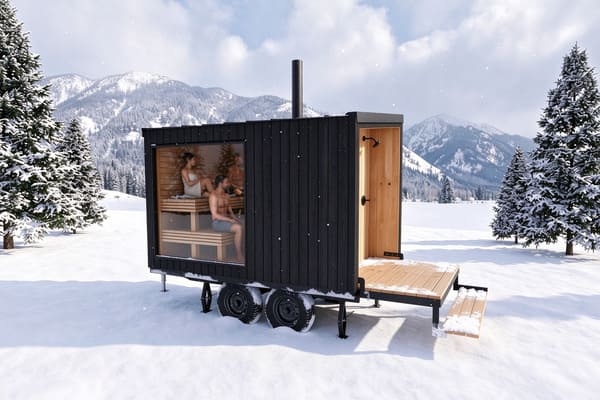
Mobile sauna projects introduce new potential customers beyond traditional hotels, spas, and gyms.
These include:
- Independent mobile sauna operators.
- Outdoor wellness businesses.
- Glamping and camping operators.
- Beach and park concessionaires.
- Resort developers.
- Sauna rental businesses.
- Commercial sauna distributors.
Their requirements may include compact heaters, compatible controllers, customized sauna rooms, suitable timber, and replacement components.
For equipment suppliers, the key is understanding that a trailer-based sauna has different space, weight, power, and installation constraints from a permanent commercial sauna.
A suitable equipment package must be selected around the actual project rather than simply reusing a standard configuration.
Conclusion
Mobile saunas are creating new ways to introduce commercial wellness services in public spaces and outdoor destinations.
From Nanaimo's revenue-sharing pilot to Minneapolis's permit system, Copenhagen's seasonal scheme, and Australia's beach-based operation, different locations are testing ways to combine public spaces with privately operated sauna services.
For entrepreneurs and commercial buyers, these projects offer practical examples of how to approach a mobile sauna business.
The key is to plan the entire operation: location permissions, customer capacity, transport, power supply, heater selection, safety, and maintenance.
A well-planned mobile sauna can become a distinctive addition to a resort, a seasonal beach attraction, or an independent outdoor wellness business.
Planning a Mobile Sauna Project?
ROC Sauna-Solution supplies sauna heaters, control systems, and customized sauna room solutions for commercial projects, distributors, installers, hotels, and outdoor wellness operators.
We can help with:
- Sauna heater and control system selection.
- Compact sauna room configurations.
- Customized benches and interior arrangements.
- Timber and material options.
- Equipment specifications for commercial applications.
Whether you are developing a mobile sauna trailer or adding a sauna to a resort, our team can help review suitable equipment and room configurations.
Share your project dimensions, expected capacity, power supply, and destination country with us to discuss a suitable equipment solution.
Frequently Asked Questions
1. What is a mobile sauna?
A mobile sauna is a sauna facility designed to be transported or installed temporarily at different locations. Common formats include trailer-mounted saunas and sauna vans.
2. Can a mobile sauna operate as a commercial business?
Yes. Some local authorities allow private operators to run mobile saunas in designated public spaces through permits, licences, or commercial agreements.
3. What equipment does a mobile sauna need?
A typical mobile sauna requires a cabin, suitable heater, compatible controller, benches, ventilation, lighting, and appropriate electrical or heating arrangements.
4. Is an electric sauna heater suitable for a mobile sauna trailer?
It can be suitable if the available power supply meets the heater's requirements. Voltage, phase, electrical capacity, and installation conditions must be confirmed first.
5. Is a mobile sauna cheaper than a permanent sauna?
Not necessarily. A mobile sauna may reduce permanent building work, but the trailer, cabin, equipment, transport, insurance, permits, and maintenance all contribute to the total investment.