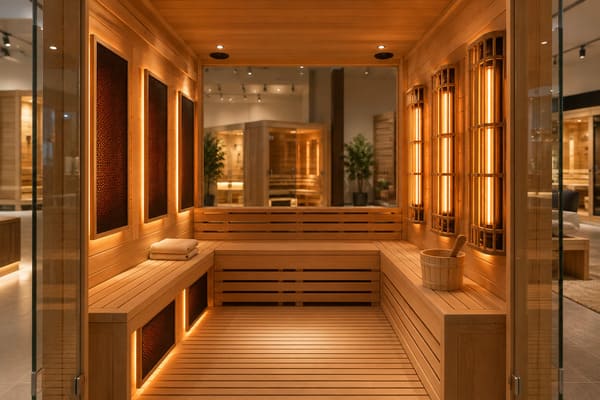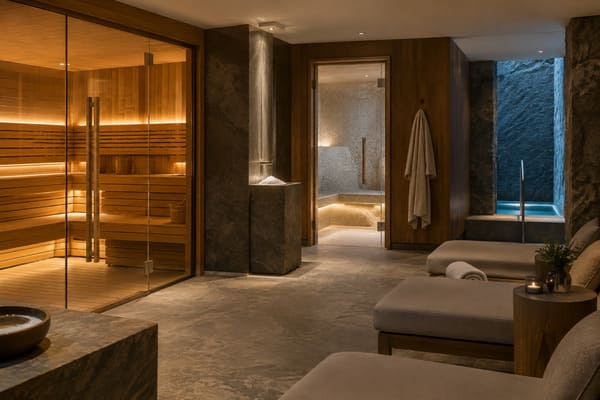
For a home sauna, cleaning is a weekend chore. For a hotel, spa, or gym, it's a daily operation with real labour and cost attached. A commercial sauna runs for hours a day, is used by dozens of guests, and lives in constant heat and moisture — the exact conditions that grow mould, breed bacteria, dull timber, and wear out equipment. So the honest question for any operator isn't just "how do I clean it?" but "how much cleaning does this thing actually need every day, and how do I keep that burden as low as possible?"
Here's the part most cleaning guides miss: a huge share of your daily maintenance workload is decided the moment you buy the sauna. Choose hard-to-clean, low-grade materials and you'll fight stains, odour, and premature replacement forever. Specify durable, easy-to-clean, commercial-grade equipment at the purchasing stage and you cut daily labour, downtime, and long-term cost for the entire life of the room. This guide covers both: the real cleaning routine a commercial sauna needs, and how to buy one that's easier to maintain in the first place.
Clean a commercial sauna on a frequency-based routine: air out and wipe benches daily, deep-clean weekly, inspect the heater and stones monthly, and service and treat timber annually. But the biggest lever on maintenance cost is the purchasing decision itself — specifying durable, easy-to-clean, commercial-grade timber, heaters, and stones dramatically reduces daily cleaning labour, hygiene problems, and premature replacement. Low maintenance is designed in at purchase, not scrubbed in later.
How Much Cleaning Does a Commercial Sauna Really Need?
Before you can reduce the workload, you need to see its true size. Here's what a commercial sauna actually demands.
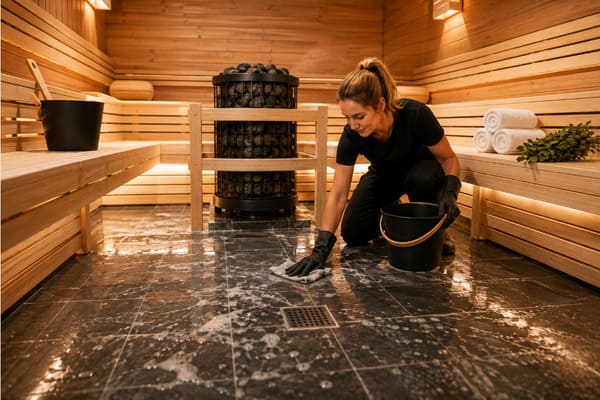
A commercial sauna needs daily, weekly, monthly, and annual maintenance. Daily: ventilate the room, wipe benches, backrests, and headrests, spot-clean the floor, and empty the water bucket. Weekly: deep-clean benches, floor, and walls with a sauna-safe cleaner. Monthly: inspect the heater, stones, and vents. Annually: professional service, timber treatment, and stone replacement. In a high-traffic facility, daily cleaning is not optional — skipping it causes mould, odour, and hygiene complaints within days.
| Frequency | Tasks | Who |
|---|---|---|
| Daily | Ventilate room; wipe benches, backrests, headrests; spot-clean floor; empty bucket | Housekeeping / spa staff |
| Weekly | Deep-clean benches, floor, walls; check stains; clean door glass | Housekeeping |
| Monthly | Inspect heater and elements for dust; check stones; clear vents; check sensor | Maintenance |
| Quarterly | Timber inspection; check bench fixings; assess stones | Maintenance |
| Annually | Professional service; treat/oil or sand timber; replace stones; check door seal | Contractor |
That daily line is the one that hurts. In a busy hotel or gym, someone is airing out and wiping down that sauna every single day — and that recurring labour, multiplied across a year, is a real operating cost. Public-facing wellness facilities are also increasingly held to documented hygiene standards, and guidance from bodies such as the World Health Organization on recreational water and wellness environments[^1] underlines why consistent cleaning of high-use, warm, moist spaces matters. The single most important daily habit is also the simplest: dry and ventilate the room after use, because trapped moisture causes almost every hygiene problem.[^2]
Why the Maintenance Burden Is Decided at Purchase
This is the point most operators realise too late — and it's the whole reason this guide exists.
The daily maintenance burden of a commercial sauna is largely determined by what you buy, not how hard you scrub. Low-grade timber stains, darkens, and holds odour, demanding constant attention and early replacement. Poorly designed heaters trap dust and are awkward to clean. Cheap stones crumble fast and choke airflow. Durable, commercial-grade equipment — proper sauna timber, well-designed heaters, and quality stones — resists staining, cleans quickly, and lasts years longer, cutting daily labour, downtime, and total cost of ownership over the sauna's life.
Think of it as total cost of ownership[^3], the way any professional procurement decision should. The purchase price is a fraction of what a commercial sauna costs you over 10 years — daily cleaning labour, consumables, downtime, and replacement parts dwarf it. A bench built from low-grade softwood might save a little upfront, then cost you in daily scrubbing, early darkening, and a full replacement in three years. A properly specified commercial bench wipes clean in seconds and lasts a decade. This is why smart operators treat "how easy is this to maintain?" as a purchasing specification, not an afterthought.
How to Buy a Low-Maintenance Commercial Sauna (Part by Part)
If maintenance is designed in at purchase, then here's what to actually specify — component by component — to keep daily upkeep low.
To minimise maintenance, specify: commercial-grade, stain-resistant timber and removable benches for easy cleaning and access; a heater designed to shed dust with accessible, replaceable elements; quality sauna stones that resist crumbling; wipe-clean backrests and headrests; and sauna-safe finishes. Each choice reduces daily cleaning time and extends replacement intervals. Buying these as a coordinated, commercial-grade package — rather than the cheapest of each — is what keeps a high-traffic sauna hygienic and low-cost over its life.
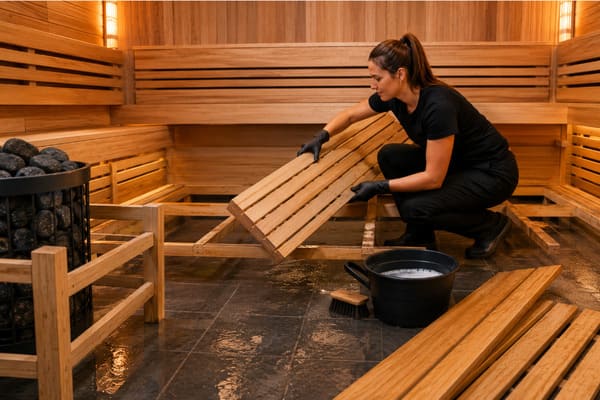
Timber and benches. This is your biggest maintenance surface. Specify durable, sauna-grade species — the naturally rot-resistant and dimensionally stable timbers used in professional saunas resist staining and odour far better than cheap softwood.[^4] Choose removable benches so staff can clean underneath (the classic mould trap) in seconds. We supply commercial-grade sauna timber, benches, and backrests in species selected for durability and easy upkeep.
The heater. A well-designed commercial sauna heater sheds dust rather than trapping it, and has accessible, replaceable elements so maintenance is quick. Dust baked onto hot elements is a leading cause of odour, so heater design directly affects your cleaning burden.
Stones. Sauna stones are consumable, but quality varies enormously. Good stones — dense, correctly graded peridotite or olivine diabase[^5] — resist the cracking and crumbling that chokes airflow and forces frequent replacement. Cheap stones can crumble within months in commercial use.
Controls and surfaces. A reliable control unit with humidity management helps keep the room drier between sessions, and wipe-clean backrests and headrests cut daily labour. Buying these as a coordinated commercial package — not the cheapest of each — is what actually keeps upkeep low.
How to Clean Sauna Wood the Right Way
However well you buy, timber still needs correct cleaning — and doing it wrong destroys even the best benches.
Clean sauna wood with mild, sauna-safe products and minimal water: a soft brush or cloth, warm water, and a dedicated sauna cleaner or a little mild soap, working along the grain and wiping dry. Never use bleach, harsh chemicals, or pressure washers — they strip and damage untreated softwood and leave residues that smell when heated. For stains, lightly sand along the grain with fine sandpaper. Treat interior timber only with sauna-specific products, never ordinary varnish, which traps heat and off-gasses.
The golden rule for sauna wood is gentle and dry. Benches are usually untreated softwood so they stay cool and absorb sweat — which is exactly why harsh chemicals and soaking are so damaging. Use a dedicated sauna cleaner, work along the grain, and wipe dry. For stains, fine sandpaper along the grain restores the surface without chemicals. If you treat timber, use only sauna-specific products such as paraffin oil made for saunas — never household varnish, which off-gasses dangerously when hot.[^6] We supply sauna-grade cleaning products and wood care alongside the timber itself.
Preventing Mould, Bacteria and Odour
This is where commercial saunas most often fail hygiene checks — and again, both buying and cleaning play a part.
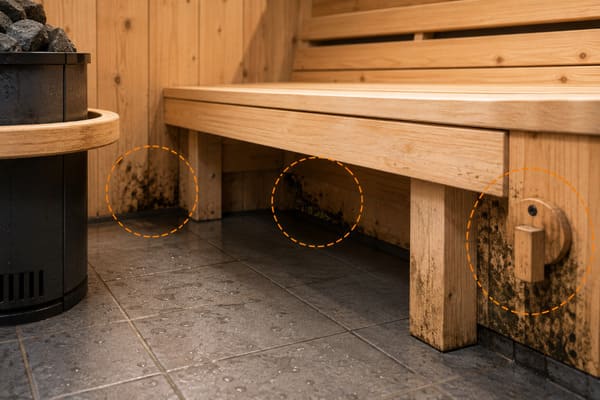
Prevent mould and bacteria by controlling moisture: ventilate after every session, dry benches and floor, keep humidity low between uses, and never close a damp sauna up overnight. Mould grows where moisture is trapped — under benches, in corners, behind fixtures — so removable benches and good ventilation make this far easier. Use a sauna-safe disinfectant on high-contact surfaces for public hygiene. If mould keeps returning despite cleaning, the cause is usually poor ventilation or a failed vapor barrier, not dirt.
Mould[^7] needs trapped moisture to grow, so drying and airflow are the whole strategy. After the last session, let the heater and ventilation dry the room fully. Inspect the hidden zones — and this is where removable benches you specified at purchase pay off, because staff can actually reach under them.
One distinction matters for operators: if a musty smell keeps returning despite proper cleaning, it's not a hygiene problem — it's usually inadequate ventilation or a failed vapor barrier in the wall structure, which cleaning can't fix. And a new burning or electrical smell is not a cleaning issue at all — it points to a fault such as dust on the elements or a failing component, covered in our sauna heater repair and troubleshooting guide. Knowing which smells are hygiene and which are faults saves a lot of wasted scrubbing.
Maintaining the Heater and Stones
The equipment needs care too — and monthly maintenance doubles as early fault detection.
Maintain the heater by keeping it free of dust (dust on hot elements causes odour and shortens their life), checking nothing has fallen against it, and inspecting elements and connections monthly. Sauna stones crack and crumble over time, packing tight and restricting the airflow the heater needs to avoid overheating. Rinse and restack them loosely, discard broken ones, and replace the full set at least yearly in heavy commercial use. Quality stones bought upfront crumble far more slowly, reducing this task.
Two jobs. First, the heater: keep it clear of dust and stray items, and use the monthly look-over as a mini-inspection. Second, the stones: they're consumable, and under heavy use they crumble and choke the airflow that keeps the heater from overheating — a common hidden cause of poor performance, and one where correct heater and stone practice[^8] matters. We supply genuine sauna stones and heater parts sized for commercial heaters. When maintenance reveals the heater itself is worn out — not just the stones — our sauna heater replacement and retrofit guide covers the next step.
When Maintenance Isn't Enough: Repair or Replace
Good buying and cleaning extend life, but nothing lasts forever — knowing when to stop cleaning and start replacing is part of running a sauna well.
Maintenance can't reverse everything. Replace timber when it's darkened, cracked, or holds a smell cleaning and sanding can't remove. Replace stones when crumbled. Repair or replace the heater when it underperforms or fails despite being clean. The rule: if a problem returns after proper cleaning and care, it's no longer a maintenance issue — it's a repair or replacement decision. Quality equipment bought upfront simply pushes that day much further into the future.
| Sign | Maintenance response | Beyond maintenance |
|---|---|---|
| Light stains, dull wood | Clean, sand, treat | — |
| Wood darkened, cracked, smells | — | Replace timber |
| Stones dusty or packed | Rinse, restack | — |
| Stones crumbled | — | Replace stones |
| Heater dusty, minor odour | Clean, clear | — |
| Heater underperforms when clean | — | Diagnose / replace |
When you cross that line, diagnosis is covered in the heater troubleshooting guide, and replacement in the heater replacement guide.
Building a Maintenance System — and Specifying for Low Upkeep
For a commercial operator, low maintenance comes from two things working together: the right system, and the right equipment.
Cut sauna maintenance cost with a two-part strategy. Operationally: assign daily/weekly tasks to housekeeping and monthly/annual tasks to maintenance, keep a checklist so nothing is skipped, and stock sauna-safe supplies. At purchase: specify durable, easy-to-clean, commercial-grade timber, heaters, and stones so the daily burden is low from day one. A documented routine also demonstrates hygiene diligence for guests and inspections — increasingly important for public wellness facilities.
The operators whose saunas stay pristine do both: a wall-mounted checklist with named responsibilities so cleaning happens even when short-staffed, and equipment specified for easy upkeep so that cleaning is quick. If you're buying or refurbishing, this is the moment to build low maintenance in — it's far cheaper than scrubbing it in later. Keeping sauna-safe cleaning products and consumables stocked removes the friction that causes tasks to be skipped.
Common Commercial Sauna Maintenance Mistakes
Most hygiene and wear problems trace back to the same avoidable errors — some operational, some made at purchase.
The most common mistakes are: buying low-grade materials that are hard to clean and quick to wear (a purchasing error that costs daily); using harsh chemicals or pressure washers that damage timber; closing a damp sauna without drying it; varnishing interior wood with unsuitable products; neglecting stones until airflow chokes; and having no fixed routine. Each shortens the sauna's life or creates a hygiene problem far costlier to fix than to prevent.
| # | Mistake | Consequence |
|---|---|---|
| 1 | Buying low-grade, hard-to-clean materials | High daily labour, early replacement |
| 2 | Harsh chemicals / pressure washing | Damaged, smelly timber |
| 3 | Closing a damp sauna without drying | Mould and odour |
| 4 | Wrong wood treatment (varnish) | Trapped heat, off-gassing |
| 5 | Neglecting stones | Choked airflow, poor heating |
| 6 | No fixed routine | Cleaning only after complaints |
How ROC Sauna-Solution Helps You Buy Low-Maintenance and Keep It That Way
The easiest commercial sauna to run is one specified for low upkeep from the start — and supplied by a manufacturer who understands commercial use.
ROC Sauna-Solution is a HARVIA-authorised agent and OEM/ODM manufacturer with 12+ years' experience, supplying commercial-grade sauna equipment built for heavy use and easy maintenance: durable, stain-resistant timber and removable benches, dust-shedding heaters with replaceable elements, quality sauna stones, controls, and sauna-safe care products — all CE, RoHS, and REACH compliant. We help hotels, spas, gyms and contractors specify low-maintenance saunas that cut daily labour and total cost of ownership, and we supply the consumables and replacement parts to keep them that way. Shipped worldwide.
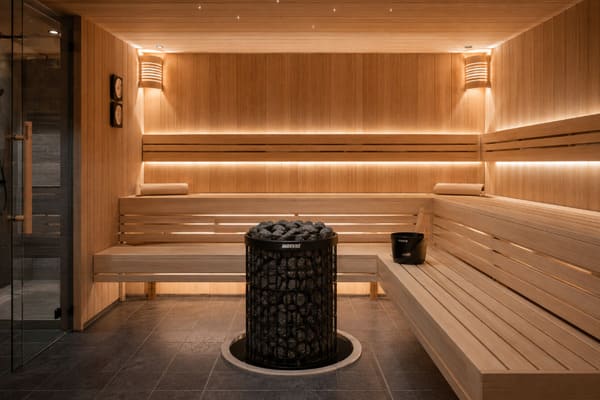
We work with SPA chains, hotel projects, gyms, contractors, and wholesalers across 50+ countries, with our own production lines and a QC team ensuring consistent batch quality. Whether you're specifying a new commercial sauna built for easy upkeep, or need durable timber, benches, stones, and cleaning products, commercial heaters, and control units to reduce maintenance and downtime, we help you keep the room hygienic, reliable, and earning — with stable bulk supply and reliable lead times.
Conclusion
A commercial sauna rewards two decisions made well. First, buy for low maintenance: durable, easy-to-clean, commercial-grade timber, heaters, and stones cut daily labour and last for years, so upkeep is low from day one. Second, run a real routine: daily airing and wiping, weekly deep cleans, monthly inspections, annual servicing — and dry the room religiously to keep mould away. Get both right and the sauna stays hygienic, reaches its full service life, and stays an asset instead of a liability. And when a problem returns despite proper care, know that it's a repair or replacement decision, not more scrubbing.
Specifying a new commercial sauna, or want to cut the maintenance cost of an existing one? Tell ROC Sauna-Solution about your project, and we'll recommend durable, low-maintenance, commercial-grade equipment — plus the care products and replacement parts to keep upkeep low. Start your enquiry here. You can also ask our AI assistant which products suit your facility.
Frequently Asked Questions
How often should you clean a commercial sauna? A commercial sauna needs a frequency-based routine: air it out and wipe benches, backrests, and the floor daily; deep-clean benches, floor, and walls weekly; inspect the heater, stones, and vents monthly; and carry out professional servicing, timber treatment, and stone replacement annually. High-traffic facilities may need more frequent deep cleaning. The most important daily habit is drying and ventilating the room after use to prevent mould and odour.
How do you clean sauna wood without damaging it? Use mild, sauna-safe products and minimal water: a soft brush or cloth, warm water, and a dedicated sauna cleaner or a little mild soap, working along the grain and wiping dry. Never use bleach, harsh chemicals, or pressure washers — they strip and damage untreated softwood and leave residues that smell when heated. For stains, lightly sand along the grain with fine sandpaper. Only treat interior timber with products made specifically for saunas.
Can you reduce sauna maintenance by choosing the right equipment? Yes — the daily maintenance burden is largely determined at purchase. Durable, stain-resistant, commercial-grade timber, removable benches, dust-shedding heaters with accessible elements, and quality stones all clean faster and last far longer than low-grade alternatives. Specifying easy-to-clean, commercial-grade equipment from the start cuts daily cleaning labour, hygiene problems, and premature replacement, lowering total cost of ownership over the sauna's life.
How do you prevent mould in a commercial sauna? Control moisture. Ventilate the room after every session, dry the benches and floor, keep humidity low between uses, and never close a damp sauna up overnight — mould needs trapped moisture to grow. Inspect hidden areas under benches and in corners, which is far easier with removable benches. If mould keeps returning despite proper cleaning, the cause is usually poor ventilation or a failed vapor barrier in the wall structure, which cleaning alone can't fix.
How often should sauna stones be replaced? Sauna stones are consumable — they crack and crumble under repeated heating and cooling, packing tight and restricting the airflow the heater needs. In heavy commercial use, inspect them regularly, discard broken ones, restack loosely, and replace the full set at least once a year. Quality stones bought upfront crumble far more slowly, reducing this task. Neglected stones are a common hidden cause of poor heating and heater overheating.
What's the best way to lower commercial sauna maintenance costs? Use a two-part strategy. At purchase, specify durable, easy-to-clean, commercial-grade timber, heaters, and stones so the daily burden is low from the start. Operationally, run a documented routine with assigned responsibilities and stocked sauna-safe supplies so tasks are never skipped. Together these cut daily labour, downtime, and premature replacement — the largest components of a sauna's total cost of ownership over its life.
References
[^1]: World Health Organization — Guidelines for safe recreational water environments. https://www.who.int/publications/i/item/9789241514826 [^2]: Wikipedia — Sauna. https://en.wikipedia.org/wiki/Sauna [^3]: Wikipedia — Total cost of ownership. https://en.wikipedia.org/wiki/Total_cost_of_ownership [^4]: Wikipedia — Wood preservation. https://en.wikipedia.org/wiki/Wood_preservation [^5]: Wikipedia — Sauna (heater and stones). https://en.wikipedia.org/wiki/Sauna#Heater_and_stones [^6]: U.S. EPA — Volatile Organic Compounds' Impact on Indoor Air Quality. https://www.epa.gov/indoor-air-quality-iaq/volatile-organic-compounds-impact-indoor-air-quality [^7]: Wikipedia — Indoor mold. https://en.wikipedia.org/wiki/Indoor_mold [^8]: Finnleo — Sauna Heaters (industry reference). https://www.finnleo.com/pages/sauna-heaters