
If you import sauna timber, benches, cladding, or complete sauna rooms into the EU, a proof-of-origin bar you may never have had to clear before is about to become mandatory. Under the EU Deforestation Regulation (EUDR) — formally Regulation (EU) 2023/1115 — wood and many wood products can only be placed on the EU market if you can prove they did not come from land deforested after 31 December 2020. The regulation's obligations begin for large and medium operators on 30 December 2026, and for micro and small operators on 30 June 2027.[^1] Crucially, EUDR replaces the older EU Timber Regulation (EUTR): the familiar "legal harvest" standard is being succeeded by a stricter, geolocation-backed, deforestation-free standard.[^2]
For buyers, this is not an abstract environmental policy. It is a documentation requirement that sits between your purchase order and your right to sell in the EU — and much of the paperwork has to come from your supplier, gathered before the goods ship. This guide explains, from the buyer's chair, which products may fall in scope, what traceability documents you'll need, and how to make sure your sauna orders don't get stranded at the border.
EUDR (Regulation EU 2023/1115) requires that timber and wood products placed on the EU market be deforestation-free (not from land deforested after 31 December 2020) and legally produced, backed by traceability data and a due diligence statement. It applies from 30 December 2026 for large and medium operators and 30 June 2027 for micro and small operators, and it replaces the older EU Timber Regulation. For sauna timber buyers, the practical documents needed generally include the tree species (including scientific name), country and region of harvest, geolocation coordinates of the harvest plots, evidence of legal production, and information supporting a due diligence statement. Whether a specific sauna product is in scope depends on its HS customs code, so confirm classification first. This article is general information, not legal advice — verify specifics against the official regulation and a qualified advisor.

First Things First: Is Your Sauna Product Even in Scope?
Before worrying about documents, you need to know whether EUDR applies to what you're buying — and the answer hinges on classification, not on the word "sauna."
Whether a sauna product falls under EUDR depends primarily on its HS customs code, because the regulation lists the commodities and derived products it covers by classification. Wood and many wood products are in scope, so raw sauna timber, cladding, and bench boards are likely captured, while a finished sauna room's status depends on how it and its components are classified. The single most useful first step for any buyer is to confirm the HS codes of what you import and check them against the regulation's product scope — don't assume, and don't rely on the marketing description. Classification determines your obligations, so it belongs at the very start of your EUDR planning.
This is why "is my sauna timber covered?" cannot be answered in the abstract. A bundle of aspen cladding, a set of bench boards, and a fully assembled cabin may be classified differently, and classification is what triggers (or doesn't trigger) the documentation duties. The practical move is straightforward:
- Identify the HS code of each product you import — raw timber, machined boards, assembled components, complete rooms.
- Check those codes against EUDR's product scope in the official regulation[^1] or with a customs/compliance advisor.
- Flag the grey areas — finished or composite products — for professional confirmation rather than guessing.
Getting classification right at the outset tells you exactly which of your orders need the full document trail described below, and which may not.
The Standard Just Got Higher: From "Legal" to "Deforestation-Free"
Buyers who dealt with the old EU Timber Regulation need to understand what has changed, because the old paperwork is no longer enough.
EUDR replaces the EU Timber Regulation (EUTR) and raises the bar in two ways. First, "legally harvested" is no longer sufficient on its own — products must also be deforestation-free, meaning not sourced from land deforested or degraded after 31 December 2020. Second, EUDR requires precise geolocation of the plots where the timber was harvested, enabling verification against deforestation data. For buyers, this means documentation you may have accepted under EUTR (a legality declaration) no longer covers you; you now also need origin geolocation and a deforestation-free basis. Treating EUDR as "EUTR with more forms" underestimates the change.
The shift is genuinely significant. Under EUTR, the guiding question was legality — was the wood harvested in line with the source country's laws? EUDR keeps that requirement but adds a second, harder one: a cut-off date of 31 December 2020, and geolocation of harvest plots so that a deforestation-free claim can actually be checked against satellite and mapping data.[^2] For a buyer, the consequence is concrete: the legality paperwork you filed away under the old regime is a starting point, not a finish line. You now need to be able to point to where the wood came from, precisely enough to verify it.
The Document Checklist: What EU Importers Need to Collect
This is the heart of the matter — and the part most buyers want on one page. Think of it as the evidence trail that has to exist before your goods can be lawfully placed on the market.
For in-scope sauna timber, EU importers generally need to be able to demonstrate: the tree species, including its scientific (Latin) name; the country of production and, where required, the region or specific area; geolocation coordinates of the plots where the timber was harvested; evidence that the timber was legally produced under the laws of the source country; supplier traceability information linking the finished goods back to that origin; and the information underpinning a due diligence statement submitted in the EU system. The exact data fields, formats, and any simplifications introduced by later amendments should be confirmed against the current official requirements, as EUDR was amended in December 2024 and December 2025.

Broken down, the trail a buyer should expect to assemble includes:
- Species and scientific name — not just "aspen" or "spruce," but the botanical identification EUDR relies on.
- Country of production — and, depending on requirements, the region or locality.
- Geolocation of harvest plots — coordinates precise enough to verify a deforestation-free claim.
- Evidence of legal production — that harvest complied with the laws of the source country.
- Supplier traceability records — the chain linking your delivered boards or cabin back to that harvest.
- Due diligence statement (DDS) — the declaration lodged in the EU information system, supported by the above.[^3]
Note two things. First, most of this originates upstream — with your supplier and their forest source — which is exactly why supplier selection and early document requests matter so much. Second, EUDR has already been amended twice (December 2024 and December 2025) to simplify administrative burden, so the precise fields and procedures should be checked against the current text rather than assumed from an earlier version.[^4]
Species, Origin, and the Sauna-Specific Complication
Sauna timber has a wrinkle that generic "wood importer" advice misses, and it's worth naming.
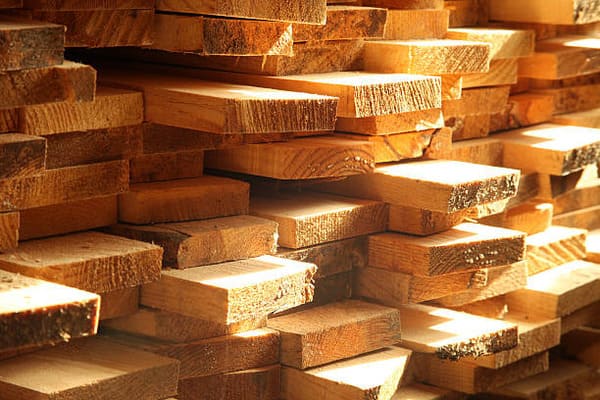
Sauna products often combine multiple wood species from potentially different origins — for example, one species for cladding, another for benches, another for framing — and may arrive as raw timber, machined boards, or complete rooms. Each species-and-origin combination is its own traceability case under EUDR, so a single sauna order can require several parallel document trails rather than one. Buyers should therefore ask suppliers to document species and origin per component, not per shipment, and should treat complete sauna rooms as an assembly whose wood elements each need substantiation. The more mixed the order, the more important a supplier who tracks this granularly becomes.
This is where a sauna order differs from, say, a container of a single dimension of lumber. A well-specified sauna can involve several woods chosen for their thermal and aesthetic properties — and if they come from different forests or countries, each needs its own species, origin, and geolocation record. Complete sauna rooms compound this: the cabin is an assembly, and its wooden elements each need a substantiated origin. The practical implication for buyers is to push traceability requests down to the component level, and to value suppliers who can answer at that resolution.
Timelines: Who Must Comply, and When
Dates and operator size interact here, so read them together rather than separately.
EUDR's application dates depend on operator size: large and medium operators must comply from 30 December 2026, while micro and small operators have until 30 June 2027 (with micro/small operators already covered by the old EU Timber Regulation also falling under the December 2026 date). Your own classification as an operator therefore affects your deadline, and it interacts with your role in placing goods on the market. Buyers should determine both whether their products are in scope (by HS code) and which operator category and date apply to them. Confirm your specific status against the official regulation, as size definitions and dates carry legal precision this summary cannot replace.
In short, two variables set your obligations: what you import (scope, by HS code) and who you are (operator size and role). A large importer bringing in sauna cabins faces the December 2026 date; a very small operator may have until June 2027 — unless they were already under EUTR. Because these categories have precise legal definitions, and because EUDR's dates have been adjusted before, the official EUR-Lex text[^1] and the European Commission's deforestation pages[^5] are the references to confirm your exact position.
What to Put in Your Purchase Agreements
The smartest buyers don't chase documents after the fact — they build the requirement into the deal.
Rather than requesting EUDR documentation after ordering, build it into your purchase agreements: specify that the supplier must provide species (scientific name), country and region of origin, geolocation of harvest plots, evidence of legal production, and the traceability records needed to support your due diligence statement, as a condition of the contract. Make compliant documentation a delivery requirement, not a favour, and clarify who bears the cost and risk if documentation is missing or inadequate. This protects you from goods that arrive unsellable and turns EUDR from a scramble into a routine part of sourcing. A supplier willing to commit to this contractually is signalling they can actually deliver it.
Contractual language does two jobs. It ensures the documents exist when you need them — before goods are placed on the market — and it allocates responsibility if they don't. Practically, that means writing the document list above into your terms, tying it to delivery and payment milestones, and being explicit about remedies if the paperwork falls short. Just as importantly, a supplier's willingness to sign up to these terms is a strong signal: those who can genuinely trace their timber will commit; those who can't will hedge. That signal alone makes EUDR readiness a useful lens for choosing who to buy from.
How ROC Sauna-Solution Supports EU Timber Buyers
Navigating EUDR is far easier with a supplier who already thinks in terms of species, origin, and documentation.
ROC Sauna-Solution is a HARVIA-authorised agent and OEM/ODM manufacturer with 12+ years' experience supplying sauna timber, benches, cladding, complete sauna rooms, and equipment to hotels, spas, gyms, resorts, wellness centres, and contractors, including buyers serving the EU market. We work with our customers to provide the product and sourcing information they need, and we understand that EU buyers increasingly require species, origin, and traceability documentation as part of responsible sourcing. As EUDR moves from headline to requirement, our aim is to be a supplier who engages seriously with your traceability and documentation questions rather than leaving them at your door.
We supply commercial projects worldwide, backed by our own production lines and QC team, with products carrying recognised certifications (CE, RoHS, REACH). For EU-bound buyers preparing for EUDR, that means working with a partner who treats your compliance as part of a long-term relationship — helping you assemble the origin and traceability picture your due diligence depends on.
Important Disclaimer
This article is general information for commercial buyers and is not legal, regulatory, or compliance advice. EUDR (Regulation EU 2023/1115) is detailed, has been amended (December 2024 and December 2025), and defines scope, operator categories, data requirements, and dates with legal precision. Whether a specific product is in scope, which documents are required, and which deadline applies must be verified against the official regulation text on EUR-Lex and, where appropriate, with a qualified legal or trade-compliance professional. ROC Sauna-Solution provides this overview to help buyers ask informed questions and does not warrant it as a substitute for professional advice.
Conclusion
For sauna timber buyers, EUDR turns "where did this wood come from?" from a nice-to-know into a condition of market access. By replacing the older Timber Regulation with a stricter, geolocation-backed, deforestation-free standard — live for large and medium operators from 30 December 2026 — it makes traceability documentation a genuine part of importing. The buyers who handle it well won't be the ones who scramble for paperwork after a container arrives. They'll be the ones who confirm their HS codes early, know exactly which documents they need, build those requirements into their purchase agreements, and choose suppliers who can trace timber to species, origin, and plot. Do that, and EUDR becomes a manageable step in sourcing rather than a barrier at the border.
Importing sauna timber or complete sauna rooms into the EU and want a supplier who takes traceability and documentation seriously? Talk to ROC Sauna-Solution about your EU-bound orders — timber, benches, cladding, complete rooms, and equipment, shipped worldwide with OEM/ODM options. Start your enquiry here. You can also ask our AI assistant your EUDR-related sourcing questions.
Frequently Asked Questions
What is EUDR and when does it apply to timber? EUDR is the EU Deforestation Regulation, formally Regulation (EU) 2023/1115, which requires that timber and many wood products placed on the EU market be deforestation-free (not from land deforested after 31 December 2020) and legally produced, supported by traceability data and a due diligence statement. It applies from 30 December 2026 for large and medium operators and 30 June 2027 for micro and small operators, and it replaces the older EU Timber Regulation. Because it has been amended and defines scope by product classification, buyers should confirm specifics against the official EUR-Lex text.
Are sauna timber and complete sauna rooms covered by EUDR? It depends on the HS customs code of each product, since EUDR defines its scope by classification rather than by end use. Wood and many wood products are covered, so raw sauna timber, cladding, and bench boards are likely in scope, while the status of a finished sauna room depends on how it and its components are classified. The most reliable first step is to confirm the HS codes of what you import and check them against the regulation's product scope, treating finished or composite products as items to verify with a customs or compliance professional rather than assuming.
What traceability documents do EU importers of sauna timber need? Generally, importers need to be able to demonstrate the tree species (including scientific name), the country and often region of production, geolocation coordinates of the harvest plots, evidence that the timber was legally produced, supplier traceability records linking goods back to their origin, and the information supporting a due diligence statement lodged in the EU system. Much of this originates upstream with the supplier and forest source, so it should be requested early. Exact data fields may have been simplified by later amendments and should be confirmed against the current official requirements.
How is EUDR different from the old EU Timber Regulation? EUDR replaces the EU Timber Regulation and raises the standard in two key ways. First, timber must not only be legally harvested but also deforestation-free, meaning not from land deforested or degraded after 31 December 2020. Second, EUDR requires precise geolocation of the plots where timber was harvested, so deforestation-free claims can be verified against mapping and satellite data. This means documentation that was sufficient under the old regime — such as a legality declaration alone — no longer covers you; you also need origin geolocation and a deforestation-free basis.
What should I include in purchase agreements for EUDR? Build the documentation requirement into the contract rather than requesting it afterward. Specify that the supplier must provide species with scientific name, country and region of origin, geolocation of harvest plots, evidence of legal production, and the traceability records needed to support your due diligence statement, as a condition of delivery. Clarify who bears the cost and risk if documentation is missing or inadequate. This protects you from goods arriving unsellable and turns EUDR into a routine part of sourcing, while a supplier's willingness to commit contractually signals they can genuinely deliver the traceability.
References
[^1]: EUR-Lex — Regulation (EU) 2023/1115 (EUDR). https://eur-lex.europa.eu/eli/reg/2023/1115/oj [^2]: Wikipedia — European Union Timber Regulation. https://en.wikipedia.org/wiki/European_Union_Timber_Regulation [^3]: Wikipedia — Due diligence. https://en.wikipedia.org/wiki/Due_diligence [^4]: Wikipedia — Deforestation. https://en.wikipedia.org/wiki/Deforestation [^5]: European Commission — Regulation on deforestation-free products (Environment). https://environment.ec.europa.eu/topics/forests/deforestation/regulation-deforestation-free-products_en