If you sign off the purchases for a commercial sauna, lighting is a decision that looks small on the quote and turns out to be anything but. Choose the wrong fixtures and, within months, you're paying to replace failed lights, dealing with a sauna that's out of service for repairs, and explaining to guests why a "premium" wellness space feels cheap. Choose the right ones and the lighting simply works — quietly, beautifully, for years — while protecting the atmosphere your guests are paying for. The difference is not luck; it comes down to a handful of buying decisions, and sauna lighting is one of the easiest places to either save money intelligently or waste it repeatedly.
Get sauna lighting right and it protects two things at once: your investment and the premium feel your guests are paying for. This article shows you how to spot lighting that will actually survive a sauna's heat and humidity, what to demand from your supplier before you sign off a purchase, which products genuinely solve the problem, and how to spend your lighting budget so it lasts for years instead of failing in months.
For commercial buyers, sauna lighting is a decision about total cost of ownership, not just upfront price. A sauna's extreme heat and humidity destroy ordinary fixtures, so cheap, non-rated lighting is a false economy — you pay again in replacements, maintenance, and downtime. The smart purchase is purpose-built, heat-resistant, sealed fixtures (such as a dedicated sauna light with a waterproof housing), paired with lamp shades that create the indirect, warm glow a premium space needs and match your interior. Keep heat-sensitive electronics out of the hot room, demand real temperature and IP ratings from suppliers rather than vague "heat-resistant" claims, and budget in tiers from basic lighting up to a full sensory package. Buy right once, and your lighting protects both your investment and your guest experience for years.
The Buyer's Trap: Why Cheap Sauna Lighting Costs More
The most expensive lighting decision a buyer can make is choosing the cheapest option, and it's worth understanding exactly why.
In a commercial sauna, ordinary lighting is a false economy because the environment destroys it. Temperatures climb toward 90°C or higher, every water-on-stones cycle spikes the humidity, and daily heating and cooling fatigues components — conditions that standard fixtures are simply not built to survive. A cheap light that fails in months forces you to pay for the replacement fixture, the labour to fit it, and the lost revenue while the sauna is out of service. Purpose-built, heat-resistant sauna lighting costs more upfront but far less over its life. For a buyer, the right question is not "what's the cheapest light?" but "what's the true cost of ownership over five years?"
For a decision-maker, the maths is what matters. A generic fixture might save you a modest sum on the purchase order, then cost you several times over in:
- Replacement fixtures — you buy the light twice, or three times.
- Labour and disruption — someone has to access and refit it, often behind benches or cladding.
- Downtime — a sauna out of service is an advertised amenity your guests can't use, in a space that's meant to generate revenue.
- Brand cost — flickering, failing, or corroded lighting quietly tells guests your "premium" space isn't.
Purpose-built sauna lighting carries a higher line-item price and a far lower lifetime cost. That's the trade every buyer should be evaluating.
What Makes a Sauna Light Actually Last
If you're going to demand one thing from a supplier, demand this — a fixture genuinely built for the environment.
A sauna light that lasts is purpose-engineered for heat and moisture: a fully sealed, waterproof housing that keeps humidity out, heat-resistant materials that tolerate the sauna's peak temperatures, and a frosted, glare-free cover that spreads a soft, even light instead of a harsh point of glare. This is exactly what a dedicated sauna light — as opposed to a repurposed "indoor" fixture — is designed to provide. When buying, look for these characteristics specifically, and treat a sealed housing and a stated heat rating as non-negotiable. A fixture built to these standards is the durable core of any commercial sauna lighting scheme.
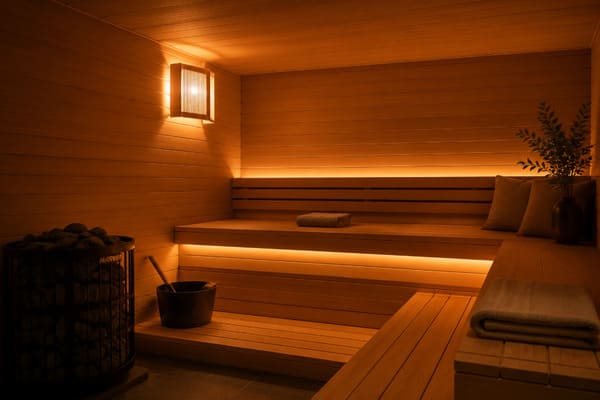
This is precisely the problem a product like ROC's sauna light is engineered to solve. Its fully sealed, waterproof housing and heat-resistant construction are built to withstand the extreme conditions inside any sauna room, while the frosted, glare-free cover distributes light evenly across the cabin — a soft, warm glow rather than a bright, clinical point of light. It mounts easily on walls or ceilings and suits both traditional Nordic timber interiors and modern installations. For a buyer, that combination — durability plus the right quality of light — is the specification to hold every supplier to.
Getting the Look Right: Lamp Shades and Indirect Glow
Durability keeps the light working; the look is what your guests actually experience — and it's where lamp shades earn their place.
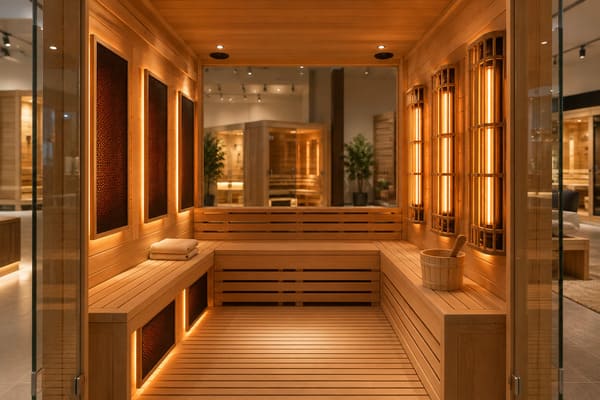
The best commercial sauna lighting is indirect and warm, never harsh or direct — and lamp shades are the simplest way to achieve this. A lamp shade mounted over the sauna light softens and diffuses the output into a gentle, ambient glow, protects against direct glare, and adds a design element that reinforces your interior. Shades come in finishes such as natural wood, which blends seamlessly into a classic timber sauna, and steel in black or silver, which suits a more modern, design-led space. For a buyer, choosing the shade is choosing the atmosphere and the aesthetic — a small item that has an outsized effect on how premium the sauna feels.
This is where a buyer shapes the guest experience directly. ROC's lamp shades turn a functional light into a design feature and let you match the sauna's mood to your brand:
- Wood lamp shade — blends into a classic Nordic timber interior, casting a warm, natural glow that feels organic and calm.
- Steel lamp shade in black — a crisp, contemporary look for modern, design-forward spaces.
- Steel lamp shade in silver — the same modern feel in a lighter, brighter finish.
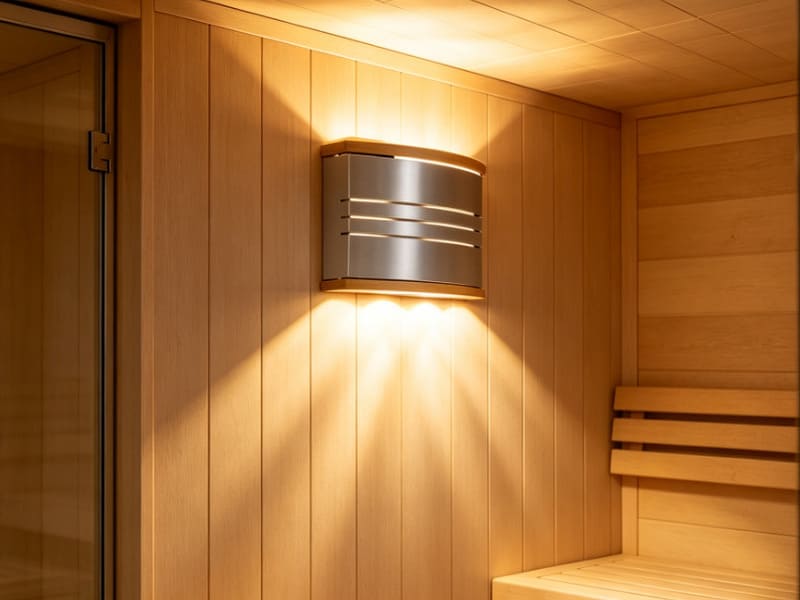
The engineering point matters too: a shade directs light indirectly, washing it across the timber rather than glaring into a bather's eyes. That's the difference between a space that feels like a spa and one that feels like a utility room. For the price of a small accessory, the right shade elevates the whole room — which is exactly why buyers aiming at a premium positioning should treat it as part of the core spec, not an afterthought.
The One Rule That Prevents Most Failures: Keep Electronics Out of the Heat
There's a single technical point every buyer should know, because it prevents the most common and costly failures — and it's a fair question to put to any supplier or installer.
The most heat-sensitive parts of any lighting or audio system are the electronics that power them — LED drivers, transformers, and amplifiers — not the fixtures themselves. These should be installed outside the hot sauna room, in an adjacent cooler space, with only the heat-rated fixtures inside the cabin. As a buyer, you don't need to design this, but you should confirm your supplier and installer plan it this way, because drivers placed inside the sauna fail fast and become a recurring cost. Asking "where do the drivers and electronics go?" is a simple question that separates a professional lighting solution from one that will keep failing.
You don't have to be an engineer to protect your investment — you just have to ask the right question. The durable fixtures (lights, heat-rated LED strips) belong inside the room; their vulnerable electronics belong outside it, connected by low-voltage wiring. This is a planning decision made alongside the room's insulation and vapor barrier and its clearance from the sauna heater, the hottest point in the room. As a decision-maker, confirming this is handled correctly is one of the highest-leverage things you can do to avoid repeat failures.
Sensory Upgrades: From Lighting to a Full Experience
Lighting is the entry point; the current premium trend is to treat light, sound, scent, and even accessories as one coordinated experience — and some of the easiest wins are simple products.
Beyond fixed lighting, commercial saunas increasingly add sensory elements that deepen the guest experience: illuminated accessories, heat-resistant audio, scent, and scene control that coordinates lighting and mood. Some of these are simple, high-impact purchases — an illuminated sauna bucket, for example, adds a warm, glowing focal point with no installation complexity. For buyers, these upgrades are a way to move a sauna from "a hot room" to a memorable, premium amenity, and they can be added in stages. The same durability rules apply: any powered item inside the sauna must be built for the heat and humidity.
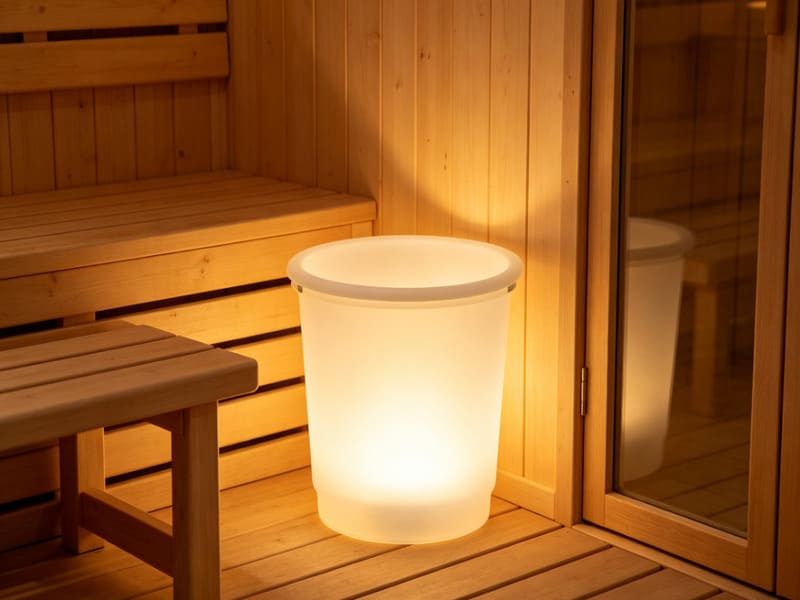
The appeal for a buyer is that not every sensory upgrade is a major project. ROC's illuminated bucket is a good example — a functional sauna bucket that glows with a soft, warm light, adding an instant ambient focal point to the room with no wiring or construction. It's the kind of low-effort, high-impression purchase that lifts the perceived quality of a space. From there, buyers aiming at the premium end can layer in heat-rated audio and scene control — the latter coordinated through the sauna's control system — building toward a full sensory package. The point is that you can start with lighting and a single accessory, and scale up as your positioning and budget allow.
Budgeting in Tiers: Match the Spend to Your Positioning
Not every sauna needs the full treatment, so a tiered view helps a buyer allocate budget sensibly.
Plan your sauna lighting and sensory budget in three tiers. Basic covers safe, durable, heat-rated lighting — the essential sauna light. Ambient adds lamp shades and indirect design lighting for a warm, premium glow. Full sensory adds illuminated accessories, heat-resistant audio, and scene control for a coordinated experience. Costs and perceived quality rise with each tier, so match the tier to your positioning: a gym recovery sauna may need only basic-to-ambient, while a luxury spa justifies the full package. Buying purpose-built products at every tier protects you from the replacement costs that make cheap lighting expensive.
| Tier | What to buy | Typical fit |
|---|---|---|
| Basic | A durable, heat-resistant sauna light | Budget or back-of-house saunas |
| Ambient | Sauna light + lamp shades (wood or steel) for indirect glow | Most hotels, gyms, mid-tier spas |
| Full sensory | Ambient + illuminated accessories + heat-rated audio + scene control | Luxury spas, resorts, premium wellness clubs |
The tier is a positioning decision as much as a cost one. A gym recovery sauna may be perfectly served by a good sauna light and a shade; a signature spa suite may justify the full sensory package as part of its premium proposition. What stays constant across every tier is that buying purpose-built, heat-rated products is what keeps the true cost down — cheap fixtures are the one line item that reliably costs more later.
Your Supplier Checklist: What to Demand Before You Buy
Bringing it together into what a buyer should actually ask — the questions that protect your budget.
Before purchasing commercial sauna lighting, confirm five things with your supplier: (1) Are the fixtures purpose-built for sauna use, with a sealed, waterproof housing? (2) What is the actual temperature and IP rating — real figures, not just the words "heat-resistant"? (3) Where do the drivers and electronics sit — inside or outside the hot room? (4) Can I get the light and matching lamp shades in a finish that suits my interior? (5) How easily can fixtures be accessed for inspection and replacement? Clear, specific answers indicate a supplier who understands commercial saunas; vague ones signal risk. These questions cost nothing and can save you from years of replacement costs.
Use these as your purchasing filter. A supplier who can answer them precisely — pointing to sealed housings, stated ratings, external electronics, matching finishes, and serviceable access — is one who understands what a commercial sauna actually needs. A supplier who deflects with marketing language is one whose lighting you'll likely be replacing. For a buyer, this five-question checklist is the single most efficient way to separate durable sauna lighting from a costly mistake.
How ROC Sauna-Solution Helps You Buy Right
Getting durable, on-brand lighting is far simpler when your supplier makes the products purpose-built for the job.
ROC Sauna-Solution is a HARVIA-authorised agent and OEM/ODM manufacturer with 12+ years' experience supplying commercial sauna equipment to hotels, resorts, spas, gyms, and wellness clubs. Our range includes purpose-built sauna lighting engineered for heat and humidity — a sealed, waterproof, heat-resistant sauna light, lamp shades in natural wood and steel (black and silver) for indirect, on-brand ambience, and illuminated accessories such as our glowing sauna bucket — alongside the heaters, control systems, timber, and benches that complete a commercial sauna. We help buyers specify lighting that lasts and looks the part, and back it with recognised certifications (CE, RoHS, REACH) and our own production and QC. Explore our full range to see how the right lighting protects both your investment and your guest experience.
Because we manufacture the fixtures for this exact environment, we can answer every question on the checklist above with specifics — sealed housings, heat-resistant materials, finishes to match your interior, and accessories that add instant ambience. Explore the sauna light, our wood and steel (black / silver) lamp shades, and the illuminated bucket in detail, or browse our full sauna accessories range — and we'll help you choose the right combination for your space and positioning.
Conclusion
For a commercial buyer, sauna lighting is a quiet test of good purchasing. The cheap option looks like a saving on the quote and becomes a recurring cost in replacements, labour, downtime, and a diminished guest experience. The right option — purpose-built, sealed, heat-resistant fixtures, paired with lamp shades that create a warm, indirect, on-brand glow, and scaled with sensory touches like an illuminated bucket — costs a little more upfront and pays you back for years. You don't need to design the system; you need to ask the right questions, demand real specifications, and buy products built for the environment. Do that, and your lighting will protect both your investment and the premium feel your guests are paying for — which is exactly what a good purchasing decision should do.
Specifying lighting for a commercial sauna and want fixtures built to last — a sealed, heat-resistant sauna light, lamp shades to match your interior, and easy sensory upgrades like an illuminated bucket? Explore ROC Sauna-Solution's full accessories range, or start your enquiry here and we'll help you buy right the first time. You can also ask our AI assistant your sauna lighting questions.
Frequently Asked Questions
What should I look for when buying commercial sauna lighting? Look for fixtures purpose-built for sauna conditions: a fully sealed, waterproof housing, heat-resistant materials rated above your sauna's peak temperature, and a frosted, glare-free cover that spreads soft, even light. Avoid generic "indoor" fixtures, which fail quickly in the heat and humidity. For a premium look, add lamp shades that diffuse the light into a warm, indirect glow and match your interior. Also confirm that heat-sensitive electronics like drivers sit outside the hot room, and that fixtures can be accessed for replacement. Buying purpose-built products costs more upfront but far less over the fixture's life.
Why is cheap sauna lighting a false economy? Because a sauna's extreme heat, humidity spikes, and constant heating-cooling cycles destroy ordinary fixtures within months. When a cheap light fails, you pay for the replacement fixture, the labour to fit it, and the lost revenue while the sauna is out of service — often several times over. You also risk a "premium" space looking cheap when lighting flickers or corrodes. Purpose-built, heat-resistant sauna lighting has a higher purchase price but a much lower total cost of ownership, which is the figure that actually matters to a commercial buyer evaluating the decision over several years.
What are sauna lamp shades for? A lamp shade mounts over the sauna light to diffuse and soften its output into a gentle, indirect glow, protect bathers from direct glare, and add a design element that reinforces your interior. Shades come in finishes such as natural wood, which blends into a classic timber sauna, and steel in black or silver for a modern, design-led space. For a buyer, the shade is a small, inexpensive item that has an outsized effect on how premium the sauna feels — turning a functional light into part of the atmosphere your guests are paying for.
Where should sauna light electronics be installed? The heat-sensitive electronics — LED drivers, transformers, and amplifiers — should be installed outside the hot sauna room, in an adjacent cooler space, with only the heat-rated fixtures inside the cabin, connected by low-voltage wiring. Drivers placed inside the sauna fail quickly and become a recurring cost. As a buyer you don't need to design this, but you should confirm your supplier and installer plan it this way. Asking "where do the drivers and electronics go?" is a simple question that separates a professional, durable lighting solution from one that will keep failing and costing you money.
Can I add sensory features to a commercial sauna gradually? Yes. Sauna lighting and sensory features can be added in tiers as your budget and positioning allow. Start with a durable, heat-resistant sauna light, add lamp shades for a warm ambient glow, and then layer in sensory upgrades such as an illuminated bucket, heat-resistant audio, and scene control. Some upgrades, like a glowing sauna bucket, add instant ambience with no installation. The key is that every powered item inside the sauna must be purpose-built for the heat and humidity, so whatever you add performs and lasts rather than becoming another replacement cost.
References
[^1]: Wikipedia — Sauna. https://en.wikipedia.org/wiki/Sauna [^2]: Wikipedia — IP Code (ingress protection ratings). https://en.wikipedia.org/wiki/IP_code [^3]: Wikipedia — LED lamp. https://en.wikipedia.org/wiki/LED_lamp [^4]: Wikipedia — Total cost of ownership. https://en.wikipedia.org/wiki/Total_cost_of_ownership [^5]: Wikipedia — Heat transfer. https://en.wikipedia.org/wiki/Heat_transfer