Why would a spa hotel need seven custom saunas instead of seven rooms built to the same specification?
At Kurro Nature Spa in eastern Estonia, that question leads to an interesting lesson for commercial sauna buyers.
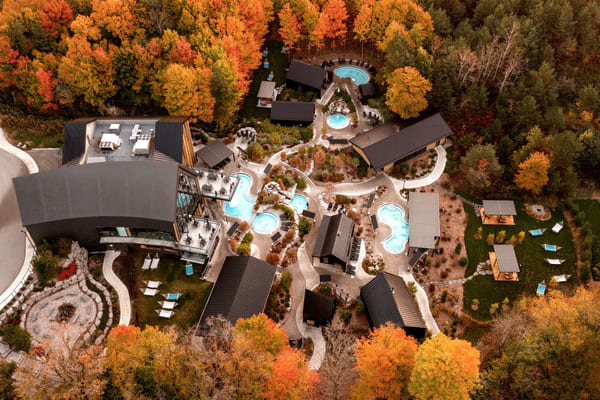
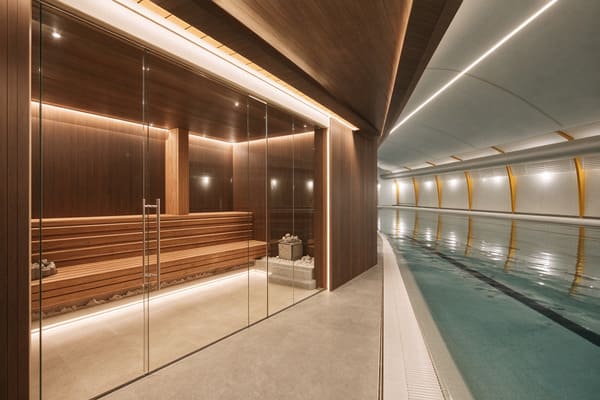
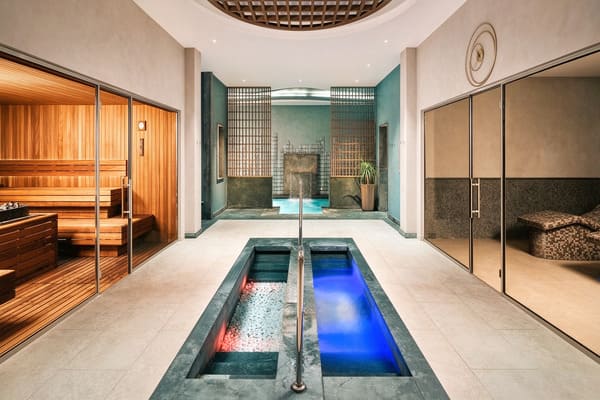
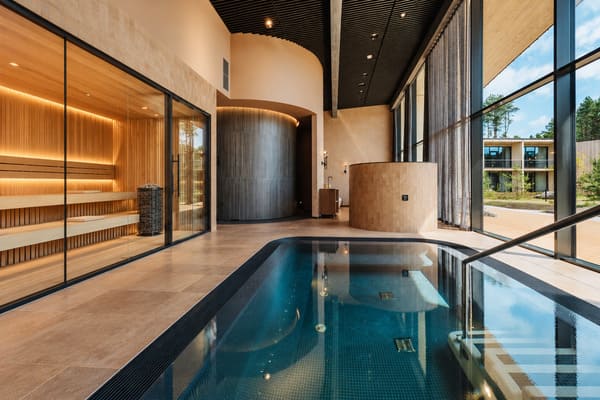
Opened in August 2026 near Lake Peipus, Kurro combines a roughly 1,500 m² spa area, a 25-metre swimming pool and seven distinctive sauna experiences. Estonian sauna manufacturer Auroom confirmed that it designed and manufactured seven bespoke saunas for the project.
But the real story is not the number seven.
Kurro serves guests who want very different things from a spa visit. Families want to spend time together, adults may prefer a quieter experience, and some guests choose private wellness facilities.
That raises a practical purchasing question: should every guest experience use the same sauna design and equipment?
Kurro suggests a more thoughtful approach.
1. Why Seven Custom Saunas Instead of One Standard Design?
Kurro's facilities are organized around different guest needs.
According to the hotel's published information, families can enjoy dedicated pools and relaxation facilities, while the quieter sauna area is reserved for guests aged 16 and above. The hotel also offers private wellness facilities in its top-floor suite.
This separation is more important than it first appears.
A social sauna used by groups has different operating priorities from a quiet relaxation sauna. A private suite sauna has different requirements again.
| Guest experience | What the project team should prioritize |
|---|---|
| Shared commercial sauna | Appropriate capacity, seating, guest circulation and operating durability |
| Quiet relaxation sauna | Comfortable seating, privacy, suitable heat experience and a calm environment |
| Private suite sauna | Space efficiency, guest controls, visual integration and maintenance access |
These are procurement considerations for comparable projects, not a claim that Kurro uses three identical technical categories.
For hotels and commercial spas, this means the purchasing brief should begin with the intended users—not with a supplier's list of available cabins.
Auroom's work at Kurro demonstrates how multiple custom sauna rooms can be developed around one overall hospitality concept while offering different experiences.
The lesson: customization is most valuable when it solves a genuine guest or operational requirement.
2. Custom-Built Sauna or Standard Cabin: Which Makes More Sense?
A custom built sauna is not automatically better than a standard sauna.
If a hotel needs several identical rooms with conventional dimensions, a suitable standard or modular design may offer simpler purchasing, predictable assembly and easier component standardization.
Customization becomes more valuable when the standard layout cannot meet the project's requirements.
Consider a spa operator planning a lounge-like sauna experience.
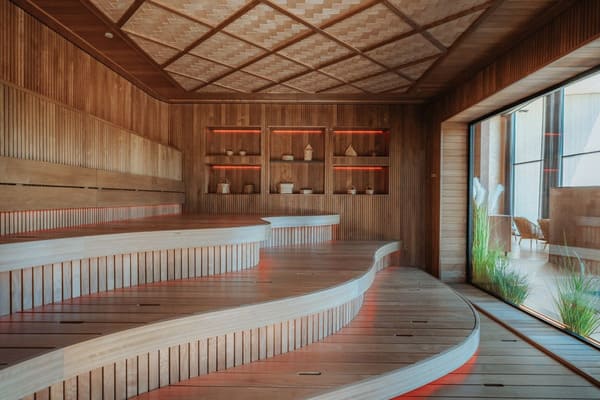
Conventional tiered benches may suit a traditional sauna session. But if the operator wants a more conversational atmosphere, the seating arrangement may need to change.
That affects more than appearance.
Custom bench geometry must still provide safe circulation, appropriate heights, sufficient heater clearance and practical cleaning access. Any unusual bench or furniture-style structure also needs materials and construction suitable for sauna temperatures.
Glass is another example.
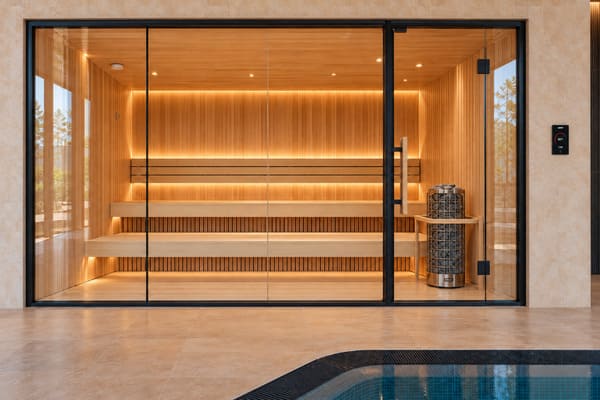
A larger glazed partition can create a more open interior or improve visual connections with adjacent spaces. But it also changes the room's heating calculation and may affect privacy.
A supplier therefore needs to consider the cabin structure, glazing, benches and heater specification together.
For hotel and spa buyers, a useful question is:
What problem does this customization solve—and what additional construction or maintenance requirements will it create?
That question helps distinguish worthwhile project customization from expensive decoration.
3. A Custom Sauna Still Needs the Right Heating System
After the room layout is established, equipment selection becomes the next major decision.
A custom indoor sauna may require a particular heater position, bench configuration or control arrangement. But the equipment must still satisfy the room's technical requirements.
For a commercial project, buyers should confirm four things before ordering:
Room volume and heat demand. Internal dimensions, glazing, insulation and other construction surfaces influence heater sizing.
Expected operating hours. A frequently used shared sauna may require equipment with different operating allowances from an occasionally used private room.
Controls and electrical compatibility. The heater, controller, sensors and any required power unit must be specified as one compatible system.
Future maintenance. Heating elements, stones and control components should remain accessible without dismantling permanent interior features.
For example, the ROC SAV floor-standing heater range offers 10.5–18 kW models for different room-volume requirements. Larger ROC SAV commercial heaters are available from 21–36 kW for suitably sized commercial rooms.
These are examples of equipment that other commercial projects may evaluate; they are not identified as equipment used at Kurro.
The appropriate model must be selected from the actual dimensions, operating conditions and destination requirements.
The same applies to the sauna control system. A separate controller, where required, is not an unnecessary add-on—it is part of the compatible heating installation.
This is where early coordination between the room supplier, equipment provider and local installer can prevent expensive changes later.
4. Why Quality Matters More Than the Initial Quote
Kurro's different sauna experiences illustrate why commercial projects should not evaluate customization by appearance alone.
A bespoke cabin can have beautiful timber, unusual seating and sophisticated lighting. But if its benches are difficult to clean, the heater cannot be serviced easily or replacement components are unavailable, the design may become expensive to operate.
For commercial buyers, quality means more than choosing premium-looking materials.
It includes:
- Timber and bench materials suitable for their intended use
- Accurate construction and installation details
- A correctly matched heater and control system
- Practical access for maintenance
- Reliable documentation, warranty terms and spare parts
Suppose two suppliers quote for the same custom sauna room.
One offers a lower initial price but provides limited information about the heater, controls and maintenance. The other provides a complete technical specification, clearly identified components and documented after-sales arrangements.
The cheaper proposal may still be suitable. However, the two quotations should not be considered equivalent until their scope and operating suitability are confirmed.
A lower purchase price is not necessarily a lower lifetime cost.
For a multi-room spa, this matters even more. Repeated maintenance problems across several cabins can affect operating costs and facility availability.
Our Commercial Sauna Cost Guide explains why the room, heater, controls, timber and installation scope should be compared together.
What Can Other Hotels and Spas Learn From Kurro?
Kurro's approach offers a useful purchasing principle: different guests may justify different sauna solutions, but every customized feature should serve a clear purpose.
Before requesting a custom sauna quotation, define:
- Who will use the sauna? Families, groups, adults seeking quiet or private-suite guests?
- What experience should the room deliver? Traditional bathing, conversation, relaxation or private use?
- What needs customization? Dimensions, benches, glazing, wood finishes or equipment integration?
- What can remain standardized? Compatible controls, service components and repeatable construction details can simplify future maintenance.
Not every element needs to be bespoke.
The smartest custom sauna projects combine the flexibility needed for the guest experience with the consistency needed for reliable commercial operation.
For buyers planning their own specifications, our OEM/ODM sauna manufacturing services explain the available approaches to customized sauna equipment, interiors and accessories.
Conclusion: Customization Should Improve the Experience, Not Just the Appearance
Kurro Nature Spa shows that custom sauna development can be about much more than distinctive interiors.
Its seven bespoke sauna experiences sit within a broader hospitality concept that accommodates different guest preferences, from family-oriented facilities to quieter adult areas.
For hotel developers and spa procurement teams, the lesson is to begin with the guest and operating requirements, then develop the room and equipment specification around them.
The most successful custom sauna is not necessarily the most elaborate or expensive. It is one that delivers the intended experience while remaining safe, reliable and practical to maintain.
Planning a Custom Sauna Project?
At Sauna-Solution, we supply genuine Harvia equipment, our own ROC sauna heaters, control systems, timber interiors and related accessories for commercial and custom projects.
Whether you are developing a hotel spa, upgrading existing sauna rooms or sourcing equipment for a custom-built facility, share your drawings, project location, dimensions and expected usage with our team.
We can help evaluate suitable equipment, compatible controls and a clearly defined supply package for your project.
Contact Sauna-Solution for a Custom Project Consultation
Frequently Asked Questions
1. When is a custom sauna worth the additional cost?
A custom sauna is worth evaluating when standard cabin dimensions or layouts cannot meet the project's seating, access, privacy or architectural requirements. Buyers should compare the practical benefit of customization against its additional construction, installation and maintenance costs. If a standard design meets the same requirements, customization may not be necessary.
2. Can hotels use different sauna heaters across multiple custom rooms?
Yes. Different rooms may require different heater capacities or configurations because their volumes, construction and operating schedules vary. Each heater must be sized and approved for its specific installation. Standardizing compatible control families or service components where practical can simplify staff training and maintenance.
3. What should a supplier include in a custom sauna quotation?
Request drawings with internal and external dimensions, a material schedule, bench and glazing details, exact heater and controller models, included stones and accessories, electrical requirements, installation exclusions, warranty terms and spare-part information. Without these details, two custom sauna quotations may describe significantly different supply packages.