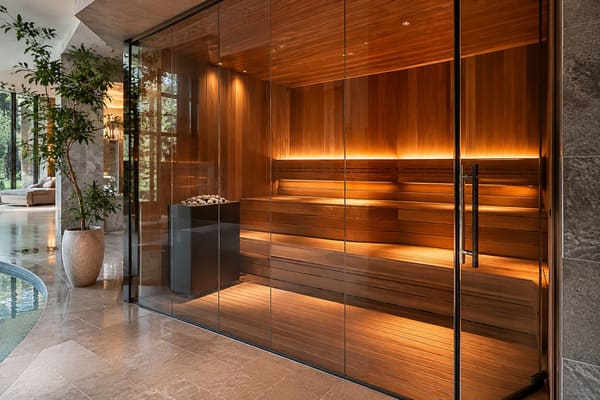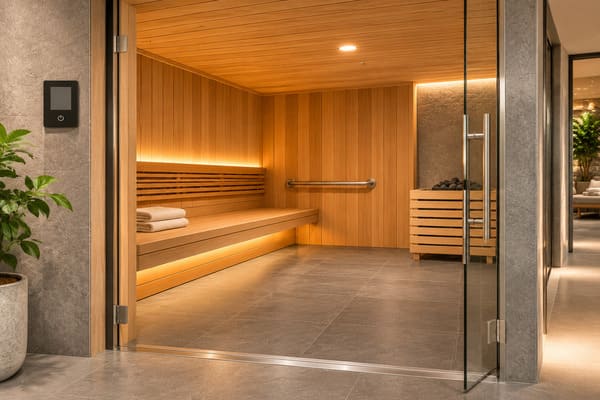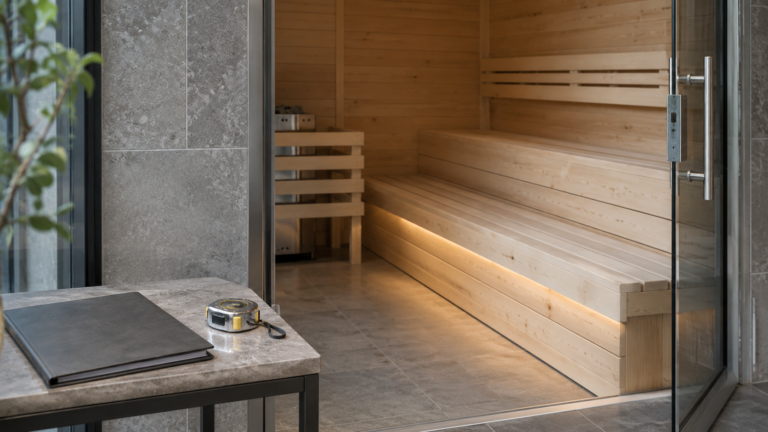
What if a fitness club could offer both traditional sauna heat and infrared warmth without building two separate sauna rooms?
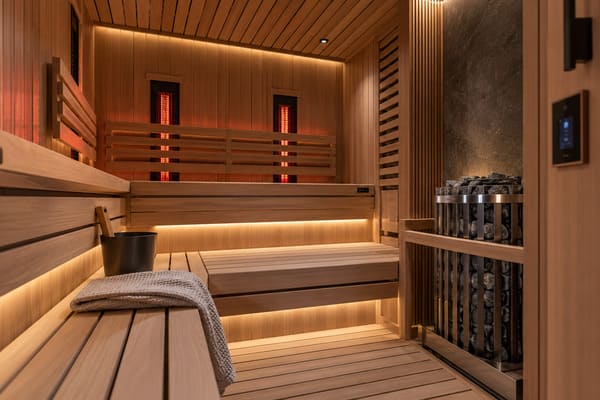
That is the idea behind a hybrid sauna—a cabin combining a traditional stone heater with infrared heating technology.
For gym owners, the concept sounds appealing. One room could provide different heat experiences while potentially reducing the space needed for separate facilities.
But there is a catch: installing infrared panels beside a conventional sauna heater does not automatically create a safe or commercially suitable hybrid system.
The planned Sweat and Tonic Yorkville location in Toronto offers a timely example of why this distinction matters.
1. Why Sweat and Tonic Is Choosing Dual Heating
Sweat and Tonic announced that its third Toronto location, at 11 Yorkville Avenue, is scheduled to open on November 21, 2026.
The new 18,000-square-foot fitness and wellness club will offer approximately 300 classes per week, covering strength training, cycling, yoga, Pilates and Lagree-based workouts.
One particularly interesting detail is its recovery facilities.
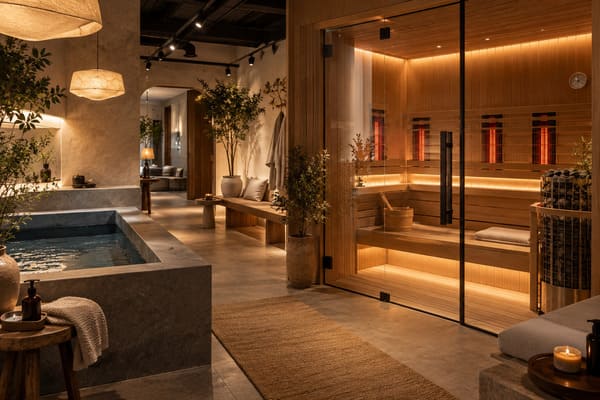
According to the company's official Yorkville opening announcement, both men's and women's changing rooms will feature contrast therapy suites with custom-built dual infrared and electric high-heat saunas, alongside cold plunge tubs.
These facilities are planned as complimentary amenities for eligible guests rather than separately charged recovery sessions.
Sweat and Tonic already operates combined infrared and traditional electric sauna experiences at its Tonic Spa location, making the Yorkville concept a continuation of its existing wellness offering.
What Makes This Commercially Interesting?
The question is not simply why a gym would offer two types of heat.
It is why an operator might choose to combine them within one sauna room.
A hybrid sauna may allow guests to select between different heating experiences without requiring separate cabins for each technology.
For a commercial facility, that could simplify the spatial arrangement. However, it also concentrates two heating systems inside one enclosure.
That decision creates technical questions that ordinary single-heater saunas do not face.
The Yorkville project demonstrates growing interest in multi-mode recovery facilities, but its final equipment specifications and operating results have not yet been published.
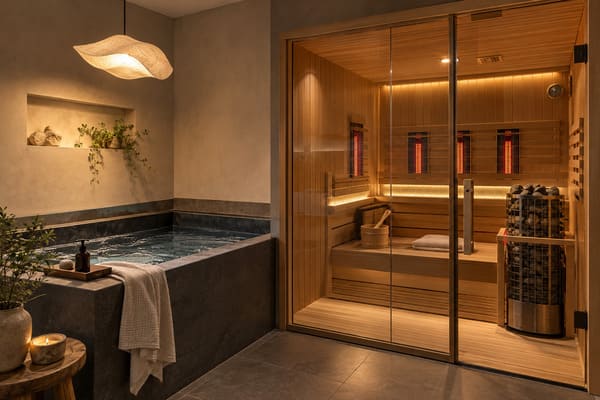
2. The Challenge of Combining Two Heating Systems
A traditional sauna heater and an infrared panel do not heat the room in the same way.
A traditional electric heater warms the sauna through heated stones and the surrounding air. Infrared emitters transfer radiant energy toward the occupants and nearby surfaces.
In a hybrid sauna, both technologies must operate within the same physical environment.
That introduces one particularly important question:
Can the infrared components tolerate the temperatures produced by the traditional heater?
Not Every Infrared Panel Is Suitable for a Hot Sauna
A conventional infrared cabin may operate at lower air temperatures than a traditional Finnish sauna.
Infrared panels designed only for these lower-temperature environments should not automatically be installed in a room containing a high-temperature electric sauna heater.
Buyers must confirm the emitter's permitted ambient temperature, installation clearances, electrical protection and operating limits.
For example, Harvia offers Vitae infrared radiators designed for hybrid saunas. The manufacturer explicitly identifies certain versions as suitable for installation in traditional Finnish sauna environments.
This is an important distinction.
A product being described as an infrared heater does not establish that it can safely operate inside every traditional sauna.
Panel placement also matters. Infrared emitters may be integrated into backrests or surrounding wall structures, but the installation must follow the exact manufacturer's instructions, including separation from the traditional heater and protection against water exposure.
Can Both Heating Systems Operate at the Same Time?
This is another detail that commercial buyers should never assume.
Harvia's hybrid sauna guidance describes infrared panels and traditional electric heaters controlled separately.
However, separate controls do not automatically mean simultaneous operation is approved.
Some hybrid systems explicitly prevent both heating technologies from operating together.
For example, the Almost Heaven IR Hybrid Sauna installation manual specifies that its infrared panels and traditional sauna heater cannot operate simultaneously. That particular system is also identified as non-commercial.
This does not mean every hybrid sauna follows the same rule. It demonstrates why the exact model and control arrangement matter.
Before purchasing, determine whether the proposed system supports:
- Traditional heating only
- Infrared heating only
- Simultaneous operation, if expressly approved
- Automatic switching or temperature-based restrictions
A dual heat sauna should be treated as an engineered heating system—not simply two products installed in one cabin.
3. What Should a Commercial Buyer Specify?
Suppose a gym developer decides that a hybrid sauna is suitable for its new recovery area.
The next step should not be to request prices for a traditional heater and several infrared panels independently.
Instead, the buyer should request a complete equipment specification that addresses how the systems will work together.
Start with the Traditional Heater
The stone heater must be appropriately sized for the room's volume and construction.
Glazing, uninsulated surfaces and ventilation can affect the calculated heating requirement. Harvia's official heater-sizing guidance explains how these factors influence model selection.
For commercial projects, the chosen heater must also be suitable for the intended operating schedule.
Sauna-Solution offers Harvia and ROC electric sauna heaters in different configurations. The exact model should be selected according to the completed room specification.
Then Check Infrared Compatibility
Infrared equipment requires its own technical review.
For example, ROC infrared heating panels include carbon-crystal panels, infrared emitters and foot-warming components for infrared cabins and related applications.
However, their suitability for installation in a high-temperature hybrid sauna must be confirmed for the exact model and operating conditions.
A panel suitable for a dedicated infrared room should not be assumed suitable for every traditional sauna environment.
Finally, Confirm the Complete Control Arrangement
The controls are where the two technologies must be coordinated.
A commercial hybrid sauna specification should explain:
| Component | What Must Be Confirmed |
|---|---|
| Traditional sauna heater | Rated room volume, commercial suitability and installation clearances |
| Infrared emitters | Temperature rating, placement, protection and total output |
| Control system | Approved operating modes, temperature limits and safety interlocks |
| Electrical supply | Connected loads, protection, circuits and local electrical requirements |
| Room construction | Insulation, ventilation, benches and access for servicing |
| Documentation | Installation manuals, model-specific compliance and warranty terms |
A high-power sauna heater may require a separate power unit, while infrared emitters may need their own dedicated controller.
Our sauna controller range includes options for traditional electric heaters and infrared systems. Compatibility between the two must be verified rather than assumed.
This distinction matters when comparing supplier quotations.
One quotation may cover the traditional heater alone. Another may include infrared panels but omit the required controls, sensors or electrical components.
Before comparing prices, make sure every supplier is quoting the same complete, approved system.
4. When Is a Hybrid Sauna Worth the Investment?
A hybrid sauna may appear to offer a straightforward space-saving advantage: two heating experiences in one room.
But is it always better than installing two separate saunas?
Not necessarily.
One Hybrid Room vs. Two Separate Rooms
| Purchasing consideration | One hybrid sauna | Two separate saunas |
|---|---|---|
| Space | One combined enclosure | Two independent enclosures |
| Guest choice | Different modes within the same room | Different experiences in separate rooms |
| Simultaneous bookings | One group normally occupies the room at a time | Independent bookings may be possible |
| Controls | Requires an approved dual-system arrangement | Each room has its own heating and control setup |
| Maintenance | Two technologies share one cabin | Equipment and servicing can be separated |
| Investment | May reduce duplicated cabin construction | Greater initial spatial and construction requirements |
The biggest limitation of a single hybrid room is easy to overlook.
Two heating systems do not necessarily mean twice the guest capacity.
If one group occupies the hybrid sauna, another group cannot independently use the same room for a different heat experience.
For a smaller gym, this may be acceptable. For a busy wellness centre running separate booking schedules, two independent rooms may be more useful.
There is also the issue of maintenance.
If the shared cabin is closed for repairs, both experiences may become unavailable even when only one heating system needs attention.
That makes serviceability particularly important.
Quality Becomes Part of the Investment Decision
A lower-priced hybrid package may look attractive, especially when it promises two experiences for less than the cost of building two rooms.
But commercial buyers should look beyond the initial quotation.
A system with undocumented control compatibility, unsuitable infrared components or limited spare-part support can create problems after installation.
On the other hand, an appropriately specified hybrid sauna may offer useful flexibility without requiring two separate cabins.
The better investment is the option that matches the expected occupancy, operating model and long-term maintenance requirements.
Quality is not simply paying more for equipment. It is buying a system that can safely and reliably deliver the experience the business intends to offer.
For hotels, fitness chains and wellness developers, that matters more than an attractive purchase price alone.
Conclusion: A Hybrid Sauna Is a System, Not a Shortcut
Sweat and Tonic's upcoming Yorkville location illustrates how commercial fitness operators are exploring different sauna experiences within their recovery facilities.
But the purchasing lesson is not simply that combining traditional and infrared heating saves space.
The real value of a hybrid sauna depends on whether the two technologies are correctly integrated and whether the resulting room suits the facility's operating needs.
Before investing, commercial buyers should confirm the permitted heating modes, infrared panel temperature ratings, control compatibility, electrical requirements and maintenance arrangements.
A hybrid sauna is worth considering when its flexibility serves a real operational purpose—not merely because two heating technologies sound more impressive than one.
Planning a Commercial Hybrid Sauna Project?
At Sauna-Solution, we supply genuine Harvia sauna equipment, ROC infrared heating panels, control systems and custom sauna interiors for commercial applications.
If you are considering a hybrid sauna, share your room dimensions, project location, expected usage and desired heating modes with our team.
We can help review suitable equipment options and identify which components and compatibility requirements need confirmation before a complete supply quotation is prepared.
Contact Sauna-Solution for a Project Consultation
Frequently Asked Questions
1. Can I add infrared panels to an existing commercial sauna?
Possibly, but not without a technical assessment. The infrared panels must be rated for the temperatures and conditions inside the existing sauna. Their installation positions, clearances, electrical requirements and controls must also be compatible with the traditional heater. An existing sauna should not be converted using ordinary infrared-cabin panels without manufacturer approval.
2. Do hybrid saunas need separate controllers?
It depends on the system. Some hybrid saunas use separate controls for traditional and infrared heating, while others may use an approved integrated controller. Buyers must confirm the exact operating modes, temperature limits, interlocks and required safety protections. Two independent controllers do not automatically make simultaneous operation permissible.
3. Is a hybrid sauna more cost-effective than two separate saunas?
It can reduce duplicated room construction and make better use of limited space. However, one hybrid cabin usually cannot provide two independently bookable experiences at the same time. Its value depends on expected occupancy, equipment costs, control-system compatibility, operating schedules and maintenance requirements. For high-demand facilities, separate rooms may offer greater operational flexibility.