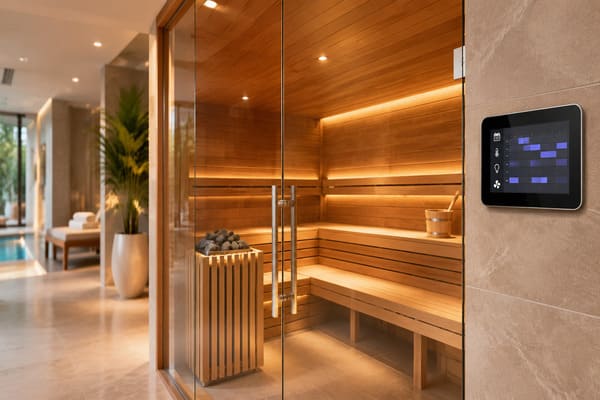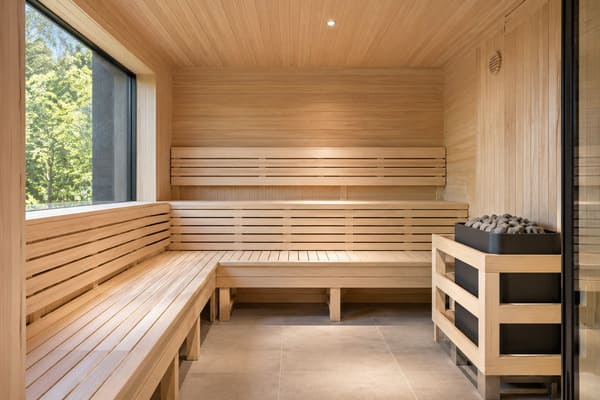
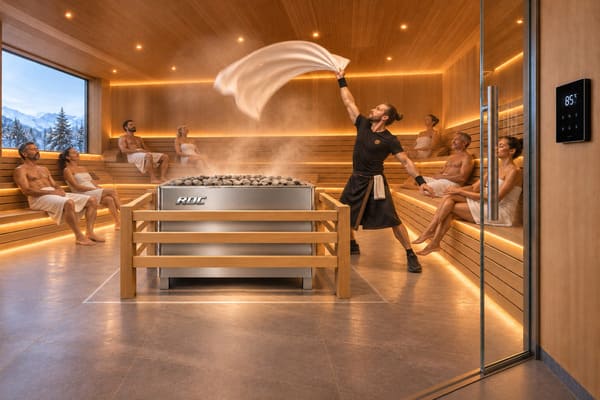
Aufguss puts different demands on a sauna heater. During a guided session, a sauna master repeatedly pours water onto heated stones and uses a towel or fan to circulate hot, fragrant air around the room.
For hotels, spas and wellness operators, this creates a different operating environment. The heater must support repeated water application, maintain suitable stone temperatures and remain practical to operate and maintain throughout the day.
Not every standard sauna heater is designed for this type of application. A heater that works well in a private sauna may not be the best choice for a commercial facility running several guided sessions daily.
For commercial buyers, choosing an Aufguss sauna heater is not simply about selecting a higher kW rating. It is about matching the heater construction, stone arrangement and heating elements to the actual operating requirements.
This article focuses on five practical purchasing considerations:
- Why are some heaters more suitable for commercial Aufguss than others?
- How does sauna stone capacity affect performance?
- What should buyers check about heating elements?
- Should you choose a floor-standing or tower-style heater?
- What should hotels and spas confirm before purchasing?
1. Choosing the Right Sauna Heater for Frequent Aufguss
A commercial Aufguss heater needs to support frequent water application, repeated heating cycles and longer daily operating hours.
That is why the first purchasing question should not be which heater looks better. It should be whether the heater is suitable for the facility's actual operating schedule.
For commercial applications, buyers should consider:
- Heating capacity and effective sauna room volume.
- Expected daily operating hours.
- Number of Aufguss sessions.
- Time between sessions.
- Stone capacity and arrangement.
- Heating element construction and maintenance access.
A higher power rating alone does not guarantee better steam performance. The heater must be correctly matched to the room and its expected workload.
Which Type of Heater Should Commercial Buyers Consider?
For larger hotels, spas and public sauna facilities, a commercial floor-standing heater is often a practical starting point.
These heaters are available in higher power ratings and are designed for larger sauna rooms. They can also offer more convenient maintenance access than some compact residential models.
For example, the ROC SAV Commercial Floor-Standing Sauna Heater covers models from 21 kW to 36 kW, with published room-volume recommendations from 19 to 70 m³.
For projects requiring a tower-style heater with a substantial stone load, the Harvia Cilindro Pro is another option worth considering.
The important distinction is that these heaters serve different configurations. A floor-standing commercial heater is a sensible starting point for larger, high-use rooms, while a tower heater may be preferable when the project specifically requires a large exposed stone surface and a particular steam experience.
Before recommending either type, the room volume, operating frequency, installation conditions and manufacturer's approved application should be checked.
2. Sauna Stone Capacity: What Matters Beyond the Kilograms?
Sauna stones play an important role in an Aufguss session.
When water is poured onto heated stones, it evaporates and produces Löyly. The stones also store heat and help maintain the thermal conditions needed for repeated steam sessions.
For commercial applications, stone capacity is an important specification, but it should not be considered in isolation.
Buyers should also look at:
- How the stones are arranged.
- How much of the stone surface is exposed.
- Whether airflow through the heater is sufficient.
- Whether the heating system can maintain the required temperature.
- Whether the stone chamber is easy to inspect and maintain.
A larger stone load can provide more thermal mass, but it does not automatically guarantee faster heat recovery. Actual performance also depends on heater power, element arrangement and operating conditions.
What Should Buyers Ask?
Instead of only asking how many kilograms of stones a heater can hold, commercial buyers should confirm:
- What stone size does the manufacturer recommend?
- How should the stones be loaded?
- Is the heater designed for repeated water application?
- How frequently should stones be inspected?
- Are replacement stones readily available?
For a more detailed explanation of how stone capacity affects commercial sauna performance, see our existing article:
Commercial Sauna Heater Buying Guide: Why Rock Capacity Matters More Than kW
For product sourcing, buyers can also explore our Sauna Stones and Accessories.
3. Heating Elements: What Changes Under Frequent Use?
For commercial buyers, the internal construction of a heater deserves attention.
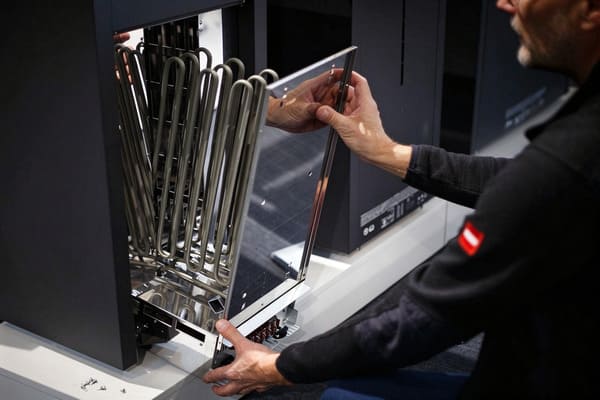
Some professional heaters use separate heating element compartments, reinforced structures or multiple heating element groups. These features can make maintenance easier and reduce the time required to replace individual components.
This matters because commercial facilities may operate their heaters for longer periods and experience more frequent heating cycles than private saunas.
However, frequent water pouring does not automatically mean heating elements will fail sooner. Their service life also depends on heater design, airflow, stone arrangement, operating conditions and maintenance.
What Should Buyers Check?
When evaluating sauna heating elements, pay attention to:
1. Heating element arrangement
The position and arrangement of heating elements affect how heat is transferred to the stones and how air circulates through the heater.
2. Airflow and stone loading
Stones should be arranged according to the manufacturer's instructions. Overpacking the stone compartment can restrict airflow and create unsuitable operating conditions.
3. Water application
Water should be applied according to the heater manufacturer's recommendations. Excessive or unsuitable water application should be avoided.
4. Maintenance access
For commercial facilities, the ability to inspect and replace heating elements without unnecessary equipment downtime is an important consideration.
5. Spare-part availability
Before purchasing, confirm whether replacement components are available and whether the supplier can identify the correct parts for the selected model.
Why Spare Parts Matter in Commercial Projects
A heater's purchase price is only one part of its long-term cost.
For a hotel or spa operating several sauna rooms, delayed replacement parts can interrupt normal operations.
Buyers should therefore ask about the availability of original replacement components, maintenance support and the expected lead time for essential parts.
ROC also supplies Heater Spare Parts for selected ROC external-control heater systems, supporting distributors, installers and after-sales requirements.
4. Floor-Standing or Tower Heaters? Which One Should You Choose?
This is a practical question for commercial buyers, and the answer should be based on the intended application.
For larger commercial Aufguss rooms where operational reliability and straightforward maintenance are priorities, we would generally start with a commercial floor-standing heater.
A tower heater is also a valid option, particularly when the project requires a large exposed stone surface. However, its shape alone does not make it suitable for every commercial Aufguss facility.
When a Floor-Standing Heater Is a Better Starting Point
A commercial floor-standing heater is often worth considering when:
- The room is relatively large.
- The facility operates several sessions daily.
- A higher power output is required.
- Maintenance access is important.
- The project needs a clearly defined and protected heater area.
For example, ROC SAV commercial heaters are designed for larger sauna rooms and use a separate control unit.
See the ROC SAV 21–36 kW Commercial Heater Range for available models and room-volume specifications.
When a Tower Heater Makes More Sense
A tower-style heater may be suitable when:
- A larger exposed stone surface is part of the desired sauna experience.
- The project requires a particular Löyly delivery style.
- The heater can be safely integrated into the room layout.
- The selected model is approved for the intended operating conditions.
The Harvia Cilindro Pro is one example of this configuration, with a vertical stone chamber and different power options for larger sauna rooms.
Our Recommendation
For most larger commercial projects, begin by evaluating a suitable floor-standing commercial heater.
Consider a tower-style model when its stone arrangement and steam characteristics better match the intended Aufguss experience.
Do not make the decision based on appearance or stone capacity alone. Always check the manufacturer's installation requirements, safety distances and operating recommendations.
5. Sauna Room Layout and Safety Around the Heater
Although this article focuses on equipment, heater placement remains important.
During an Aufguss session, the sauna master needs sufficient room to move safely while directing hot air towards the guests.
The heater should also be positioned so that water can be poured onto the intended stone surface without creating unnecessary risks.
Commercial buyers and project contractors should confirm:
- Heater installation location.
- Manufacturer-required safety distances.
- Distance from seating and walking areas.
- Access for inspection and maintenance.
- Compatibility with the planned bench arrangement.
- Space for the sauna master's movements.
A heater that is correctly sized but poorly positioned can create difficulties during daily operation.
This is why heater selection should be coordinated with the room design and installation plan.
For further information, see our Commercial Sauna Installation Guide: Design, Equipment and Safety Requirements.
6. What Should Hotels, Spas and Wellness Projects Confirm Before Buying?
When purchasing equipment for a commercial Aufguss facility, the heater should be evaluated as part of the complete operating system.
Here is a practical checklist for buyers.
| Item | What Buyers Should Confirm |
|---|---|
| Heater model | Exact model and approved application |
| Power rating | kW output and recommended room volume |
| Stone capacity | Total capacity and approved stone size |
| Heating elements | Construction, maintenance and replacement availability |
| Control system | Compatible controller and operating functions |
| Electrical supply | Voltage, phase and local requirements |
| Installation | Safety distances and installation arrangement |
| Maintenance | Inspection and replacement procedures |
| Spare parts | Availability and lead times |
| Warranty | Commercial-use conditions and coverage |
Don't Forget the Control System
A commercial sauna heater may require a separate control unit, depending on its model and configuration.
Before ordering, buyers should confirm that the controller is compatible with the heater's rated power, electrical supply and intended installation.
For ROC external-control heaters, we offer several control options, including the ROC Sauna Controller Range.
For example, the ROC AT86 Touch-Screen Controller supports different power classes, including configurations for higher-power commercial heaters.
The exact controller should always be matched to the selected heater model.
Information to Prepare for a Supplier
To receive a more accurate equipment recommendation and quotation, prepare:
- Sauna room dimensions and effective volume.
- Expected number of users.
- Daily operating hours.
- Number of Aufguss sessions per day.
- Preferred heater type, if already decided.
- Available electrical supply.
- Destination country and applicable certification requirements.
With these details, a supplier can assess the equipment configuration more accurately instead of recommending a heater based on room size alone.
Conclusion: Choose Equipment for the Way Your Sauna Will Operate
Commercial Aufguss requires buyers to think beyond basic sauna heating.
The right heater is not simply the one with the highest power rating or the most attractive design. It is the one that matches the real operating environment: repeated water application, suitable stone performance, reliable heating elements, practical maintenance and a room layout that supports safe operation.
For larger commercial projects, a floor-standing commercial heater is often a practical starting point. Tower heaters can also be suitable when their stone arrangement and installation requirements match the intended experience.
At ROC Sauna-Solution, we supply ROC and Harvia sauna heaters, controllers, sauna stones and related equipment for commercial and residential projects.
Whether you are developing a dedicated Aufguss facility, upgrading a hotel sauna or sourcing equipment for a spa chain, our team can help review your requirements and discuss suitable configurations.
Planning a commercial Aufguss sauna project?
Contact ROC Sauna-Solution for Equipment Recommendations and a Project Quotation.
Share your sauna room dimensions, expected operating schedule and preferred equipment requirements with our team. We can help you review suitable heater options and supporting equipment before you order.
Frequently Asked Questions
What kind of heater is best for commercial Aufguss?
For larger commercial facilities with frequent sessions, a commercial floor-standing heater is often a practical starting point. The final selection depends on room volume, operating frequency, stone arrangement and manufacturer-approved applications.
Is a tower heater better for Aufguss?
Not automatically. Tower heaters can provide a large exposed stone surface, but the installation layout, safety protection and intended operating conditions must also be considered.
Why is stone capacity important in Aufguss saunas?
Stone capacity influences heat storage and the steam experience. However, heater power, airflow, stone arrangement and operating conditions also affect performance.
Does frequent water pouring shorten the life of sauna heating elements?
Not necessarily. Correct water application is part of normal sauna operation. Heating element service life also depends on heater design, airflow, stone loading, operating hours and maintenance.
Should commercial buyers purchase spare heating elements in advance?
It is worth discussing spare-part availability before ordering, particularly for facilities operating multiple sauna rooms. Ask the supplier about compatible replacement components, lead times and maintenance support.
Does every commercial sauna heater require a separate controller?
No. Some heaters have built-in controls, while others require an external control unit. Buyers should confirm the control configuration and compatibility for the exact heater model.
References
- Harvia – Sauna Heaters and Product Information
- Finnish Sauna Society – Sauna.fi
- Sauna from Finland – Sauna from Finland
- Harvia – Sauna Heater Stone Maintenance