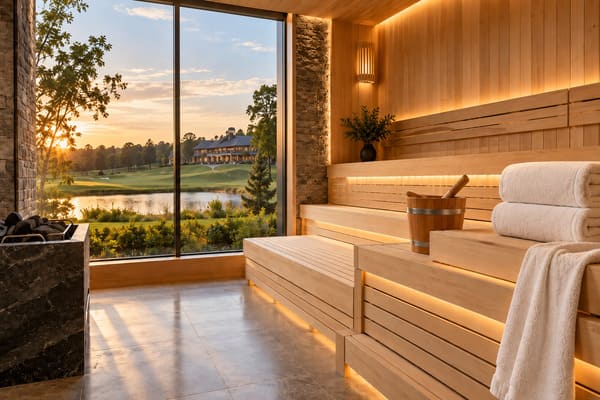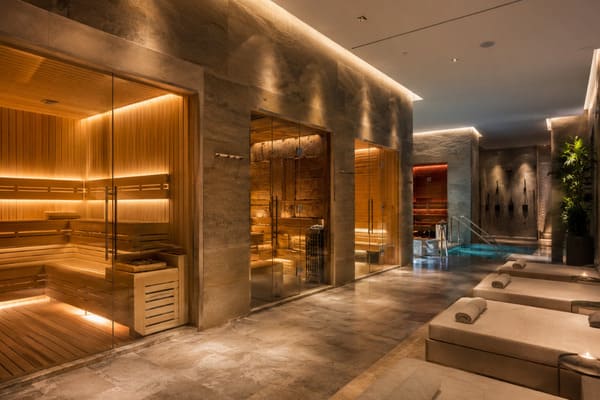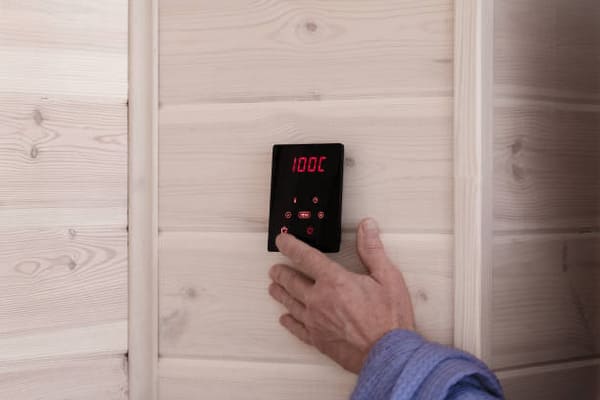
Choosing the right wood is one of the most important decisions when developing a custom sauna.
For importers, distributors and commercial project buyers, the question is not simply which timber looks better. The material must suit its intended location, withstand the operating environment and maintain its appearance over time.
An indoor sauna and an outdoor sauna may share a similar design, but their material requirements are not the same.
A timber that works well for interior benches may not be the best choice for exposed exterior cladding. Likewise, wood selected for outdoor weather resistance is not automatically suitable for every surface inside a hot sauna room.
The best wood for a sauna depends on where it is used, how it is exposed to heat and moisture, and what the finished product needs to deliver.
This guide compares popular sauna wood types and explains what wholesale buyers should specify when sourcing custom indoor and outdoor sauna rooms.
1. Best Wood for Indoor Saunas: Comfort, Stability and Appearance
Indoor sauna materials are selected primarily for their performance in a heated environment.
Wall panels, ceilings and benches experience different conditions. Therefore, using the same wood throughout the entire cabin is not always necessary.
Popular Wood Options for Indoor Saunas
| Wood Type | Common Application | Key Characteristics |
|---|---|---|
| Hemlock | Wall and ceiling panels | Clean appearance, relatively uniform grain |
| Western Red Cedar | Walls, ceilings and decorative panels | Distinctive aroma, natural durability and attractive colour |
| Nordic Spruce | Wall and ceiling panels | Light colour and traditional Scandinavian appearance |
| Aspen | Benches, backrests and interior panels | Light colour, smooth appearance and low resin content |
| Abachi (Obeche) | Benches and backrests | Lightweight and commonly selected for seating surfaces |
| Alder | Benches and interior cladding | Warm reddish-brown appearance and versatile interior use |
Which Wood Is Better for Sauna Benches?
Benches deserve special attention because they are in direct contact with users.
Aspen and Abachi are popular choices because their properties make them suitable for seating surfaces in heated environments.
Alder is another option for buyers who prefer a warmer, darker appearance.
Harvia's official Formula sauna bench range illustrates several material options, including Aspen, Abachi, Alder and heat-treated Aspen.
For commercial projects, buyers should consider more than appearance:
- Surface temperature and user comfort
- Smoothness and finishing quality
- Knots, cracks and other natural defects
- Board thickness and dimensions
- Moisture content and dimensional stability
- Cleaning and maintenance requirements
A cheaper bench material may reduce the initial quotation, but inconsistent timber quality can affect the finished appearance and long-term customer experience.
What About Wall and Ceiling Panels?
Hemlock, Spruce and Cedar are all options for indoor sauna paneling.
The choice depends on the desired appearance, timber grade, resin characteristics, dimensions and project budget.
For example:
- Hemlock is suitable for buyers seeking a relatively clean and consistent interior appearance.
- Spruce offers a traditional light-coloured wood finish.
- Cedar provides a more distinctive grain, colour and natural aroma.
The important point is to specify the actual wood species and grade rather than relying on general descriptions such as "premium sauna wood."
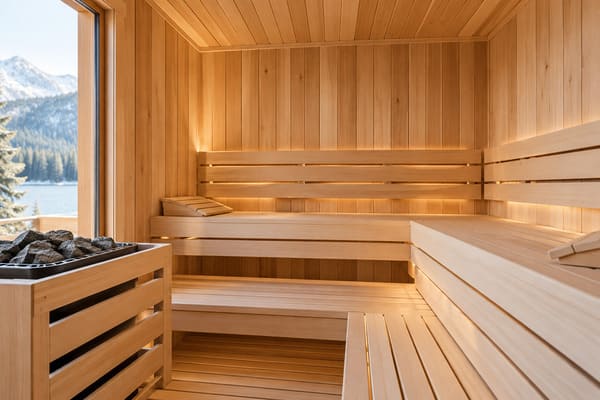
2. Best Wood for Outdoor Saunas: Weather Resistance Comes First
Outdoor sauna rooms face a different set of challenges.
Unlike indoor cabins, their exterior surfaces are exposed to rain, sunlight, temperature fluctuations and seasonal humidity changes.
The choice of outdoor sauna wood must therefore consider both appearance and environmental exposure.
Popular Wood Options for Outdoor Saunas
Western Red Cedar
Western Red Cedar is widely used for exterior cladding because of its natural resistance to moisture, decay and insect damage.
It also has an attractive grain and colour, making it suitable for premium outdoor sauna projects.
However, buyers should still specify the timber grade, surface finish, installation details and maintenance requirements.
The Real Cedar technical guide provides useful guidance on selecting, acclimatizing and installing Western Red Cedar siding.
Thermally Modified Pine
Thermally modified pine is another option for outdoor cladding.
The thermal modification process changes the wood's properties and can improve its resistance to biological deterioration and dimensional movement.
Thermory's thermally modified pine technical datasheet provides product-specific information on durability, moisture and outdoor applications.
It is important to distinguish between cladding and structural timber. Thermally modified wood should not automatically be used for load-bearing components without checking its structural properties and suitability.
Thermally Modified Spruce
Thermally modified spruce can also be considered for exterior applications, depending on the product specification and intended exposure.
It offers another option for projects requiring a particular colour, appearance and exterior finish.
An Outdoor Sauna Is More Than an Exterior Wood Choice
Selecting weather-resistant cladding does not make the entire sauna weatherproof.
A properly planned outdoor sauna also needs:
- Suitable roof construction
- Appropriate waterproofing and drainage
- Adequate insulation
- Proper ventilation
- Moisture-resistant structural details
- Suitable exterior fasteners and connections
- An appropriate maintenance plan
These elements should be considered together when preparing a custom outdoor sauna quotation.
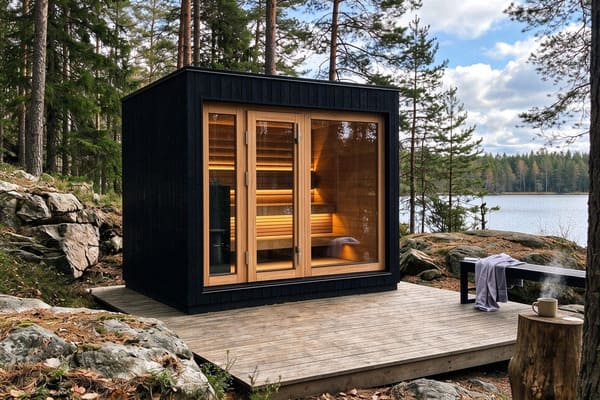
3. Indoor vs. Outdoor Sauna Wood: What Are the Main Differences?
This is where many purchasing mistakes happen.
Buyers sometimes focus on the wood species but overlook the fact that different parts of a sauna have different environmental requirements.
Consider the following comparison:
| Consideration | Indoor Sauna | Outdoor Sauna |
|---|---|---|
| Main exposure | Heat, humidity and repeated heating cycles | Rain, sunlight, humidity and temperature changes |
| Wall materials | Hemlock, Spruce, Cedar | Cedar, thermally modified timber and suitable exterior cladding |
| Bench materials | Aspen, Abachi, Alder | Suitable low-contact-temperature interior bench materials |
| Exterior protection | Usually not required for enclosed indoor cabins | Requires suitable cladding protection and construction detailing |
| Structural requirements | Stable internal framing and appropriate insulation | Weather-resistant construction, insulation and waterproofing |
| Maintenance focus | Cleaning, surface condition and ventilation | Exterior finish, moisture management and weather exposure |
Can the Same Wood Be Used for Both Indoor and Outdoor Saunas?
Yes, but the intended application and material specification must be different.
Take Cedar as an example.
It can be used for indoor wall panels and suitable outdoor cladding. However, the exterior application requires attention to weather exposure, installation, finishing and maintenance.
Hemlock may be appropriate for indoor sauna wall panels, but it should not automatically be specified for exposed outdoor cladding without evaluating its durability and protection requirements.
Aspen is a popular interior option for benches and other surfaces, but it is not a substitute for weather-resistant exterior construction.
The same species does not mean the same specification, treatment or installation method.
A useful real-world example is Thermory's Natura Outdoor Sauna project.
The project uses thermally modified Aspen for the sauna interior and painted thermally modified Spruce for the exterior wall panels.
This illustrates an important purchasing principle: different parts of one sauna can use different materials according to their individual requirements.
Why Moisture Content Matters
Wood is a natural material that responds to changes in surrounding humidity.
If timber is not properly dried, stored or acclimatized before installation, dimensional changes can lead to gaps, warping or surface defects.
The USDA Forest Service Wood Handbook explains the relationship between wood moisture content, dimensional stability and environmental conditions.
For wholesale buyers, this means wood species alone is not enough.
You should also confirm moisture-content specifications, measurement methods and storage conditions before approving production.
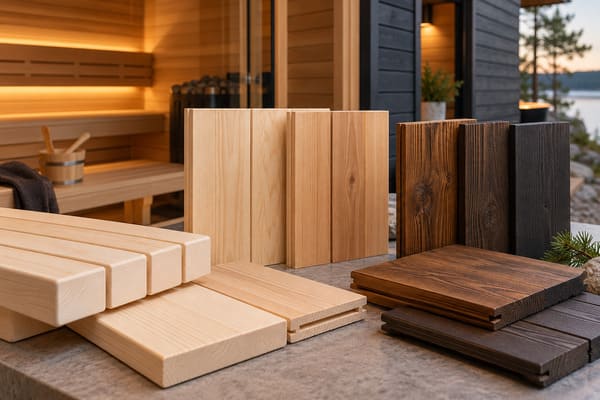
4. Different Sauna Parts Need Different Wood Specifications
When ordering a custom sauna, it is useful to divide the material requirements according to each component.
| Sauna Component | Material Considerations | What Buyers Should Specify |
|---|---|---|
| Interior wall panels | Appearance, heat exposure and resin characteristics | Species, grade, thickness and profile |
| Ceiling panels | Stability and consistent finish | Species, dimensions and installation details |
| Benches | Surface comfort and finishing quality | Species, board thickness, edge finishing and acceptable knots |
| Backrests | Surface comfort and design | Wood type, dimensions and finish |
| Outdoor cladding | Weather exposure and durability | Species, treatment, finish and installation method |
| Structural frame | Load-bearing capacity and stability | Structural grade, dimensions and engineering requirements |
| Exterior trim | Moisture exposure and appearance | Material, coating and maintenance requirements |
This approach also allows buyers to combine different materials rather than paying for premium timber in every part of the cabin.
For example, a project may use Hemlock for interior walls, Aspen for benches and thermally modified Pine for exterior cladding.
This can provide a more practical balance between appearance, performance and budget.
5. What Should Wholesale Buyers Specify Before Ordering?
If you are sourcing indoor or outdoor sauna rooms from a manufacturer, the material specification should be part of the initial quotation.
Avoid simply requesting:
"We want a premium Cedar sauna."
That description leaves too much room for different interpretations.
Instead, prepare a clear material checklist.
Custom Sauna Wood Specification Checklist
Before confirming an order, discuss:
- Wood species: Hemlock, Cedar, Spruce, Aspen, Abachi or another specified timber.
- Wood grade: Acceptable knots, colour variation, cracks and natural defects.
- Dimensions: Board thickness, width, length and profile.
- Moisture content: Agreed limits and measurement method.
- Surface finish: Sanding, coating and treatment requirements.
- Application: Interior walls, benches, ceiling, exterior cladding or structural components.
- Outdoor protection: Suitable weather protection, installation and maintenance requirements.
- Sample approval: Confirm the actual timber sample before bulk production.
Why Material Quality Is More Important Than Just Price
Two suppliers may quote different prices for what appears to be the same wood.
However, the timber grade, drying process, board dimensions, finishing quality and acceptable defects may differ.
A lower quotation does not necessarily represent better value.
For commercial buyers and distributors, inconsistent materials can affect the appearance of multiple units, increase replacement requirements and create problems after installation.
It is therefore worth comparing the complete material specification rather than choosing a supplier based only on the lowest price per square metre.
A reliable manufacturer should be able to explain the proposed materials, identify their intended applications and clarify which specifications can be customized.
Conclusion: Choose the Wood for the Environment, Not Just the Appearance
The best wood for a sauna is not necessarily the most expensive or the most attractive species.
For indoor saunas, buyers should prioritize suitable materials for heated interiors, comfortable benches and consistent finishing.
For outdoor saunas, the selection must go further, considering weather resistance, moisture management, structural stability and exterior protection.
The most practical approach is to specify each component separately and choose materials according to their intended use.
For importers, distributors and commercial project buyers, this makes quotations easier to compare and helps prevent unnecessary material costs.
A well-designed sauna is not built around one expensive wood species. It is built around the right material for every application.
Looking for Custom Indoor or Outdoor Sauna Solutions?
Sauna-Solution supplies customized sauna rooms, timber interiors, genuine Harvia equipment, ROC heating solutions and related accessories for international buyers.
We can discuss different timber combinations and cabin configurations according to your project requirements.
Whether you are sourcing indoor sauna cabins, outdoor sauna rooms or developing a private-label product range, share your preferred dimensions, wood choices, quantity and destination market with our team.
We can help evaluate suitable material and equipment options and prepare a project-specific proposal.
Contact Sauna-Solution for a Custom Sauna Project
Frequently Asked Questions
1. What is the best wood for an indoor sauna?
Aspen, Abachi, Alder, Hemlock, Spruce and Cedar are commonly considered for indoor sauna construction.
Aspen and Abachi are popular for benches and backrests, while Hemlock, Spruce and Cedar can be used for wall and ceiling panels.
The final choice depends on the intended application, timber grade, appearance and project requirements.
2. What is the best wood for an outdoor sauna?
Western Red Cedar and thermally modified timber are options worth considering for outdoor cladding.
However, exterior performance also depends on the roof, drainage, ventilation, installation details and maintenance plan.
The wood species alone cannot guarantee long-term outdoor durability.
3. Can the same wood be used for indoor and outdoor saunas?
Some wood species can be used in both applications, but their grades, finishes and installation requirements may differ.
For example, Cedar can be used for indoor panels and suitable exterior cladding. However, exterior applications require appropriate weather protection and construction detailing.
4. Which wood is best for sauna benches?
Aspen, Abachi and Alder are common choices for sauna benches.
When comparing options, consider surface comfort, finishing quality, board dimensions, knots and moisture exposure.
The best material is the one that meets the intended performance and appearance requirements.
5. Is thermally modified wood suitable for outdoor sauna construction?
Thermally modified wood can be suitable for outdoor cladding, depending on the species, treatment process and product specification.
However, thermal modification can also change the mechanical properties of wood. It should not automatically be used for load-bearing structural components without appropriate technical assessment.
6. What should I ask a sauna manufacturer before ordering?
Ask the manufacturer to specify the wood species, grade, dimensions, moisture content, finish and intended application for each part of the sauna.
For outdoor projects, also confirm the exterior cladding system, roof construction, waterproofing and maintenance requirements.
Request material samples and approve the specifications before bulk production.
References
- Harvia – Formula Sauna Bench (Aspen). Official product information showing Aspen, Abachi, Alder and heat-treated Aspen bench material options.