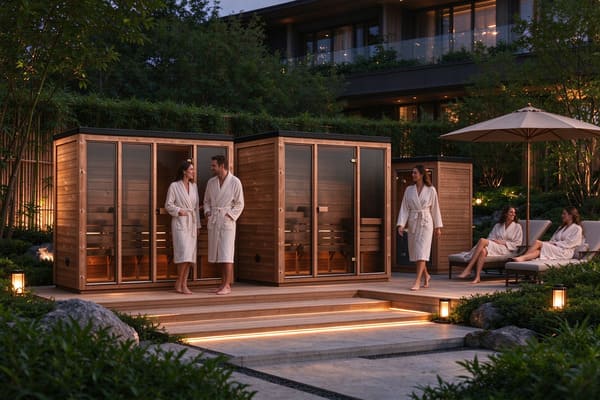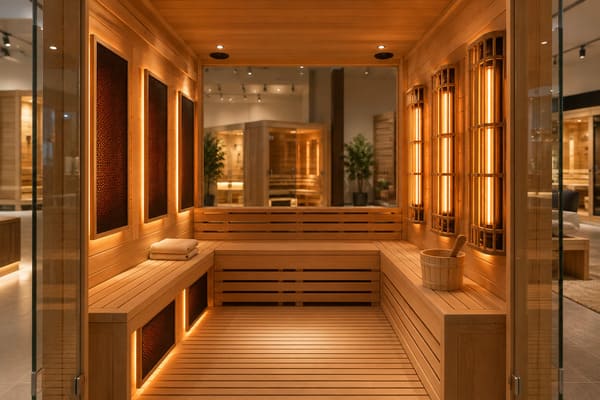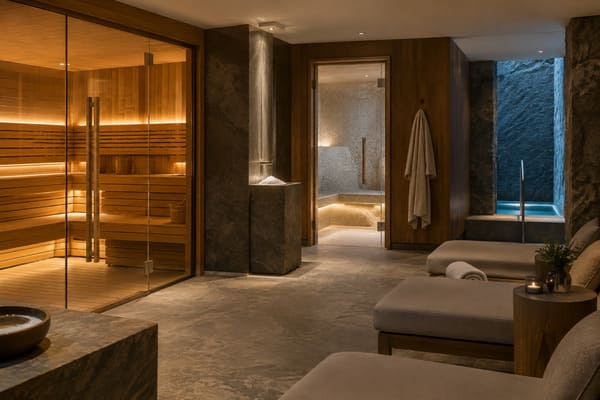
They look almost identical in a photo. A home sauna and a commercial unit share the same wood, the same benches, the same heater in the corner. So business buyers assume a home sauna will do the job in a gym or hotel. Then it falls apart under daily use and the warranty is denied. The difference is real, and it costs money. Let me help.
A home sauna is built for a few short sessions a day. A commercial sauna is built to run all day, every day, with denser materials[^1], reinforced benches, a heavier-duty heater, longer commercial warranties, and safety features that meet public-use codes[^2]. Putting a home unit in a business is the single most expensive mistake buyers make.
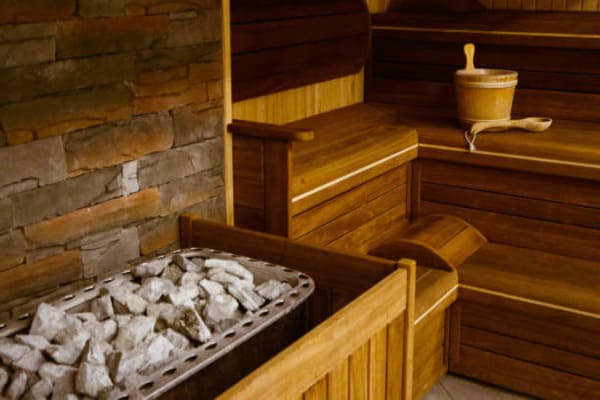
I have seen a hotel try to save on a residential unit, only to replace it within a year. This guide shows you exactly what separates the two, why it matters for your business, and how to know if a unit is truly commercial-grade before you buy.
What Makes a Commercial Sauna "Commercial-Grade"?
The word gets thrown on every product page. Most buyers have no way to check if it is real. That gap is where poor purchases happen.
A commercial sauna is built for continuous, high-traffic use. It uses denser, more durable timber, reinforced benches and framing, a commercial-rated heater, and safety features required for public spaces. "Commercial" is about build quality and duty rating, not just size.
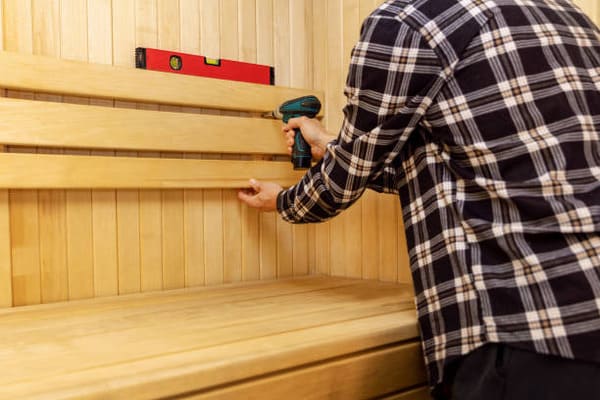
The heater is one obvious dividing line — home models have a built-in cool-down timer[^3] that makes them unsuitable for all-day runtime, while commercial heaters are rated to run for hours without stopping. That single component is deep enough to deserve its own guide, which is why we break it down fully in commercial vs. residential sauna heaters: what's the real difference.
But the heater is not the whole story. The cabin itself is built differently. A commercial unit uses denser, tighter-grain timber that resists warping under constant heat and humidity[^4][^1], and the benches and frame are reinforced to survive dozens of people climbing on them every day. A home sauna's lighter build simply was not designed for that load.
If a supplier calls a product "commercial" but the timber, benches, and heater are all residential-grade, that is your red flag. Ask what makes it commercial, not just whether the label says so.
How Do Home and Commercial Saunas Compare?
The price tags look far apart, and buyers assume they are paying for the same thing scaled up. They are not. Almost every part of the build is different.
Home and commercial saunas differ in five key areas: material density, bench and frame strength, heater duty rating, warranty terms, and safety compliance[^2]. Each one is built for a completely different level of use.
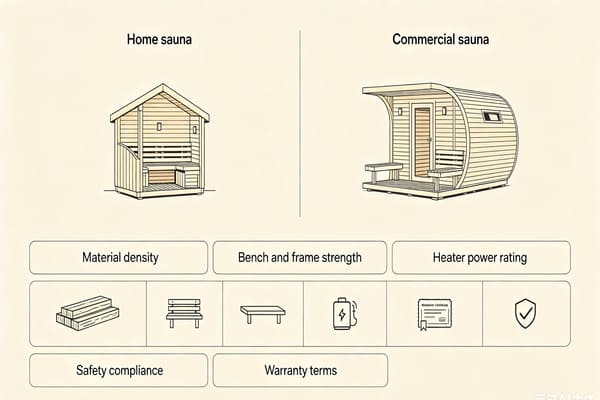
The Side-by-Side Comparison
Here is the chart I hand to every business buyer.
| Factor | Home Sauna | Commercial Sauna |
|---|---|---|
| Typical use | A few sessions per day | Continuous, all-day use |
| Materials | Standard timber | Denser, tighter-grain timber |
| Benches & frame | Lighter build | Reinforced for constant traffic |
| Heater | Home-rated | Commercial-rated |
| Warranty | Residential terms only | Commercial-use warranty |
| Safety compliance | Home standards | Meets public-use codes |
Two rows quietly decide the outcome: materials and warranty. A home sauna's lighter timber and benches wear out fast under public use, and once a home unit is installed in a business, the warranty is almost always void the moment something fails. That is why "it looks the same" is a trap.
Why Does a Commercial Sauna Cost More?
A home unit is cheaper today. That saving is real, and it is a trap. The cost shows up later, when it hurts most.
A commercial sauna costs more because it uses denser materials, reinforced construction, and a heavier-duty heater rated for all-day public use. Using a home model in a business instead leads to early failure, voided warranties, and safety liability that costs far more than you saved.
Think past the sticker price:
- Downtime costs money. A dead sauna in a gym or hotel means refunds, complaints, and lost members.
- Warranty denial is expensive. Manufacturers deny claims when a home unit is used commercially. You pay full replacement.
- Safety is a legal issue. Public-use spaces have compliance requirements a home unit was never designed to meet.
For any hotel, gym, spa, or clinic, the commercial version is not the premium option. It is the only option that survives the job.
How Do You Choose the Right Commercial Sauna?
Once you know a commercial unit is what your business needs, the next step is judging one supplier's quote against another — because on paper they all say "commercial-grade."
The short version: check the heater's duty rating, the materials, the commercial warranty, code compliance, and how it's delivered. Get clear answers on all five and you've found a real supplier, not a reseller. We walk through each one in detail in our full guide on What to Look for When Buying a Commercial Sauna: 5 Key Checks.
This is also where we're different from most suppliers. We provide commercial-grade Harvia units built to pass every one of those checks, and we run our own freight operation — so your sauna is packed for long-haul transport and delivered intact, with the shipping cost known upfront. No surprise fees, no finger-pointing when a panel arrives cracked.
Conclusion
A home sauna and a commercial unit may look the same, but they are built for completely different jobs. A home unit is made for occasional private use, with lighter materials and a home-rated heater. The commercial version is built to run all day, with denser timber, reinforced benches, a commercial heater, and a warranty that holds up for business use. For any hotel, gym, or spa, a home sauna is a false saving that fails fast.
[^1]: "Dimensional stability of board manufactured with wood-based ...", https://bioresources.cnr.ncsu.edu/resources/dimensional-stability-of-board-manufactured-with-wood-based-panel-laths/. Wood-science literature explains that higher-density timber generally has greater mechanical strength and different dimensional-stability characteristics, which is relevant to material selection in hot, humid sauna interiors. Evidence role: mechanism; source type: paper. Supports: Commercial saunas use denser materials as part of a more durable construction approach.. Scope note: Wood density alone does not determine sauna durability; species, drying, grain, ventilation, and installation also affect performance. [^2]: "Rapid review: Environmental health risks and safety considerations in ...", https://ncceh.ca/resources/evidence-briefs/rapid-review-environmental-health-risks-and-safety-considerations-saunas. Public health or building-code provisions for sauna rooms document that saunas in public facilities are subject to safety requirements such as temperature controls, timers, ventilation, warning signage, or supervised-use rules. Evidence role: expert_consensus; source type: government. Supports: Commercial saunas must include safety features that satisfy public-use codes.. Scope note: Requirements vary by jurisdiction, so the source should be cited as an example or baseline rather than a universal legal rule. [^3]: "Important Changes For North American Sauna - Reddit", https://www.reddit.com/r/Sauna/comments/1ax53zw/important_changes_for_north_american_sauna/. Sauna heater safety documentation can show that residential sauna controls often include automatic shutoff or timer limits intended to reduce overheating and unattended-operation risks. Evidence role: mechanism; source type: institution. Supports: Residential sauna heaters may include timer-based operating limits that restrict continuous use.. Scope note: Timer design varies by manufacturer and jurisdiction, so the citation should not imply that every residential model uses the same timer duration or cool-down behavior. [^4]: "Dimensional stability of board manufactured with wood-based ...", https://bioresources.cnr.ncsu.edu/resources/dimensional-stability-of-board-manufactured-with-wood-based-panel-laths/. Wood-science research describes how heat and moisture changes cause dimensional movement, swelling, shrinkage, and warping in timber, explaining why material selection matters in sauna environments. Evidence role: mechanism; source type: paper. Supports: Timber exposed to repeated heat and humidity can warp, and denser or more dimensionally stable wood may reduce that risk.. Scope note: The source would explain the physical mechanism of warping; it may not compare specific sauna brands or prove that one commercial cabin resists warping better than another.