Many gym, hotel, and spa buyers ask: "The home unit is half the price with enough wattage—why can't I use it?" Skip this, and repair bills bite back hard.
The difference is not wattage. It is design life, run logic, and liability. A residential heater is engineered for short daily sessions, while a commercial heater is built to run continuously for a full business day.[^1] Run a home heater in a commercial space, and the money you save comes back as repair costs, downtime, and denied insurance claims. As a rule of thumb, if your space needs the sauna hot for more than 3 hours a day, you need a commercial heater[^2]. Five angles explain it all.
I have watched buyers chase the cheaper price and regret it within a year. Let me break down each factor so you choose right the first time.
How Long Can a Commercial Sauna Heater Run?
A home unit dies fast under all-day loads. A commercial one is built for the full business day. This is the core split.
Home heaters are built for one sauna session: heat 30–60 minutes, use 1–2 hours, then cool down. Commercial heaters run 8–16 hours straight, all week. If your space needs over 3 hours a day, choose commercial.
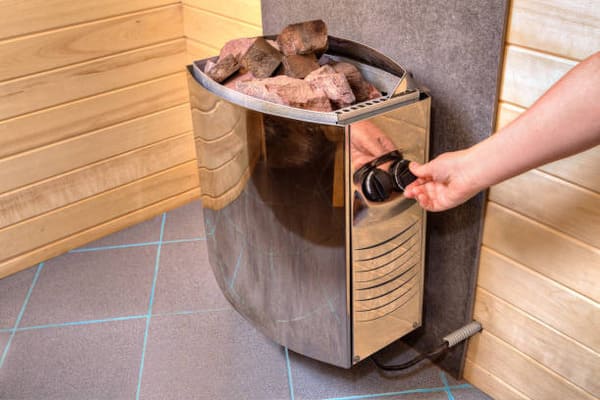
The Home Logic
Home heater parts—elements, thermostats, relays—are picked for short cycles. North American UL/ETL home models even force a hard 1-hour shutoff.[^3] That is a safety rule, not a cost cut.
The Commercial Logic
Commercial heaters assume the store opens at 10 AM and closes at 10 PM.
| Feature | Home | Commercial |
|---|---|---|
| Control | Built-in timer | External panel + contactor |
| Elements | Standard, low load | Low density, more units |
| Temp mode | Spike then off | Steady hold |
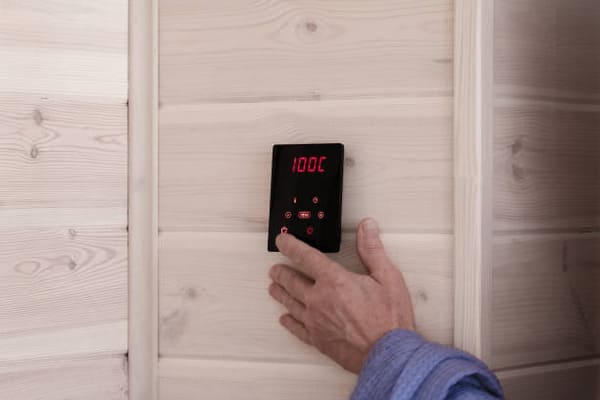
Big current skips the panel, so long runs and remote booking work fine. When one element fails, the others keep going.[^4] This continuous-duty design is also why commercial installations have stricter electrical requirements than home units.
Why Does Maintenance Look So Different?
Home owners forget the heater exists. Commercial operators plan around it. That gap costs money if you ignore it.
Home heaters are near maintenance-free. Commercial heaters need scheduled care: turn stones every 1–2 months, replace cracked ones every 3–6 months, and keep spare elements ready. Skip this, and warranty voids.
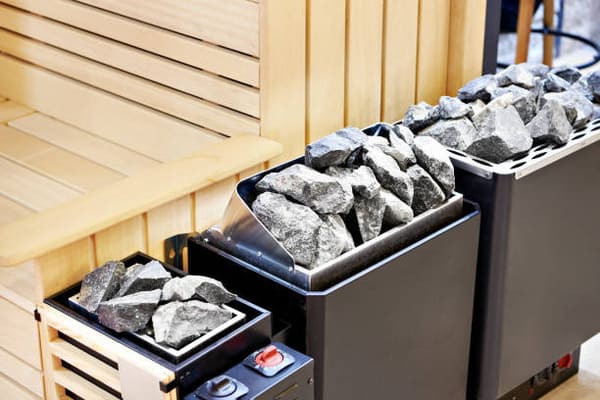
Why the Gap Is So Wide
Sauna stones crack fast under frequent water and sudden cooling.[^5] Broken dust blocks airflow and overheats the element until it burns.[^6] A commercial room sees dozens of water pours a day, so stones are a consumable.[^7]
| Task | Home | Commercial |
|---|---|---|
| Turn stones | Yearly | Every 1–2 months |
| Replace stones | 1–2 years | 3–6 months |
| Element check | On failure | Yearly plan |
| Terminal check | Rarely | Every 6–12 months |
My advice: budget stones and elements as yearly consumables, not repair events. Many warranty terms deny element failure caused by skipped stone care. For the full picture, see our commercial sauna maintenance guide, and keep genuine sauna stones and spare parts on hand.
Is More Stone Just for Show?
Buyers think more stone means more power waste. That belief costs them stable steam and longer part life.
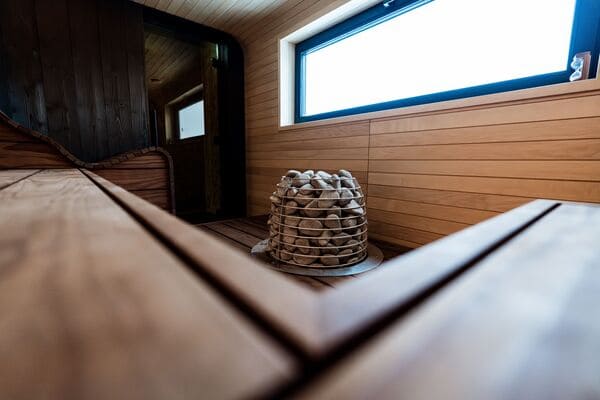
Commercial heaters hold 60–120 kg of stone as a heat reservoir.[^8]This keeps steam thick and steady during heavy water pouring. Home heaters hold 20–60 kg, so steam turns soft fast under load.
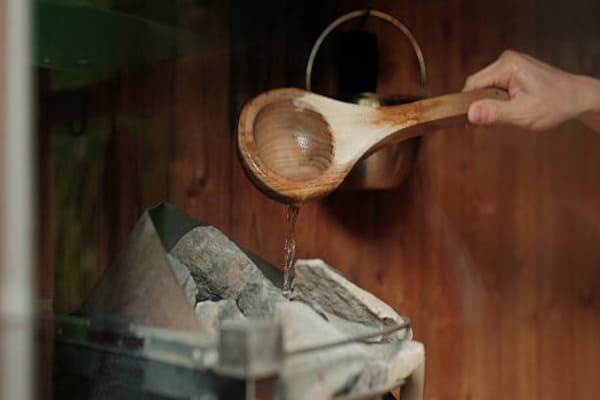
The Real Trade-Off
A small stone pile heats fast, ready in 30–45 minutes. Great for "turn on and use." But under constant pouring, stone temperature drops and steam weakens.
A large stone pile stores heat.[^9] Guests come in waves, pour water often, and steam stays strong. Open doors recover fast too. The cost is a slow first heat-up, often over an hour, so commercial rooms pre-heat and hold all day.
Here is the myth buster: in all-day use, a big stone pile cuts element on-off cycles. Power draw stays smoother, and parts last longer. A small pile forces constant full-power spikes—more wasted power, faster failure. This is also why stone capacity, not just wattage, is a key spec—explained in our heater rock capacity guide.
What Extra Safety Rules Apply to Commercial Use?
Commercial safety is a full liability system, not just a tougher box. Miss one rule, and an accident review lands on you.
Commercial heaters need three-phase power, a dedicated circuit, and licensed electrician records.[^10] Add a heater guard, redundant over-temp cutoff, patrol routine, and warning signs. The certification version must be the commercial model.
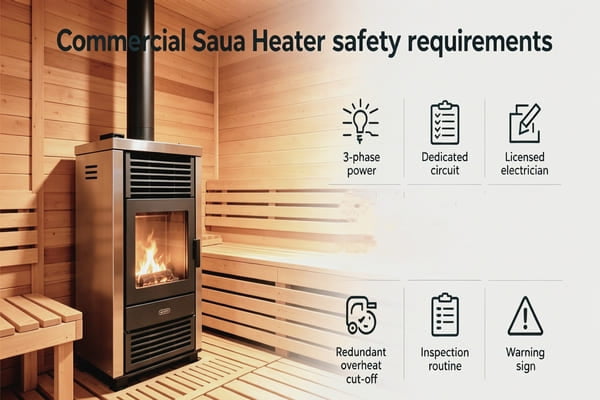
Layers of Protection
Guests are the wild card. People fall asleep, arrive drunk, or drop towels on the stones. So rules require staff patrols, emergency stops, and clear signs.
| Safety Item | Home | Commercial |
|---|---|---|
| Power | Single phase | Three phase, dedicated |
| Heater guard | Optional | Required or strongly advised |
| Over-temp backup | Basic | Redundant manual reset |
| Install record | None | Licensed electrician, logged |
Certification matters most. A home-listed model in a business space can count as a violation on its own. North American ETL splits home (240V, 1-hour limit) from commercial (208V three-phase, continuous). CE manuals set the same scope limits. Getting the power side right starts with our commercial sauna electrical requirements guide.
Why Does the Warranty Get Shorter for Commercial?
Buyers focus on the number of years. The conditions matter more, and that is where claims get denied.
Home use often gets around 2 years. Commercial use usually drops to 1 year, sometimes less for heavy public spas. All warranties require licensed install, scheduled stone care, and approved stones.
The Three Common Traps
| Trap | Result |
|---|---|
| Home model in a business | Warranty shortened or void |
| No install record | Electrical claims denied |
| Never turned stones | Burned element ruled "poor care" |
Before you sign, get written warranty terms and confirm three things. First, does this model clearly allow commercial use—ask for the "Intended Use" page. Second, what is the commercial warranty length and start date—ship day, install day, or open day? These differ by months. Third, what maintenance is required, how often, and must you keep photo or service records? Put these into the contract annex.
How ROC Sauna-Solution Helps You Choose Right
Picking the correct heater class the first time is the cheapest decision you will ever make on a sauna.
ROC Sauna-Solution helps hotels, spas, gyms, and contractors select genuine, certified commercial-grade Harvia heaters matched to their usage intensity, room volume, and local power supply—not underspecified home units that fail early. We supply the right heater, the right stone capacity, and genuine spare parts, so your sauna runs reliably for years.
Tell us your daily operating hours, room size, and power supply, and we will recommend a certified commercial heater sized correctly for the job—whether that is a compact unit like the Harvia The Wall or Glow Corner, or a robust stainless model like the Harvia Vega Pro. Factor the heater into your full budget with our commercial sauna cost guide.
Conclusion
Choose your heater by use intensity, not by budget. A home unit's saved cash returns doubled as burned elements, downtime, and denied claims. Match the heater class to how hard you will run it, install it to code, and maintain the stones—and it will pay you back with years of reliable service.
Not sure whether your project needs a home or commercial heater? Contact ROC Sauna-Solution with your operating hours, room size, and power supply for a clear recommendation on the right certified heater and genuine spare parts. Get in touch here. You can also ask our AI product assistant about the best heater for your space.
Frequently Asked Questions
What is the real difference between a commercial and residential sauna heater? The difference is design life, run logic, and liability—not wattage. A residential heater is built for short daily sessions and often includes a forced 1-hour shutoff, while a commercial heater is engineered to run continuously for 8–16 hours a day, uses an external control panel and contactor, holds more stone, and meets stricter safety and certification requirements. If your space runs the sauna more than 3 hours a day, you need a commercial heater.
Can I use a home sauna heater in a commercial space to save money? It is strongly discouraged. A home-listed heater used in a business can void its warranty, fail early under continuous load, and count as a compliance violation on its own—potentially voiding insurance after an incident. The upfront saving is usually lost to repairs, downtime, and denied claims within a year or two.
Why do commercial sauna heaters hold more stones? Commercial heaters hold 60–120 kg of stone as a heat reservoir, versus 20–60 kg for home units. The larger stone mass keeps steam thick and steady during heavy water pouring, recovers quickly when doors open, and reduces element on-off cycling—which lowers wasted power and extends part life under all-day use.
How often do commercial sauna heaters need maintenance? Commercial heaters need scheduled care: turn the stones every 1–2 months, replace cracked stones every 3–6 months, check elements on a yearly plan, and inspect terminals every 6–12 months. Stones and elements should be budgeted as consumables, not one-off repairs. Skipping this care can void the warranty.
What power supply does a commercial sauna heater need? Commercial heaters typically require three-phase power on a dedicated circuit, installed and documented by a licensed electrician. North American commercial units commonly run 208V three-phase for continuous operation, compared with 240V single-phase home units. Confirm the exact requirement against the heater's specifications and your local code.
Why is the warranty shorter for commercial use? Commercial use subjects the heater to far heavier loads, so manufacturers usually shorten the warranty—often to about 1 year versus around 2 years for home use, and sometimes less for high-traffic public spas. Warranties also require licensed installation, scheduled stone care, and approved stones, so read the conditions, not just the number of years.
About ROC Sauna-Solution
ROC Sauna-Solution is an official authorized Harvia distributor and commercial sauna sourcing partner based in China, with over 12 years of experience supplying and integrating sauna projects worldwide. We help hotels, spas, resorts, gyms, and project contractors across 50+ countries select correctly specified commercial sauna heaters—supplying genuine certified Harvia heaters, control systems, stones, and genuine spare parts, with full technical documentation, CE/ETL/RoHS certification, OEM options, and technical and after-sales support.
[^1]: "The Secret Ingredient to One UL Engineer's Long Career", https://www.ul.com/news/secret-ingredient-one-ul-engineers-long-career. A standards document or manufacturer installation manual distinguishing household sauna-heater controls from commercial continuous-operation controls would support the distinction between intermittent residential duty and longer commercial duty cycles. Evidence role: general_support; source type: institution. Supports: Residential sauna heaters are designed for shorter intermittent sessions, while commercial heaters are designed for full-day operation.. Scope note: Such sources usually specify permitted installation and operating conditions for particular heater classes rather than proving all residential heaters fail under commercial use. [^2]: "Commercial sauna installation guide for business owners", https://finnishsaunabuilders.com/blogs/sauna-news/commercial-sauna-installation-guide-for-business-owners?srsltid=AfmBOooDC0lhxmGwNachzpx738WpC8691Pz_pb8dwh8Kpxik5mVQVnpZ. Commercial sauna guidance or manufacturer sizing documentation can contextualize the three-hour threshold by showing that public or extended daily operation is treated differently from private intermittent use. Evidence role: expert_consensus; source type: institution. Supports: Saunas operated for more than about three hours daily should be treated as commercial-duty applications.. Scope note: The three-hour cutoff is likely a practical rule of thumb rather than a universally codified threshold. [^3]: "The New UL Sauna Heater Standard Is Here. The Building Code Isn't ...", https://www.saunanews.com/article/ul-60335-2-53-sauna-heater-standard-transition. A North American safety standard, NRTL listing explanation, or certified heater manual documenting one-hour timer limits for household sauna heaters would substantiate the stated shutoff requirement. Evidence role: definition; source type: institution. Supports: Some North American residential sauna-heater models are certified with a one-hour automatic shutoff requirement.. Scope note: Timer limits may depend on the listing standard, controller type, jurisdiction, and model generation. [^4]: "Sauna Heater Wiring Diagrams Explained Simply - YouTube", https://www.youtube.com/watch?v=FVh10tJZspE. An electrical-heating reference or multi-element heater manual explaining parallel heating-element circuits would support the claim that remaining elements can continue operating after one element opens. Evidence role: mechanism; source type: education. Supports: In multi-element sauna heaters, failure of one heating element may allow other elements to continue producing heat.. Scope note: Continued operation depends on circuit design and safety controls; some heaters may shut down or require service after an element fault. [^5]: "(PDF) Fire-cracked rock experiments: A comparison of use-alteration and ...", https://www.academia.edu/41888474/Fire_cracked_rock_experiments_A_comparison_of_use_alteration_and_fracture_patterns_between_stone_boiling_wet_cooling_and_hearth_dry_cooling. A materials-science or geology source on thermal shock in rocks would support the mechanism by which repeated heating and water cooling can fracture sauna stones. Evidence role: mechanism; source type: paper. Supports: Frequent water pouring and rapid cooling can crack sauna stones through thermal shock.. Scope note: General thermal-shock research explains the process but may not measure crack rates for specific commercial sauna stones. [^6]: "A Complete Guide to Sauna Stone and Heating Element Care - HUUM", https://huumsauna.com/sauna-heater-maintenance-a-complete-guide-to-sauna-stone-and-heating-element-care/. A heater maintenance manual or heat-transfer reference explaining that blocked convection airflow raises element temperature would support the connection between stone debris, restricted airflow, and element overheating. Evidence role: mechanism; source type: education. Supports: Stone dust or debris can restrict airflow through an electric sauna heater and contribute to element overheating.. Scope note: The source may establish the overheating mechanism generally, while the exact failure rate depends on heater design and maintenance history. [^7]: "Is it ok to pour water on the sauna stones? - Narvi Oy", https://narvi.fi/blog/is-it-ok-to-pour-water-on-the-sauna-stones/. Public-sauna operation guidance or observational research on sauna use can contextualize higher water-pouring frequency in shared facilities and why stones require periodic replacement. Evidence role: general_support; source type: research. Supports: Commercial sauna stones experience heavier water-pouring cycles and should be treated as periodically replaceable components.. Scope note: Exact numbers of water pours vary widely by culture, facility traffic, and house rules. [^8]: "Harvia sauna heater stones", https://www.harvia.com/en/sauna-heater-stones/. Commercial electric sauna-heater specification tables from certified product manuals can verify typical stone-capacity ranges for high-duty models. Evidence role: statistic; source type: institution. Supports: Many commercial sauna heaters use substantially larger stone masses, commonly in the range of tens to over one hundred kilograms.. Scope note: The range is model-dependent and may not cover all commercial heaters, especially very small or very large units. [^9]: "Heat Capacity and Energy Storage | EARTH 103 - EMS Online Courses", https://courses.ems.psu.edu/earth103/node/1005. A thermodynamics or heat-capacity reference explaining thermal mass would support the statement that a larger mass of heated stones stores more energy and buffers temperature changes. Evidence role: mechanism; source type: education. Supports: A larger mass of sauna stones stores more thermal energy and can moderate heat delivery.. Scope note: The principle is general physics; actual sauna performance also depends on heater power, airflow, room insulation, and control logic. [^10]: "Sauna Electrical Code by State: NEC Basics, Local AHJ Rules, and What", https://havenofheat.com/blogs/sauna-heater-guides/sauna-electrical-code-by-state-nec-basics-local-ahj-rules-and-what-homeowners-must-know?srsltid=AfmBOookwmLRvA5RfU7muKhIIVVqJD16N_DZkGWZrijgEqiLww-pFGSF. Electrical-code guidance and commercial sauna-heater installation manuals can substantiate that larger commercial units are commonly specified for dedicated branch circuits and three-phase supply installed by qualified personnel. Evidence role: expert_consensus; source type: government. Supports: Commercial sauna heaters commonly require dedicated electrical circuits and, for larger units, three-phase power installed by qualified electricians.. Scope note: Not every commercial sauna heater requires three-phase power; requirements depend on wattage, voltage, jurisdiction, and the listed installation instructions.