Most buyers think about maintenance only after the sauna is installed — but the smartest ones think about it before they buy. The reason is simple: the decisions you make at the purchasing stage, from the wood and heater to the build quality and spare-parts supply, largely determine how much time and money you will spend maintaining the sauna for years afterward. This guide is written for B2B buyers — hotels, spas, gyms, and project contractors — and focuses not on how to scrub a bench, but on what maintenance means for your purchase.
A commercial sauna's maintenance requirement is set by its materials, heater quality, configuration, and build quality. Day-to-day upkeep is quick and simple, while periodic and annual servicing is more involved. The most effective way to reduce long-term maintenance is at the buying stage — choosing durable certified equipment, the right wood, good ventilation, and a supplier with reliable spare parts — and to budget maintenance as part of the total cost of ownership.
Why Maintenance Matters at the Buying Stage
Maintenance is not a problem you inherit after installation — it is a variable you control when you buy. Two saunas of the same size can have very different maintenance burdens depending on how they were specified. A sauna built with durable, heat-treated timber, a certified commercial heater, and proper ventilation will need far less attention than one built to the lowest price.
For a commercial operator, that difference compounds. A high-traffic sauna running many hours a day, every day, exposes every weak specification choice — cheap wood discolours, an underventilated room grows mould, an uncertified heater fails. Thinking about maintenance before you buy is how you avoid inheriting those costs.
How Much Maintenance Does a Commercial Sauna Really Need?
You don't need to master cleaning procedures to buy well — but you do need a realistic sense of the workload, so you can plan staffing and budget.
A commercial sauna needs three tiers of maintenance: quick daily upkeep (wiping surfaces and airing the room to keep it dry), periodic deeper cleaning and checks (surfaces, stones, and heater), and less frequent professional servicing (timber treatment, stone replacement, and electrical inspection). Daily upkeep is fast and low-skill; the deeper and annual work is where specification and supplier support make the difference.
| Tier | Roughly how often | What it involves (overview) |
|---|---|---|
| Daily | Every operating day | Wipe surfaces, keep the room aired and dry |
| Periodic | Weekly to monthly | Deeper clean, check stones, heater, and ventilation |
| Annual | Once or twice a year | Timber treatment, stone replacement, professional electrical check |
The annual electrical inspection is not optional box-ticking — sauna heating appliances are covered by the dedicated safety standard IEC 60335-2-53,[^1] and periodic professional checks keep the installation compliant. The key takeaway for a buyer is that the daily burden is small — but the periodic and annual work, and its cost, depends heavily on what you bought. Keeping the room dry through good ventilation is the single most important daily habit, and it also controls the moisture that leads to mould, as US EPA guidance[^2] explains.
What Drives Maintenance Cost and Effort
If you want to predict a sauna's maintenance burden before you buy, look at these factors — each is a decision you make during specification.
The main factors that drive commercial sauna maintenance cost and effort are usage intensity, the type and grade of wood, the quality of the heater, the ventilation design, and whether the sauna is located near a pool. Higher usage and poorer specification both increase maintenance, while durable materials, a certified heater, and good ventilation reduce it.
- Usage intensity — a sauna used many hours a day needs more frequent attention; specify accordingly.
- Wood type and grade — some species and heat-treated timbers resist moisture, staining, and wear far better. See our sauna wood selection guide; durability data such as The Wood Database[^3] shows how species differ.
- Heater quality — a robust certified commercial heater fails less and lasts longer than a cheap unit. See our rock and heater capacity guide.
- Ventilation design — good airflow keeps the room dry and prevents mould and odour. See our ventilation design guide.
- Poolside location — chlorinated air is aggressive to timber; poolside saunas need more protective care.
Buying Choices That Reduce Long-Term Maintenance
This is where a buyer has the most leverage. The right choices at purchase can cut maintenance for the life of the sauna.
To reduce long-term maintenance, choose durable or heat-treated wood that resists moisture and staining, a genuine certified heater with a lower failure rate, a design with easily replaceable parts, and a properly engineered ventilation system. These specification choices cost slightly more upfront but significantly lower the maintenance workload and cost over the sauna's life.
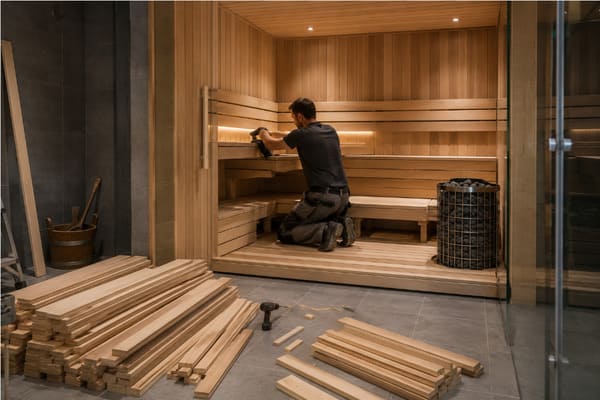
- Durable timber — heat-treated and low-conductivity woods hold up better under heavy use, extending the interval between sanding and treatment.
- Certified heater — a genuine unit with recognised safety marks (CE/ETL/UL[^4]) and compliance with the EU RoHS directive[^5] is built for high duty cycles and fails far less often than a generic one.
- Serviceable design — heaters and controls with standard, replaceable elements and parts are far cheaper to keep running than sealed or obscure units.
- Proper ventilation — engineered airflow keeps the room dry, protecting both the timber and the air quality.
Get these right and daily upkeep stays trivial while major servicing becomes rare — which is exactly what a busy commercial operator wants.
Spare Parts and After-Sales: The Hidden Buying Criterion
This is the factor buyers most often overlook — and the one that causes the most expensive regret.
Spare-parts availability and after-sales support are critical buying criteria for a commercial sauna. A sauna built around a generic, uncertified heater can become unrepairable when a part fails, forcing full replacement. Choosing a supplier who provides genuine parts — stones, heating elements, and control components — and reliable technical support keeps the sauna serviceable and protects the investment.
Ask before you buy: Can I get replacement elements and stones? Are control parts available? Is there technical support if something fails? A cheaper sauna that cannot be repaired is not cheaper — it is a shorter-lived asset. This is a core reason commercial buyers favour genuine, well-supported equipment over the lowest quote. Genuine consumables and replacements — from sauna stones and accessories to heating elements and controls — keep the sauna serviceable for its full life. It also feeds directly into the budget, which is why maintenance and parts belong in your commercial sauna cost planning from the start.
Maintenance as Part of Total Cost of Ownership
A purchase price tells you what the sauna costs to buy. Maintenance tells you what it costs to keep.
Maintenance is a core part of a commercial sauna's total cost of ownership, alongside the purchase price, energy, and spare parts. Over several years of heavy use, maintenance and consumables can represent a meaningful share of the sauna's lifetime cost, so they should be estimated and budgeted at the buying stage rather than treated as an afterthought.
The practical point for buyers: a slightly higher-quality specification that reduces maintenance often produces a lower total cost over the sauna's life. Compare quotes not on purchase price alone, but on the total of purchase, energy, maintenance, and expected lifespan. Our cost guide covers how to build that full picture.
How Design and Build Quality Extend Sauna Lifespan
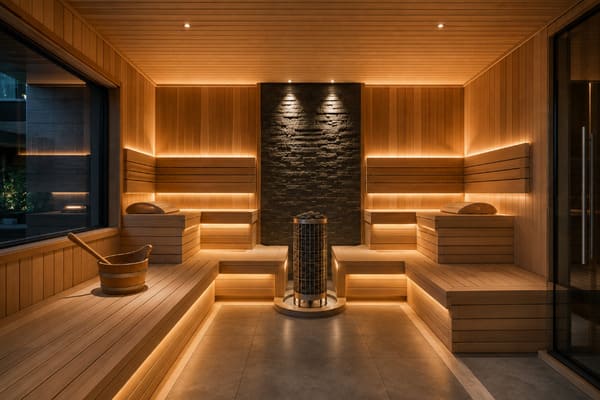
A well-specified, well-built commercial sauna that is properly maintained can last 15 to 20 years or more, while a poorly built or poorly maintained one may need major repairs or replacement far sooner. Build quality — solid timber, a durable heater, and correct ventilation — reduces both the frequency and the cost of maintenance over the sauna's life.
Quality and maintenance work together: buying well makes maintenance easier, and maintaining well makes a good sauna last. For buyers, this means the cheapest sauna is rarely the most economical — the total return depends on lifespan and upkeep, not the initial invoice. The same logic applies whether you are fitting a compact room (see our minimum size guide) or a full-size installation (see our size and capacity guide).
How ROC Sauna-Solution Helps
Choosing equipment that is durable, certified, and well-supported is the foundation of a low-maintenance commercial sauna.
ROC Sauna-Solution helps hotels, spas, gyms, and contractors choose commercial saunas that are built to last and easy to maintain — supplying genuine certified Harvia heaters, durable timber, and quality sauna stones, along with reliable spare parts and technical support. This lets buyers minimise long-term maintenance and protect their investment.
Tell us your capacity, usage intensity, and whether the sauna sits near a pool, and we will recommend a specification that keeps maintenance low — whether that centres on a compact heater like the Harvia The Wall or Glow Corner, a robust stainless unit like the Harvia Vega Pro, or a full material package. We also supply genuine sauna stones, spare parts and accessories to keep your sauna running for years. For the wider purchasing process, see our sauna sourcing guide, and confirm parts availability with genuine equipment from Harvia.
Conclusion
Maintenance is not just an operational task — it is a buying decision. The wood, the heater, the ventilation, the build quality, and above all the availability of genuine spare parts and support determine how much time and money you will spend keeping your sauna in service. Specify well, budget maintenance as part of the total cost of ownership, and choose a supplier who can keep the sauna serviceable, and you turn maintenance from a recurring headache into a predictable, manageable cost — while your investment lasts for 15 to 20 years or more.
Want a commercial sauna specification built to last and easy to maintain? Contact ROC Sauna-Solution with your capacity and usage details for advice on durable, low-maintenance equipment, genuine spare parts, and full technical support. Get in touch here. You can also ask our AI product assistant about maintenance and parts for your specific setup.
Frequently Asked Questions
How much maintenance does a commercial sauna need? A commercial sauna needs quick daily upkeep (wiping surfaces and keeping the room aired and dry), periodic deeper cleaning and checks of the stones and heater, and professional servicing once or twice a year for timber treatment, stone replacement, and electrical inspection. The daily burden is small; the periodic and annual work depends heavily on the sauna's specification and how heavily it is used.
Which sauna wood needs the least maintenance? Heat-treated and low-conductivity timbers generally resist moisture, staining, and wear better than untreated softwoods, so they need less frequent sanding and treatment. The best choice depends on your budget and whether the sauna is near a pool; our wood selection guide covers the trade-offs in detail.
Do genuine Harvia heaters need less maintenance than generic units? Generally yes. A genuine certified heater is built for high commercial duty cycles, fails less often, and has readily available replaceable parts such as elements and stones. A generic uncertified unit is more likely to fail and can be difficult or impossible to repair, which raises both maintenance cost and the risk of full replacement.
Are spare parts easy to get for commercial saunas? It depends entirely on what you buy. Genuine, well-supported equipment has readily available stones, heating elements, and control parts, keeping the sauna serviceable for years. Generic or uncertified equipment can become unrepairable when a part fails, so parts availability should be confirmed before purchase.
How does maintenance affect the total cost of a commercial sauna? Maintenance and consumables are a core part of total cost of ownership, alongside purchase price, energy, and spare parts. Over years of heavy use they can be a meaningful share of lifetime cost, so a higher-quality, lower-maintenance specification often produces a lower total cost overall — which is why quotes should be compared on lifetime cost, not purchase price alone.
How long does a well-maintained commercial sauna last? A well-specified, well-built, and properly maintained commercial sauna can last 15 to 20 years or more. Poor build quality or neglected maintenance can shorten that significantly, so both the initial specification and ongoing upkeep matter to the sauna's lifespan.
About ROC Sauna-Solution
ROC Sauna-Solution is an official authorized Harvia distributor and commercial sauna sourcing partner based in China, with over 12 years of experience supplying and integrating sauna projects worldwide. We help hotels, spas, resorts, gyms, and project contractors across 50+ countries specify durable, low-maintenance commercial saunas — supplying genuine certified Harvia heaters, steam generators, control systems, timber, stones, and accessories, with reliable spare-parts supply, full technical documentation, CE/ETL/RoHS certification, OEM options, and technical and after-sales support.
[^1]: IEC 60335-2-53: Household and similar electrical appliances – Safety – Particular requirements for electric sauna heating appliances. International Electrotechnical Commission (IEC). https://webstore.iec.ch/publication/1627 [^2]: Mold and moisture control guidance. United States Environmental Protection Agency (EPA). https://www.epa.gov/mold [^3]: Wood species durability and properties database. The Wood Database. https://www.wood-database.com/ [^4]: Product certification and listing. UL Solutions. https://www.ul.com/ [^5]: Restriction of Hazardous Substances (RoHS) Directive. European Commission. https://environment.ec.europa.eu/topics/waste-and-recycling/rohs-directive_en