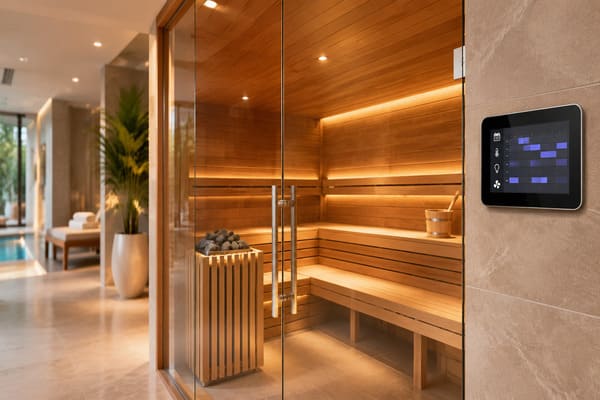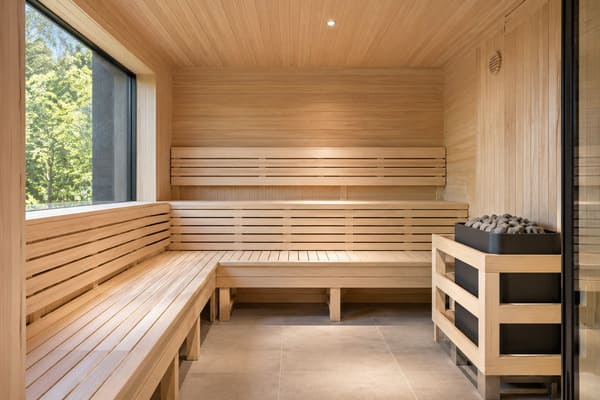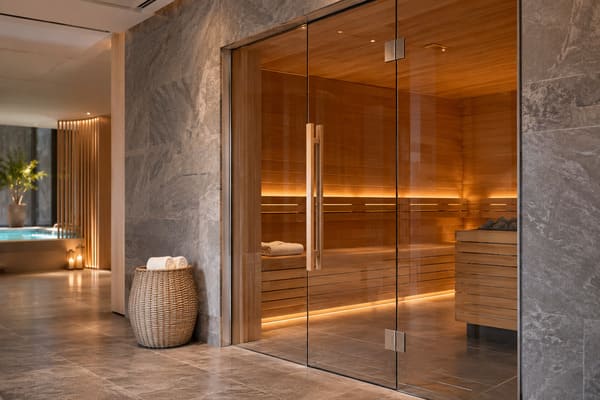
You've decided your business needs a commercial unit, not a home one. Good. But now every commercial sauna for sale claims to be "commercial-grade," the specs blur together, and two quotes for units that look identical can be hundreds apart. For a gym, hotel, or spa, the wrong choice isn't a bad purchase — it's years of downtime, refunds, and replacement costs. Let me help you buy it right the first time.
When buying a commercial sauna, check five things before you sign: the heater's duty rating, the materials and build quality, the commercial warranty terms, safety and installation compliance, and how it will be delivered. A supplier who answers all five clearly is a real commercial partner. One who dodges them is a reseller who leaves the risk with you.
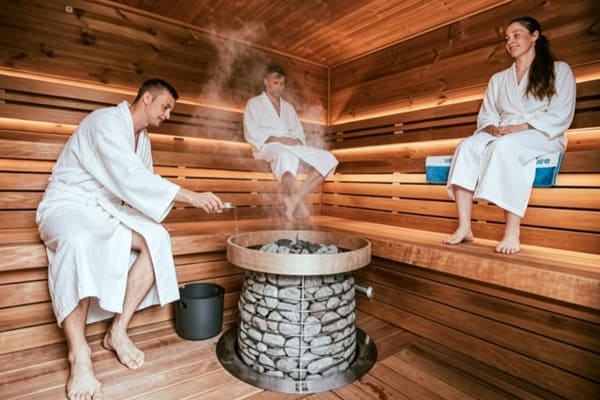
If you're still weighing whether you even need a commercial unit at all, start with the next section on the difference between a home sauna and a commercial sauna. If that's settled, here is exactly what to check — and how to think about it as a business investment, not just a purchase.
Home Sauna vs Commercial Sauna: What Makes It "Commercial-Grade"?
The word gets thrown on every product page. Most buyers have no way to check if it is real. That gap is where poor purchases happen.
A home sauna suits a few short sessions a day. By contrast, a commercial sauna supports all-day use, with denser materials, reinforced benches, a heavier-duty heater, commercial-use warranty terms, and safety features that meet public-use codes. Putting a home unit in a business is the single most expensive mistake buyers make.
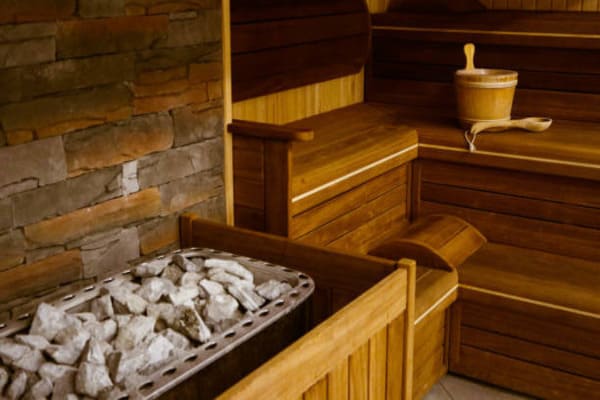
The heater is one obvious dividing line — home models have a built-in cool-down timer that makes them unsuitable for all-day runtime, while commercial heaters are rated to run for hours without stopping. That single component is deep enough to deserve its own guide, which is why we break it down fully in commercial vs. residential sauna heaters: what's the real difference.
If a supplier calls a product "commercial" but the timber, benches, and heater are all residential-grade, that is your red flag. Ask what makes it commercial, not just whether the label says so.
The Side-by-Side Comparison
| Factor | Home Sauna | Commercial Sauna |
|---|---|---|
| Typical use | A few sessions per day | Continuous, all-day use |
| Materials | Standard timber | Denser, tighter-grain timber |
| Benches & frame | Lighter build | Reinforced for constant traffic |
| Heater | Home-rated | Commercial-rated |
| Warranty | Residential terms only | Commercial-use warranty |
| Safety compliance | Home standards | Meets public-use codes |
Two rows quietly decide the outcome: materials and warranty. A home sauna's lighter timber and benches wear out fast under public use, and once a home unit is installed in a business, the warranty is almost always void the moment something fails. That is why "it looks the same" is a trap.
For any hotel, gym, spa, or clinic, the commercial version is not the premium option. It is the only option that survives the job.
Start With Your Commercial Sauna Project Requirements
Every commercial project starts with the space and the people using it — not the product catalog. Get the requirements right and the equipment choices follow logically.
The setting changes the specification more than most buyers expect:
- Hotels — guests use the sauna in unpredictable bursts, so the room must reach and hold temperature reliably at all hours.
- Spas — often run long continuous hours and expect a premium finish, so timber quality and even heat matter.
- Gyms — high throughput and frequent door openings drain heat fast, demanding heaters sized above the room volume alone.
- Resorts — larger capacity and sometimes outdoor exposure, which increases heating requirements.
Start by documenting your exact space dimensions, expected peak users, daily hours, and location type. These four facts drive the heater size, timber choice, ventilation, and control system you will need — and adequate ventilation is a recognised requirement for indoor air quality in occupied spaces. If you are still choosing who to source from, our guide on how to choose a reliable sauna supplier covers the vetting process.
1. Is the Heater Actually Rated for Commercial Use?
This is where most bad buys happen. The commercial sauna heater is the hardest-working part, and it's the first thing a dishonest quote quietly downgrades to hit a lower price.
Ask for the heater's duty rating, not just its kW number. Confirm that the heater and controller support the operating schedule your facility needs. If the supplier can't tell you the runtime rating, the "commercial" label is just marketing.
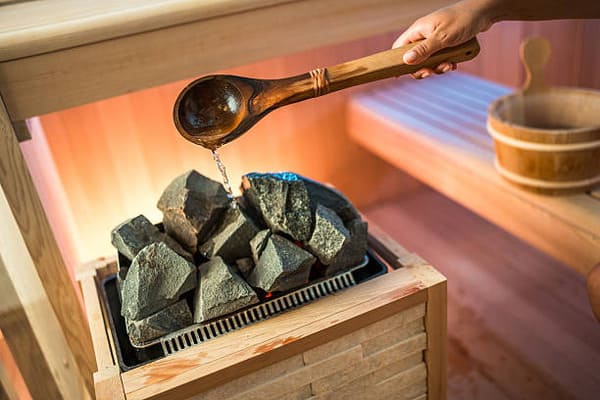
Using a heater beyond its approved duty rating can lead to shutdowns, excessive wear and warranty problems. For a facility running 12-hour days, check permitted operating hours and controller settings before ordering. Two heaters with the same wattage may suit different workloads. Ask the manufacturer to confirm suitability for hotels, spas or gyms in writing. This helps protect uptime and makes supplier comparisons more reliable.
How to Size the Heater for a Commercial Room
Select a commercial sauna heater by matching its kW output to the room volume, then increasing it for heavy usage, frequent door openings, and glass or stone surfaces. Commercial heaters must be built to run for long hours continuously — a home-grade heater sized to the same room will fail under commercial load.
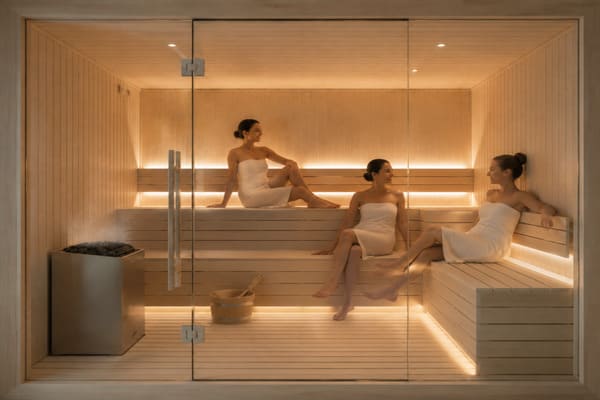
Four factors decide the right heater for a commercial room:
| Factor | What It Affects | Commercial Consideration |
|---|---|---|
| Sauna size (volume) | Base kW requirement | Start from room m³, then adjust up |
| Usage frequency | Heat recovery needs | High traffic needs extra output |
| Door / glass exposure | Heat loss | Glass walls and frequent openings drain heat |
| Commercial durability | Heater lifespan | Must be rated for continuous daily operation |
The most common mistake is sizing a heater just to reach temperature, not to hold it as guests come and go. A commercial room needs enough output to recover heat quickly between users — and glass walls, stone surfaces, and frequent door openings all demand extra kW. For the full sizing method, including these adjustments, see our detailed sauna heater size guide. This is also where genuine, commercial-grade heaters from established brands earn their price — they are built for the duty cycle a hotel or gym demands, they meet the dedicated sauna-heater safety standard IEC 60335-2-53, and they come with the warranty and certification a public installation requires.
2. Are the Materials Built to Survive Daily Traffic?
Buyers focus on the heater and forget the cabin. But in a business, the wood and benches take a beating, and cheap timber fails fast — right where your customers see it.
Look for dense, tight-grain timber and reinforced benches and framing. A commercial cabin faces constant heat, humidity, and dozens of people a day. Standard home-grade wood warps, cracks, and loosens under that load far sooner than the price justifies.
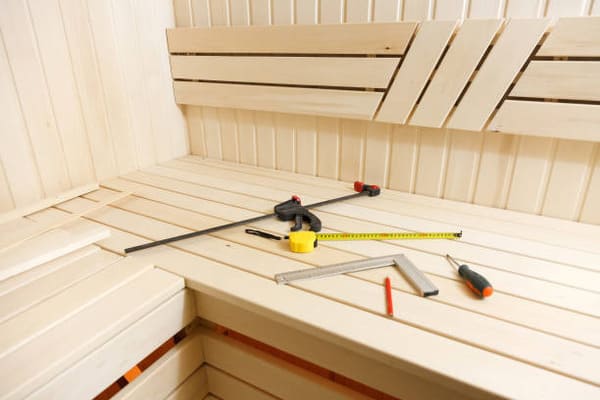
Ask what species and grade of wood is used, and whether the benches and frame are reinforced for public use. This matters even more for a large commercial sauna, where longer benches and wider spans carry more weight every single day. A cabin that looks identical in a photo can be built to two completely different standards — and for a paying facility, a sagging, cracked interior in year two is a direct hit to your brand. This is exactly the kind of long-term cost buying a commercial sauna should protect you from.
Beyond the Timber: Stones, Controls and Accessories
A sauna is a complete system, not just a heater in a box. The timber, stones, controls, and accessories all affect performance, safety, and how long the installation lasts.
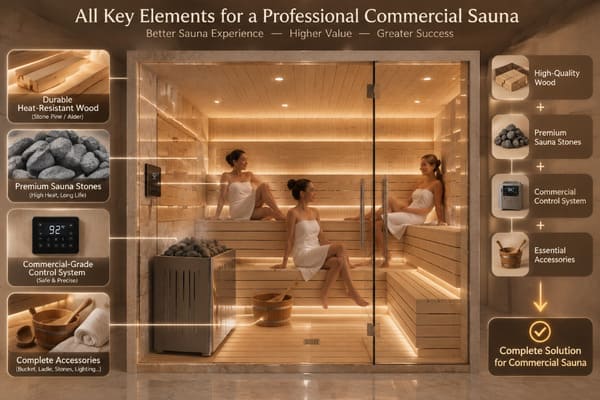
Here is what to define for each component:
- Timber / wood panels — commercial rooms cycle through heat and humidity far more than home units, so heat-stable, durable species matter for both feel and lifespan; the behaviour of different species under heat and moisture is documented in timber research from the USDA Forest Products Laboratory. Our guide on how to choose the right wood for a sauna room breaks down the options.
- Sauna stones — quality stones hold and release heat efficiently and need periodic replacement in high-use settings, so a reliable supply matters.
- Control system — commercial-grade controls with scheduling and safety features let staff run the sauna safely over long operating hours.
- Accessories — benches, lighting, doors, and ventilation fittings all affect usable capacity and guest experience.
3. What Does the Warranty Actually Cover for Business Use?
Buyers read the number of years and stop there. The conditions buried underneath are where claims get denied — and where your operating budget takes the hit.
Confirm the warranty explicitly allows commercial use, and read the conditions. Many warranties shorten or void the moment a unit is used in a business, or require licensed installation and documented maintenance. A vague warranty is a warning sign.

Before you sign, get three things in writing:
- Does this model allow commercial use? Ask for the "intended use" statement, not a verbal yes.
- How long is the commercial warranty, and when does it start — ship date, install date, or opening day? These differ by months.
- What maintenance is required to keep it valid, and do you need to keep service records?
Put these into the purchase contract. For a business, a warranty you can't enforce is an unbudgeted liability sitting on your books.
4. Does It Meet Local Safety and Installation Codes?
In a private home, safety is your own business. In a public space, it's a legal and insurance liability — and the rules are stricter than most first-time buyers expect.
Confirm the unit meets the public-use electrical and safety codes for your country. Commercial sauna installation often requires three-phase power, a dedicated circuit, certified components, and a licensed installer. A home-listed unit in a business can void your insurance on its own.
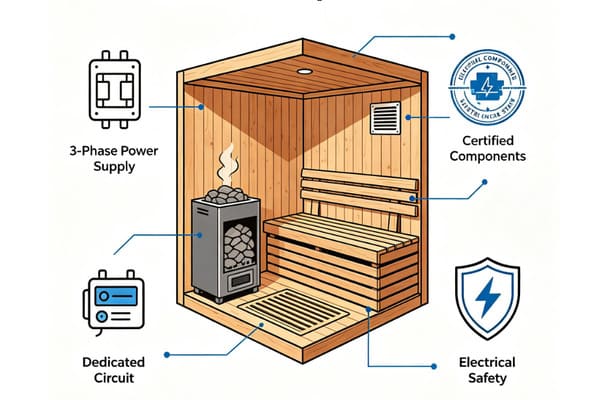
Certification isn't a formality. If an incident ever happens, the first question your insurer and any inspector will ask is whether the equipment was rated and installed for commercial use. Make sure the answer is yes, in writing, before the unit is ever switched on. Also ask who handles the installation — a supplier who understands commercial installation requirements will save you costly rework and inspection delays.
Public installations must carry the right marks (such as CE, ETL, or RoHS for the equipment) and meet local safety rules — a serious supplier provides this documentation.
5. How Will It Be Delivered — and Who Pays if It Arrives Damaged?
This is the question almost every buyer forgets, and it's the one that wrecks opening timelines. A perfect sauna is worthless if it arrives cracked or stuck in customs the week before you launch.
Ask exactly how the unit ships, who packs it, and who covers damage or delays in transit. A commercial sauna is a heavy, fragile load of timber, glass, and a dense heater. Poor freight handling turns a great purchase into a cracked, delayed, over-budget mess — and quietly inflates your true commercial sauna cost.

This is where most suppliers go quiet — they build or resell the unit and hand freight to a third party, so delays and damage become your problem. We arrange the shipping as part of the order: we pack for long-haul transport, load it correctly, and move it by full container or consolidated shipment with the cost known upfront. No surprise fees, no finger-pointing when a panel cracks, and a delivery date you can plan your opening around.
Why Work With an Experienced Commercial Sauna Solution Provider?
A commercial sauna is a project, not a single purchase. Piecing it together from separate suppliers — a heater here, timber there, controls from a third — multiplies the risk of mismatched parts, delays, and no one accountable when something goes wrong.

This is where the right partner changes the outcome of your project. Instead of you researching heaters, sourcing timber, and hoping the controls are compatible, a solution provider does this:
- Understands your project requirement — space, capacity, hours, and setting.
- Selects the right equipment — heater sizing, controls, and materials matched to your use.
- Matches you to genuine, certified brands — authentic product with real engineering and warranty behind it.
- Supplies the complete package — heater, room, controls, timber, and accessories consolidated in one shipment.
- Provides technical support — installation guidance, documentation, and after-sales backing.
Think in ROI, Not Just Sticker Price
Home buyers compare prices. When buying a commercial sauna, business buyers should compare cost per year of reliable service.
A commercial sauna that runs dependably for 8–10 years almost always beats a cheaper unit replaced in year two — once you factor in downtime, refunds, lost members, and a second installation. A €1,000 saving upfront means nothing if it triggers a €5,000 replacement plus two weeks of a closed amenity. When you compare quotes, divide the price by expected service years and add the cost of one failure. The "expensive" commercial unit is usually the cheaper decision.
For a gym or spa, the sauna is also a revenue driver — a working amenity keeps memberships and bookings, while a dead one drives cancellations. That upside belongs in your math too.
How to Compare Two Commercial Saunas Quickly
If you only have two quotes in front of you and no time, run them through this table. The best commercial sauna on paper is the one that answers every column with a clear "yes."
| Check | Green Flag | Red Flag |
|---|---|---|
| Heater | Stated all-day runtime rating | Only a kW number given |
| Materials | Dense, tight-grain timber, reinforced benches | "Premium wood," no species named |
| Warranty | Written commercial-use terms | Home warranty, or vague on business use |
| Installation | Meets local codes, licensed install | No mention of compliance |
| Delivery | Supplier-managed, cost upfront | "Freight is your responsibility" |
| Total cost | Cost per service year | Sticker price only |
Conclusion
Buying a commercial sauna comes down to five checks — heater runtime, materials, commercial warranty, installation compliance, and delivery — plus one mindset shift: judge it on cost per year of service, not sticker price. Get clear answers on all five and do the ROI math, and you've found a real supplier. Get dodged on any of them, and you've found a reseller who'll leave you with the repair bills and the downtime.
We supply commercial-grade Harvia units built to pass every one of these checks — genuine commercial heaters, durable materials, business-ready warranties, and shipping arranged as part of the order to deliver intact and on schedule. Tell us your space, your daily traffic, and we'll spec the right solution for your gym, hotel, or spa. Browse our commercial saunas to get started. Or request a commercial sauna consultation here.
Frequently Asked Questions
How do I specify a custom commercial sauna?
Start from your project: room dimensions, peak user capacity, daily operating hours, and setting (hotel, spa, gym, or resort). These determine the heater output, timber, ventilation, layout, and control system you need. An experienced solution provider turns these details into a complete equipment specification for you.
What size heater does a commercial sauna need?
It depends on the room volume and how heavily it is used — commercial heaters must be sized to hold temperature as guests come and go, not just to reach it once. Glass walls and frequent door openings drain heat, so the heater is often sized above the room volume alone. Have your supplier calculate the correct kW output for your exact space and traffic.
How is a commercial sauna different from a home sauna?
A commercial sauna runs many hours daily, so it uses heavier-duty heaters and timber built for continuous use and must meet the safety certifications required for public premises. A home-grade unit specified for commercial use tends to fail early and can create compliance problems.
Why source a commercial sauna through one solution provider instead of separate suppliers?
Piecing a project together from multiple suppliers risks mismatched components, delays, and no single point of accountability. A solution provider matches you to the right genuine equipment, consolidates everything into one shipment, and provides technical and after-sales support — giving you one accountable partner.
What certifications does a commercial sauna need?
The equipment must carry the marks required for your market and for public installation, such as CE, ETL, or RoHS, and meet local safety rules. A reliable supplier provides this documentation so your sauna is legal to install and operate commercially.
Sources
- Rapid review: Environmental health risks and safety considerations in ...
- ANSI/ASHRAE Standard 62.1: Ventilation for Acceptable Indoor Air Quality
- IEC 60335-2-53: Household and similar electrical appliances — Safety — Particular requirements for electric sauna heating appliances
- Wood Handbook — Wood as an Engineering Material
- CE marking
- ETL Listed Mark
- RoHS Directive