Choosing gym recovery equipment requires a clear plan for member needs and daily operations. This guide looks at how commercial saunas can fit into a club's wider recovery offer.
A fitness club can add more equipment, introduce new classes or lower its membership price. But what gives members a reason to pay more and stay longer?
For some clubs, the answer is a better recovery experience.
Saunas, cold plunges and dedicated recovery areas are becoming part of how fitness operators differentiate their membership offers. Yet adding these facilities raises a practical question: how should a gym choose equipment that members value and the business can operate reliably?
Examples from Planet Fitness, Gold's Gym and YMCA show different ways to package recovery amenities. They also offer a useful lesson for equipment buyers: the best investment is not necessarily the cheapest equipment or the biggest collection of facilities. It is the equipment that delivers consistent value over time.
1. Three Fitness Clubs, Three Ways to Sell Recovery
Before choosing a sauna heater, it helps to understand what the equipment is expected to do for the business.
Planet Fitness: Make Premium Membership More Attractive
Planet Fitness reported that its Black Card members accounted for 66.5% of recurring-billing members at the end of 2025. Its premium membership includes additional amenities beyond standard gym access, such as massage and recovery-related facilities.
This figure represents membership-tier penetration, not sauna usage.
The purchasing lesson: An amenity can help differentiate a membership, but only if members value it and the club can keep it available.
If a sauna is part of the premium offer, frequent breakdowns or extended maintenance closures can undermine the value members expect to receive.
Gold's Gym Tampa: Turn Recovery into a Paid Service
Gold's Gym Tampa Gas Worx offers Recovery Lounge memberships at published prices of $59 and $169 per month, with different levels of access and services.
Its approach combines facilities such as infrared sauna, dry plunge and other recovery equipment into defined packages.
The lesson is that equipment selection should follow the service being sold. A club offering bookable recovery sessions has different requirements from one providing open access to premium members throughout the day.
YMCA: Offer Different Levels of Equipment Access
The YMCA of Greenville offers different recovery packages, including a Performance tier that adds sauna and dry-plunge access.
This illustrates another approach: begin with a defined service and expand the facilities according to the membership model.
These examples do not establish a universal pricing formula. They demonstrate three possible strategies: premium membership benefits, paid recovery services and tiered access.
For gym owners, the next question is more important than copying another club's prices:
Which equipment can deliver the experience your members want, without creating unnecessary operating costs?
2. Why the Sauna Should Be Chosen for Long-Term Performance
A sauna can become a central feature of a premium gym recovery area. But a good-looking sauna and a reliable commercial sauna are not necessarily the same thing.
The first decision is to match the room and equipment to the intended use.
Consider:
- How many members are likely to use the sauna during peak hours?
- What are the room dimensions and construction materials?
- How many hours per day will the facility operate?
- What electrical supply is available?
- How easily can the heater and controls be serviced?
These details determine the appropriate heater capacity and installation requirements.
Harvia's sauna volume calculator illustrates why heater selection depends on room volume and construction, including surfaces such as glass that can increase heating demand.
A heater should therefore be selected for the actual room and operating conditions, rather than chosen solely because it has a higher power rating or a lower purchase price.
Our Sauna Heater Size Guide explains this selection process in more detail.
The Price Tag Is Only the Beginning
Imagine two heaters that appear suitable for the same gym sauna.
One has a lower initial price. The other costs more but offers a better-documented service network, accessible replacement parts and a configuration better suited to the club's operating schedule.
The cheaper option may still be the right choice—but only if it can meet the same operational requirements.
Buyers should compare the complete specification, warranty terms, service arrangements and expected maintenance needs before deciding.
Quality does not simply mean buying the most expensive product. It means choosing equipment that is fit for purpose, reliable and supportable throughout its working life.
For a commercial gym, this distinction matters because equipment downtime affects more than the maintenance budget. It can also affect the member experience the club is charging for.
3. Should You Add a Cold Plunge or Keep the Setup Simple?
Once the sauna is specified, the club can decide whether additional recovery equipment is worthwhile.
A cold plunge may complement a sauna-focused experience. Massage or compression equipment may suit a club with limited space or members who prefer shorter individual sessions.
But every additional facility introduces its own costs and responsibilities.
| Equipment | Main planning considerations |
|---|---|
| Commercial sauna | Heater, controls, room construction, ventilation and maintenance |
| Cold plunge | Water treatment, filtration, hygiene and temperature management |
| Massage or compression equipment | Cleaning, session turnover and servicing |
| Dedicated recovery room | Floor area, booking, member flow and total operating costs |
A larger package may make a membership more attractive, but it can also increase investment and operational complexity.
A sensible approach is to begin with the facilities that best support the club's intended service, then expand when demand justifies the additional expense.
The goal is not to purchase as much equipment as possible. It is to build a recovery area that members use and the business can maintain.
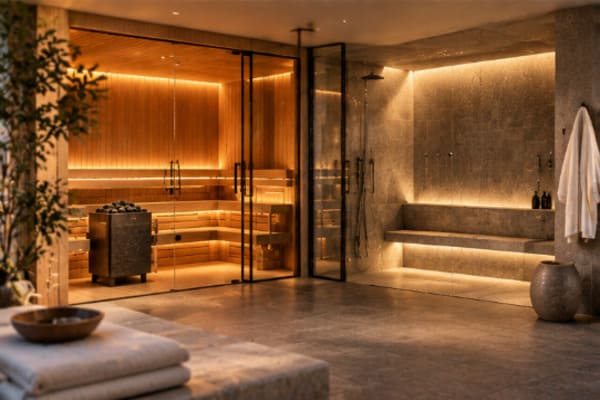
4. Calculate the Cost of Owning the Equipment, Not Just Buying It
A low equipment price can look attractive during procurement, especially when a club is fitting out several rooms.
But the initial quotation does not show the entire cost of ownership.
For a commercial sauna, the budget may include the heater, compatible controller, stones, room construction, electrical work, ventilation and installation. Ongoing costs include electricity, inspection, cleaning, maintenance and replacement parts.
A simple starting point is:
Total ownership cost = Initial purchase and installation + Operating costs + Maintenance and repairs
The club should also consider the financial impact of downtime and the replacement cycle when comparing alternatives.
This does not mean the more expensive product always wins. A higher-priced system must justify its cost through relevant benefits such as durability, reliability, serviceability or suitability for the intended use.
Likewise, a lower-priced option may be entirely appropriate for a smaller facility with lighter usage.
The important thing is to compare equivalent solutions and realistic operating requirements—not just the first number on the quotation.
Our Commercial Sauna Cost Guide provides more detail on the factors affecting a commercial sauna investment.
5. Don't Forget the Controller When Buying a Commercial Sauna
A commercial sauna heater is not always a complete operating system by itself.
Depending on the selected model, the installation may require a compatible controller, power unit, temperature sensors and other specified components.
The controller must match the heater's power rating and electrical configuration. The complete system must also suit the club's operating schedule and installation conditions.
Before approving a quotation, ask the supplier to confirm:
- The exact heater model and rated room-volume range
- Compatible controls and any required power unit
- Included stones, sensors and accessories
- Electrical and ventilation requirements
- Warranty, maintenance and replacement-part arrangements
For example, Harvia's C400VKK commercial control unit is designed for compatible professional sauna installations up to its specified power rating. The correct control configuration must always be checked against the exact heater and project requirements.
Sauna-Solution's Commercial Sauna Control Units Guide explains why the controller should be considered as part of the complete equipment specification.
This is another area where procurement decisions matter: a seemingly inexpensive heater quotation may not include all the components needed for the intended installation.
Compare the complete, compatible system—not just the main unit.
Conclusion: Buy for the Experience, Invest for the Long Term
Planet Fitness, Gold's Gym and YMCA demonstrate that recovery facilities can support different membership models. But the commercial value of these facilities depends on more than their appeal at launch.
For fitness clubs, a successful sauna investment starts with a clear membership strategy, an appropriately sized room and equipment suited to the expected operating conditions.
It also requires a realistic view of long-term ownership costs.
The lowest purchase price is not always the lowest-cost solution. Reliable equipment, suitable controls, accessible maintenance and available replacement parts can all influence how well a commercial sauna serves its members over time.
At ROC Sauna-Solution, we supply Harvia sauna equipment, our own ROC heater range, control systems and related accessories for commercial projects, subject to model availability and destination requirements.
If you are planning a gym sauna or upgrading an existing recovery area, share your project location, room dimensions, expected usage and electrical supply with our team. We can help evaluate suitable equipment configurations for your facility.
Contact Sauna-Solution for a Commercial Project Consultation
Frequently Asked Questions
1. Should a fitness club include sauna access in every membership?
Not necessarily. Some clubs include sauna access in premium memberships, while others sell recovery as a separate upgrade. The right approach depends on member demand, available capacity and the cost of operating the facility.
2. What should a gym consider before buying a commercial sauna?
Confirm the room dimensions, construction, expected usage, electrical supply and operating hours. Then check heater capacity, compatible controls, ventilation, installation requirements, maintenance access and the availability of replacement parts.
3. Is a more expensive commercial sauna heater always better?
No. The objective is to find the best fit for the project, not the highest-priced model. Compare suitability for the room, operating demands, warranty, serviceability, parts availability and expected ownership costs. A cheaper heater may be appropriate for a lighter-duty application, while a more demanding facility may justify investing in a system better suited to frequent commercial use.